

Mutual Aid Collaborative
A Continuum of Leadership, Collaboration, and Community Impact
The Mutual Aid Collaborative (MAC) is a core extension of Chicago Peace Fellows and a defining feature of our long-term model for neighborhood-led violence prevention and community transformation. While the Fellowship provides the initial foundation of equipping grassroots leaders with training, tools, and cross-community relationships the Mutual Aid Collaborative ensures that this work continues, deepens, and scales far beyond the structured program.
More than a traditional alumni network, the Mutual Aid Collaborative is an active, organized, and highly engaged collective of Peace Fellows graduates who remain committed to advancing peace and equity across Chicago’s communities. Through the Collaborative, alumni continue building skills, strengthening professional networks, and practicing shared leadership long after their cohort experience ends.

Invest In Peace
become a champion of safe and thriving communities
Make a Tax-Deductible Contribution Today
A Platform for Ongoing Learning and Shared Leadership
The Mutual Aid Collaborative is made up of alumni of Chicago Peace Fellows who practice a liberatory model of shared leadership, accountability, collaborative decision-making and collective action. By empowering community based leaders, the Mutual Aid Collaborative brings resources to individuals that have demonstrated knowledge and connections to the communities they both live in and serve.
The community leaders that take part in the Mutual Aid Collaborative build on partnerships that they developed as Peace Fellows. Prior to working on projects in the Mutual Aid Collaborative, Peace Fellows spent months building trust, developing relationships, and collaboratively working through a curriculum centered around community driven social change
By maintaining this ongoing learning environment, the Mutual Aid Collaborative supports Fellows in refining their skills, adapting to changing community dynamics, and applying new approaches to their work.
Collective Action and Joint Peacebuilding Projects
A defining feature of the Mutual Aid Collaborative is its commitment to collective action. Fellows pool their knowledge, relationships, and financial resources to design and implement collaborative peace and community-building projects across Chicago. These projects often emerge organically responding to real-time needs identified by Fellows who are deeply embedded in their communities.
Over the past several years, Collaborative-led projects have included:
- Community healing circles and peace rallies
- Youth summer programs and mentorship initiatives
- Food and resource distribution events during times of crisis
- Public space revitalization and neighborhood safety initiatives
- Cross-neighborhood partnerships to reduce isolation and strengthen community trust
This model ensures that solutions are not imposed from the outside but are created and led by those closest to the issues.
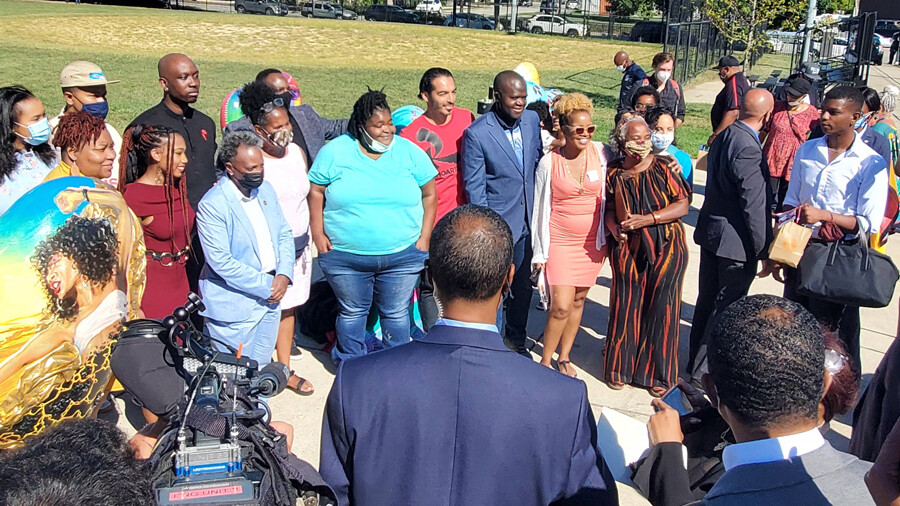
Many Mutual Aid Collaborative projects have reached successful completion, with Fellows continuing to advance the underlying issues in their own ongoing work. One powerful example is the Parade of Hearts, a citywide public art initiative led by Peace Fellow Cosette Nazon-Wilburn and her organization, The LUV Institute, with support from the Mutual Aid Collaborative.
This project placed large fiberglass heart sculptures in ten neighborhoods across Chicago: each one designed and created by local artists. The hearts were intentionally installed in communities that are often overlooked or underrepresented in public art investments. Their presence was more than decorative; they served as bold symbols of peace, love, and neighborhood pride.
By elevating community voices and showcasing local artistic talent, the Parade of Hearts project demonstrated how public art can shift narratives, build civic engagement, and ignite conversation about healing and unity in underserved neighborhoods. This is the essence of the Mutual Aid Collaborative leveraging the collective creativity and leadership of our Fellows to spark tangible, visible change across Chicago.
Other Mutual Aid Collaborative projects have generated similarly meaningful outcomes, including:
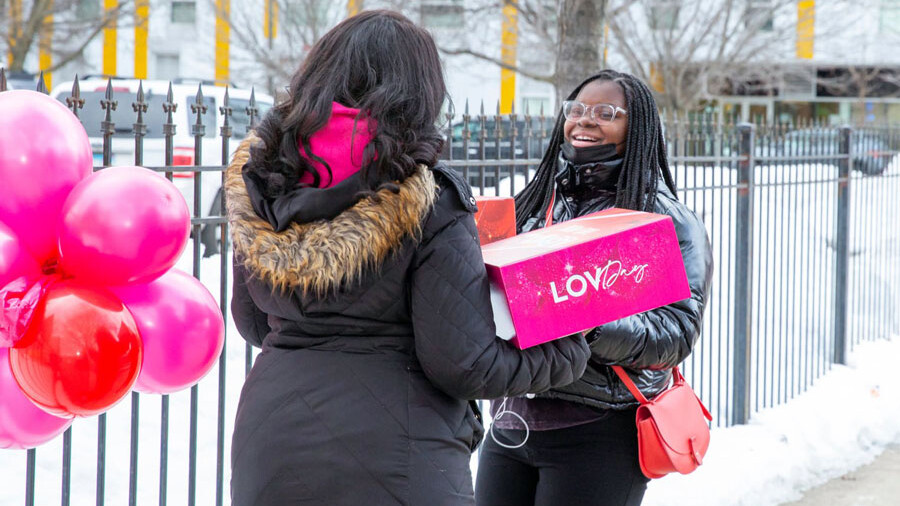
- LOV DAY – Hosted by Ladies of Virtue and supported by the Mutual Aid Collaborative, this event gathered Black girls for a day of joy, self-care, and community building. The team also distributed 350 resource boxes—including Black history facts, teddy bears, hair care items, and PPE—across the South Side.
- Raising Black Girl Magic – Led by Peace Fellows Jamila Trimuel and La’Keisha Gray-Sewell, this project provided bi-monthly sessions and vital material support to young Black women, addressing a deeply underserved population with mentorship, education, and essential resources.
- Healing-Centered Activities for Seniors – This initiative supported older adults with care packages containing hygiene items, food, and sanitation supplies. Fellows also offered social engagement and wellness activities—from card games and puzzles to virtual gatherings, chair yoga, and basic health checks.
- Chicago Stories on the Block – A creative youth-led project engaging young people most affected by violence through art, storytelling, and entrepreneurship training. The project culminated in the creation of four community murals, a poetry chapbook, and original music inspired by participants’ lived experiences.
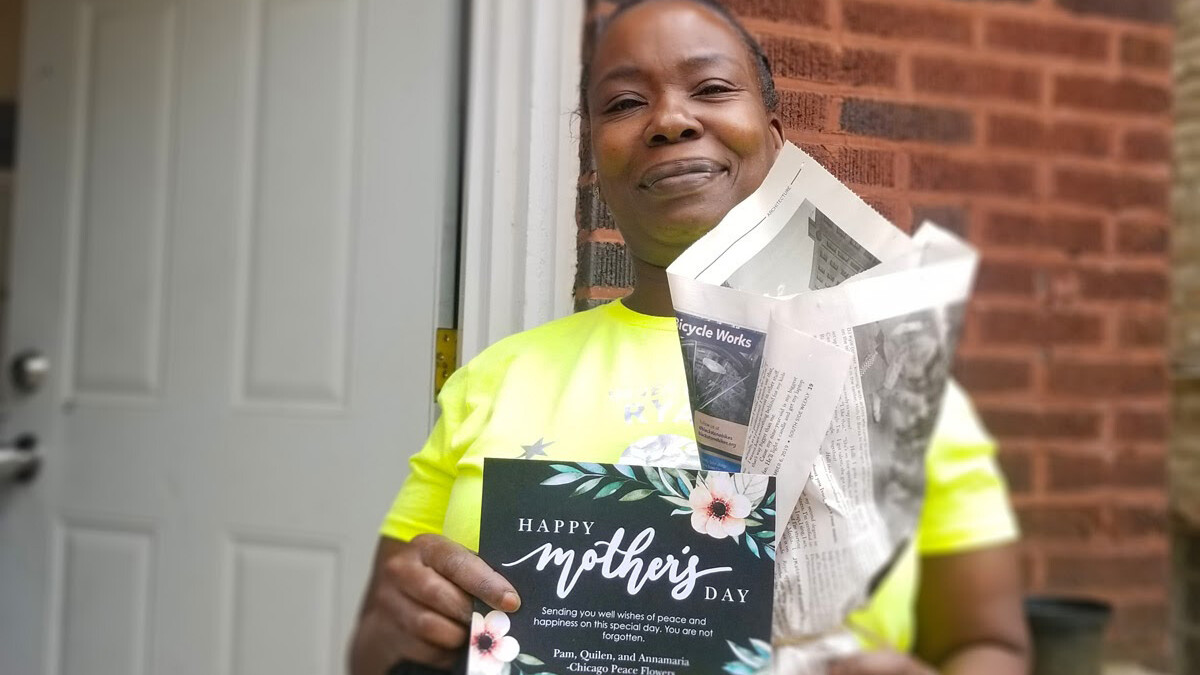
- Chicago Peace Flowers – For the last five years, the Peace Flowers initiative has distributed flowers to mothers, on Mother’s Day, who lost children to gun violence. This project exists as a collaboration between organizations that are committed to both supporting victims of gun violence and developing green spaces in Chicago.
The Mutual Aid Collaborative’s joint peace projects are offering a powerful model for how funding can be guided by racial justice, equity, and community power building. An approach highlighted in coverage by the Chicago Sun Times and Crain’s Chicago Business.
Invest In Peace
become a champion of safe and thriving communities
Make a Tax-Deductible Contribution Today