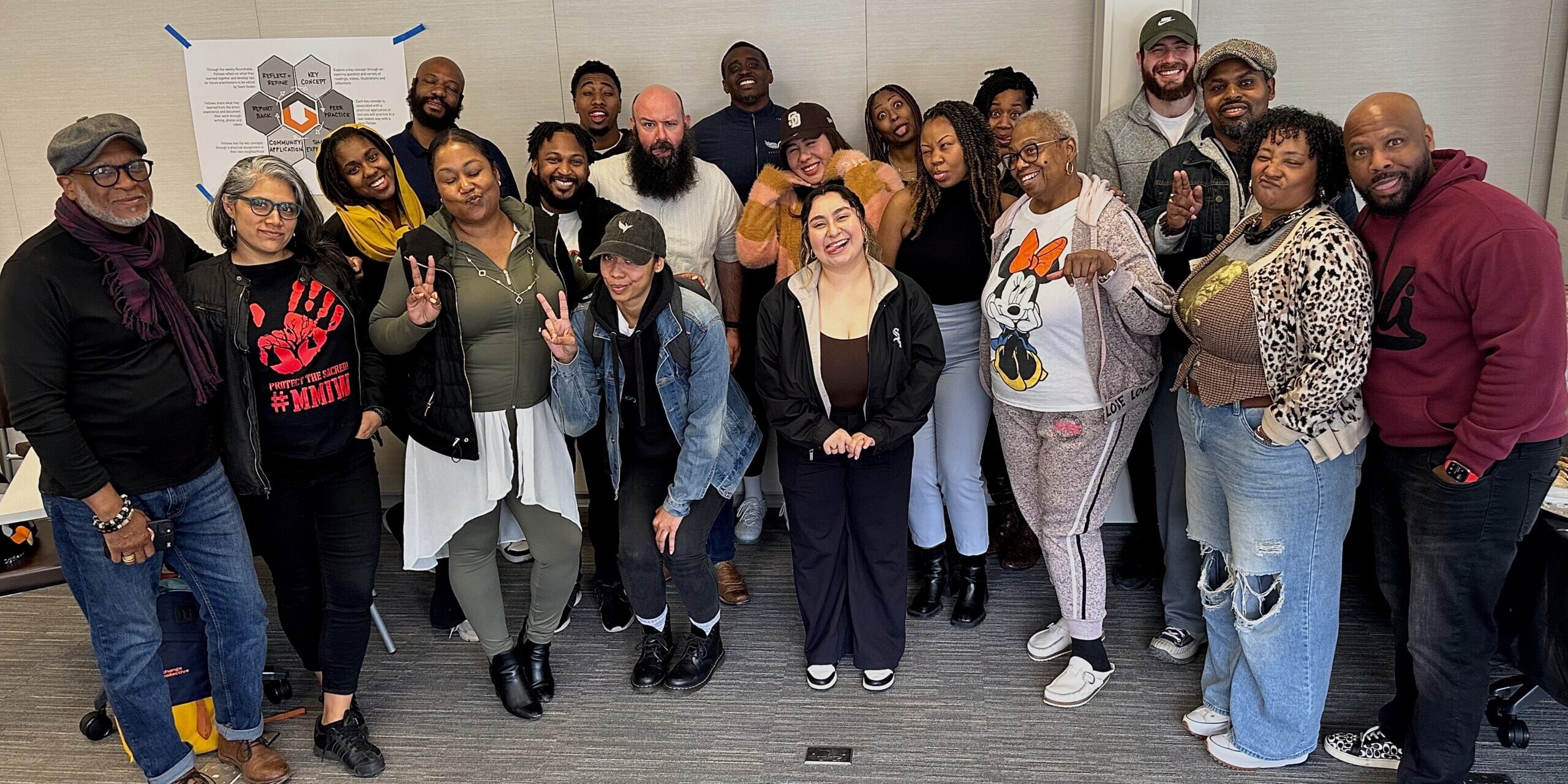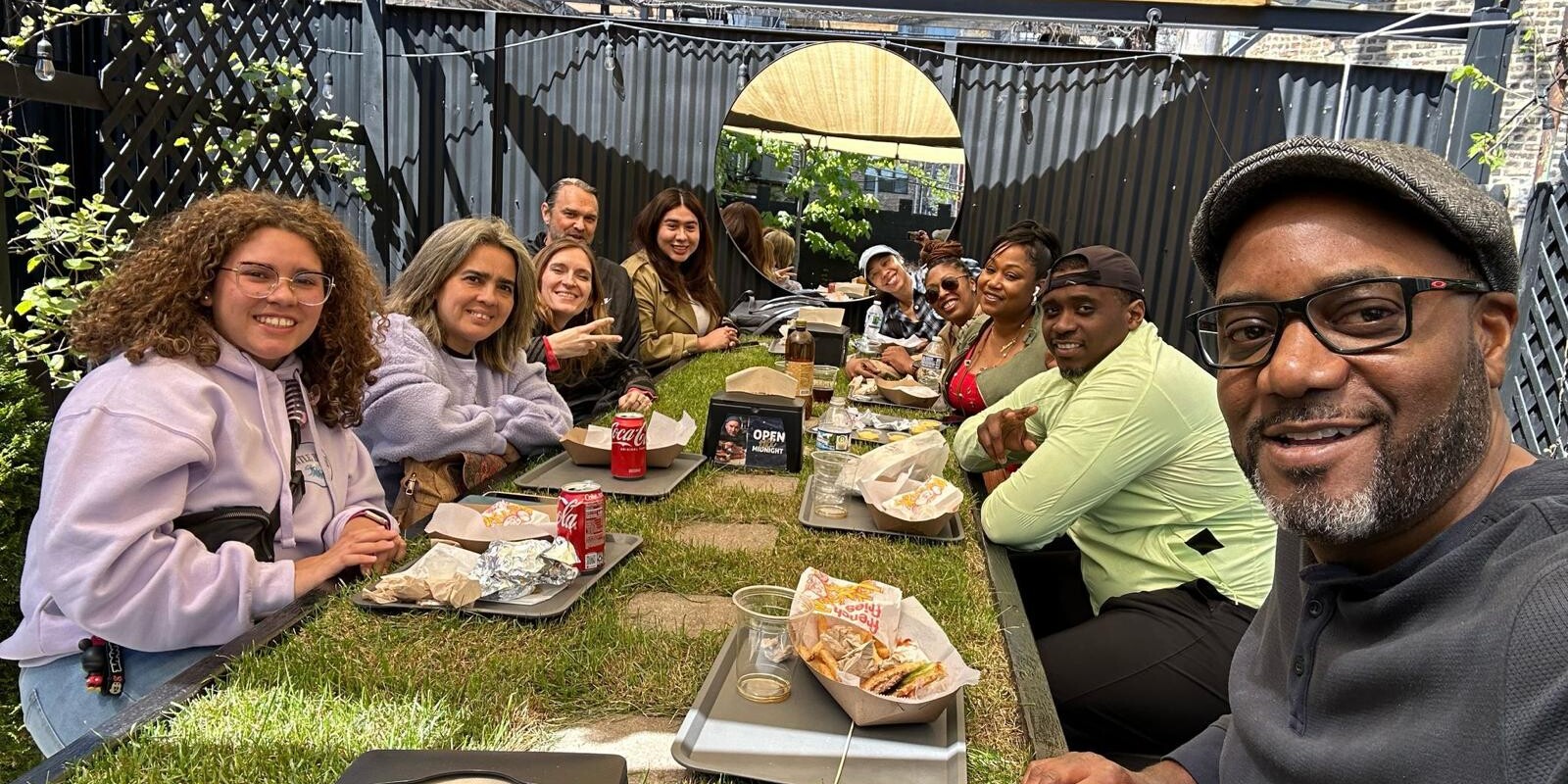

On March 20, the 2025 Chicago Peace Fellows met for the first time at the Chicago Cultural Center. Founded in 2019 in collaboration with the Partnership for Safe and Peaceful Communities, the Chicago Peace Fellows program is the only leadership development program that is built by and for grassroots community leaders on the South and West sides of Chicago.
The 2025 Peace Fellows Cohort will be the seventh group of Chicago Peace Fellows, following in the footsteps of over 130 alumni and joining a global network of Alumni that is nearing 300 grassroots leaders in over 50 countries. The 2025 Peace Fellows cohort consists of 20 activists, artists, outreach workers, and community leaders representing 15 community areas on the South and West sides of Chicago.

2025 Chicago Peace Fellows are Welcomed by Funders, Alumni, and the Mayor’s Office
The 2025 Peace Fellows were welcomed by Jai Jones of the Partnership for Safe and Peaceful Communities and Anita Alexander of the Dreihaus Foundation, who spoke to the lasting influence of the Peace Fellows program and its ability to provide tools and connections for grassroots leaders. Alexander noted the importance of the program as a way of making connections at a grassroots level: “You all are the building blocks that make neighborhoods safer and better for their communities”
“Grassroots organizations don’t talk about their communities from a place of deficit, but from a place of asset.”
-Jai Jones
In addition to a welcome from funders of the program, the 2025 class was also welcomed by Billy Evans, the Chief of Faith Engagement at Chicago’s Office of the Mayor. Evans presented a proclamation from Mayor Brandon Johnson that commended and honored the Chicago Peace Fellows and the Goldin Institute for “their unwavering commitment to fostering peace and equity.” The proclamation also emphasizes that “the work of the Chicago Peace Fellows aligns with the City of Chicago’s broader commitment to ensuring public safety, investing in communities, and supporting grassroots leadership as key pillars of long-term peace and prosperity.”
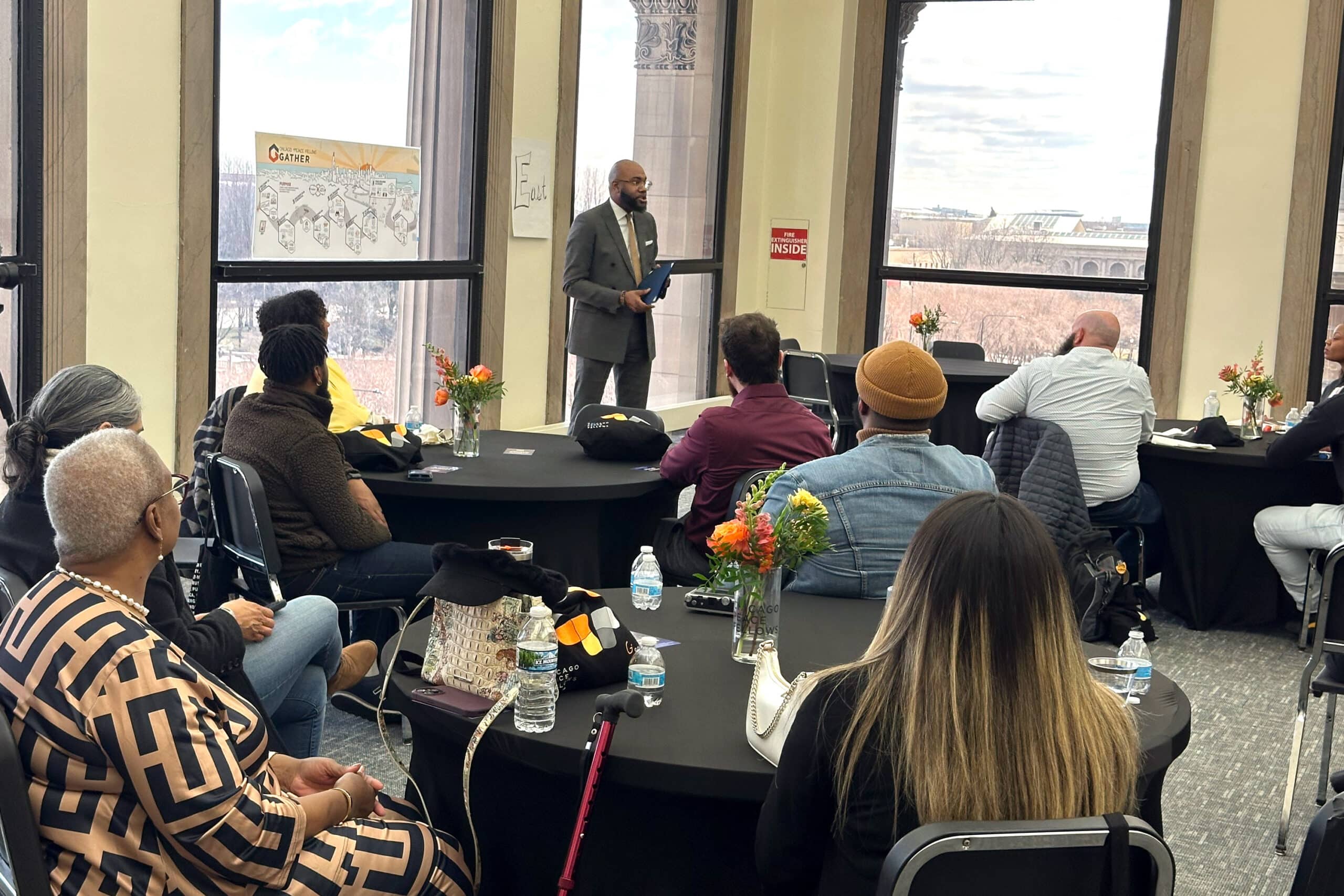
The 2025 Peace Fellows Cohort were also welcomed by two alumni: Jonathan Johnson, a 2023 Peace Fellow alumnus, and Ashaki Williams, a 2024 Peace Fellow alumna. Both Jonathan and Ashaki emphasized the importance of community and collaboration in the program. Jonathan began his speech by reflecting on the larger network that he gained through the Peace Fellows program: “You will be exposed and connected to like minded individuals and you will be counted on to represent not only yourself, but the Chicago Peace Fellows as a whole…You will be brought into a family. Think about the program as enlarging your territory, don’t go into this only concerned about your block or your nonprofit.”
Ashaki took a grassroots approach to her speech, beginning by reading responses from her cohort when she asked “What does it mean to be a Fellow?”. After reading quotes from her cohort that discussed the triumphs and obstacles they faced, she concluded: “You can be vulnerable in this program, you don’t have to hold up yourself and everyone else in this program.”

Building Relationships and Learning Together
Peace Fellows previewed the GATHER curriculum that they would be participating in over the course of their Fellowship. GATHER is both a mobile platform for shared learning and a curriculum for people who want to build on the talents of their neighbors and the assets of their communities to make real and lasting change. Members of the Goldin Institute emphasized that the Peace Fellows curriculum is not like a typical high school or college class, but is designed for Fellows to gain new tools and networks for their efforts at community engagement.
Through the GATHER platform, the 2025 Peace Fellows will engage in a 36-week course of intensive shared learning as well as group projects, culminating in a graduation event in November 2025. The curriculum has been designed in collaboration with grassroots leaders, based on their practical knowledge and hard-earned wisdom.

At their first meeting, the new Peace Fellows also had time to get to know one another and explore the diverse interests, skill sets, and leadership styles of their peers. The launch provided opportunities for Fellows to speak with one another about their interests and work as well as explore their different leadership styles.
As a way to begin building relationships, the Fellows engaged in a brief, energizing activity known as “Uncommon Commonalities,” led by Chicago Peace Fellows Facilitator April Doner. In this process, pairs of people have only 5 minutes to uncover the most interesting thing they have in common, then shared their learnings back to the larger group.

The Fellows explored their strengths and needs as leaders through a leadership compass activity, where they grouped themselves in four categories derived from the cardinal directions, using different sides of the room to gather. Led by Michael Henderson, Director of the Chicago Peace Fellows, the Leadership Compass activity energized the room as Fellows identified their leadership styles and how those styles shape their approach to community work. Whether bold and action-oriented or reflective and relationship-driven, every leadership type brought something valuable to the table. The room filled with conversation and connection, and “aha” moments were shared as each group reflected on how to best work together across diverse ways of thinking, communicating, and collaborating.
As the 2025 Peace Fellows progress through their curriculum, they will continue to build on the strength of their diversity through a series of collaborative GATHER based workshops. The 2025 cohort is made up of motivated problem-solvers and community-builders and their strengths will be shared. After working through the GATHER curriculum, the Peace Fellows will use the new techniques and concepts they’ve learned on community-oriented summer projects. The diverse skills of the Peace Fellows will go on to form projects that aim to have a continuing impact preventing violence and remediating its consequences.