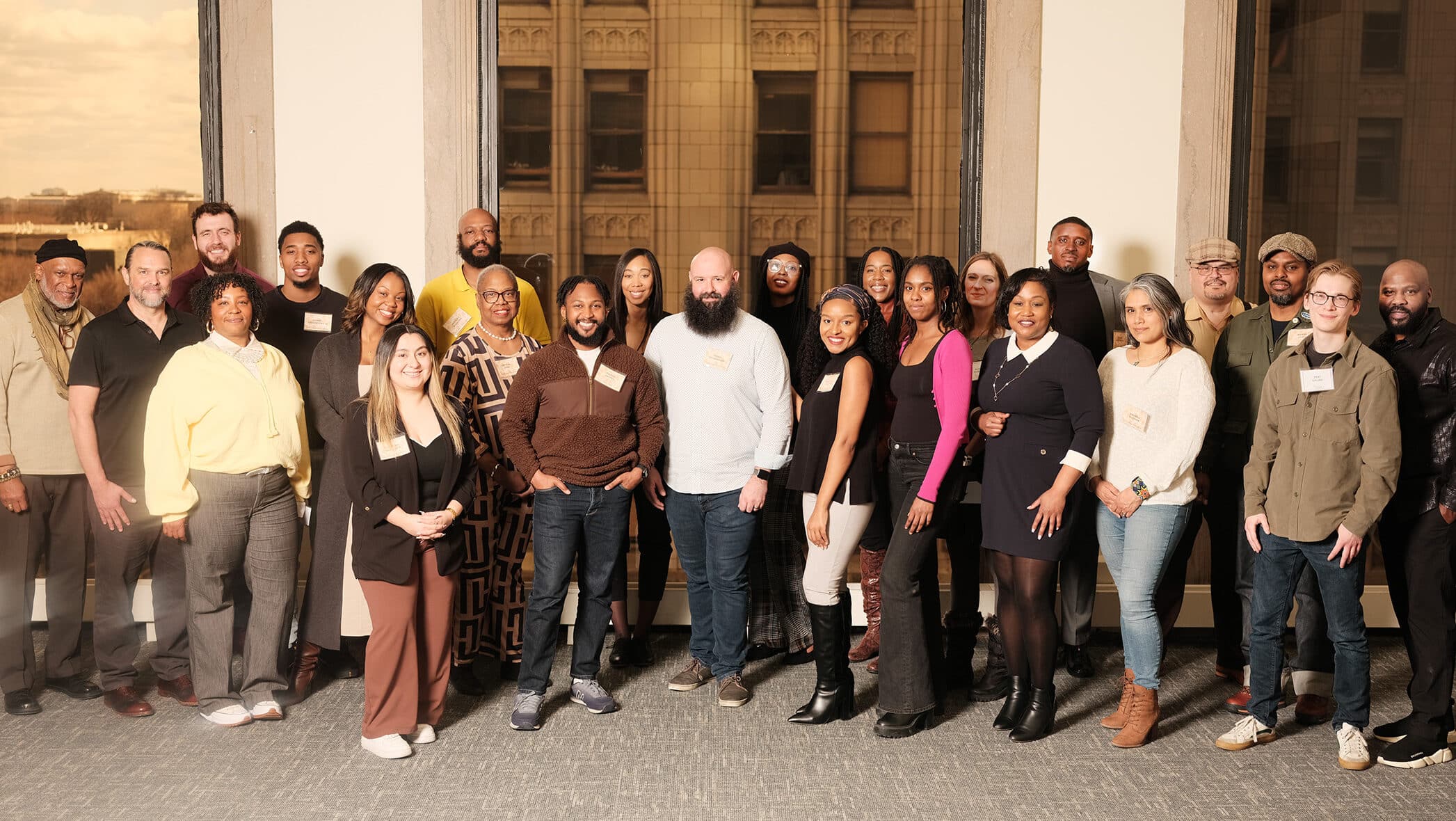
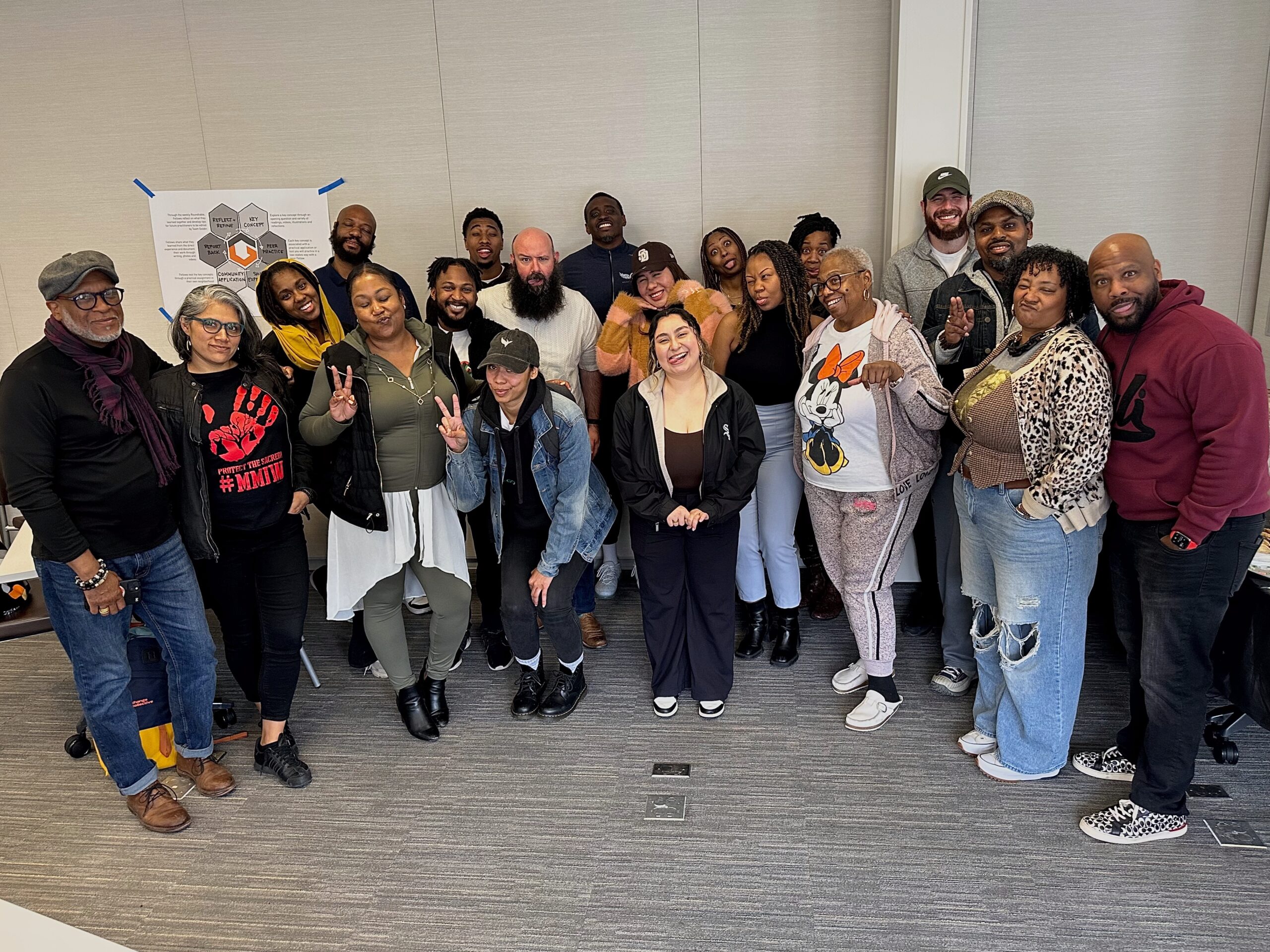
On March 20, 2025, nineteen leaders walked into the 2025 Chicago Peace Fellows cohort as strangers. They came from different neighborhoods across Chicago, carrying diverse callings, responsibilities, and ways of showing up for their communities. By November 20, those same nineteen leaders would stand together as a community of practice marked by trust, shared language, and collective responsibility.
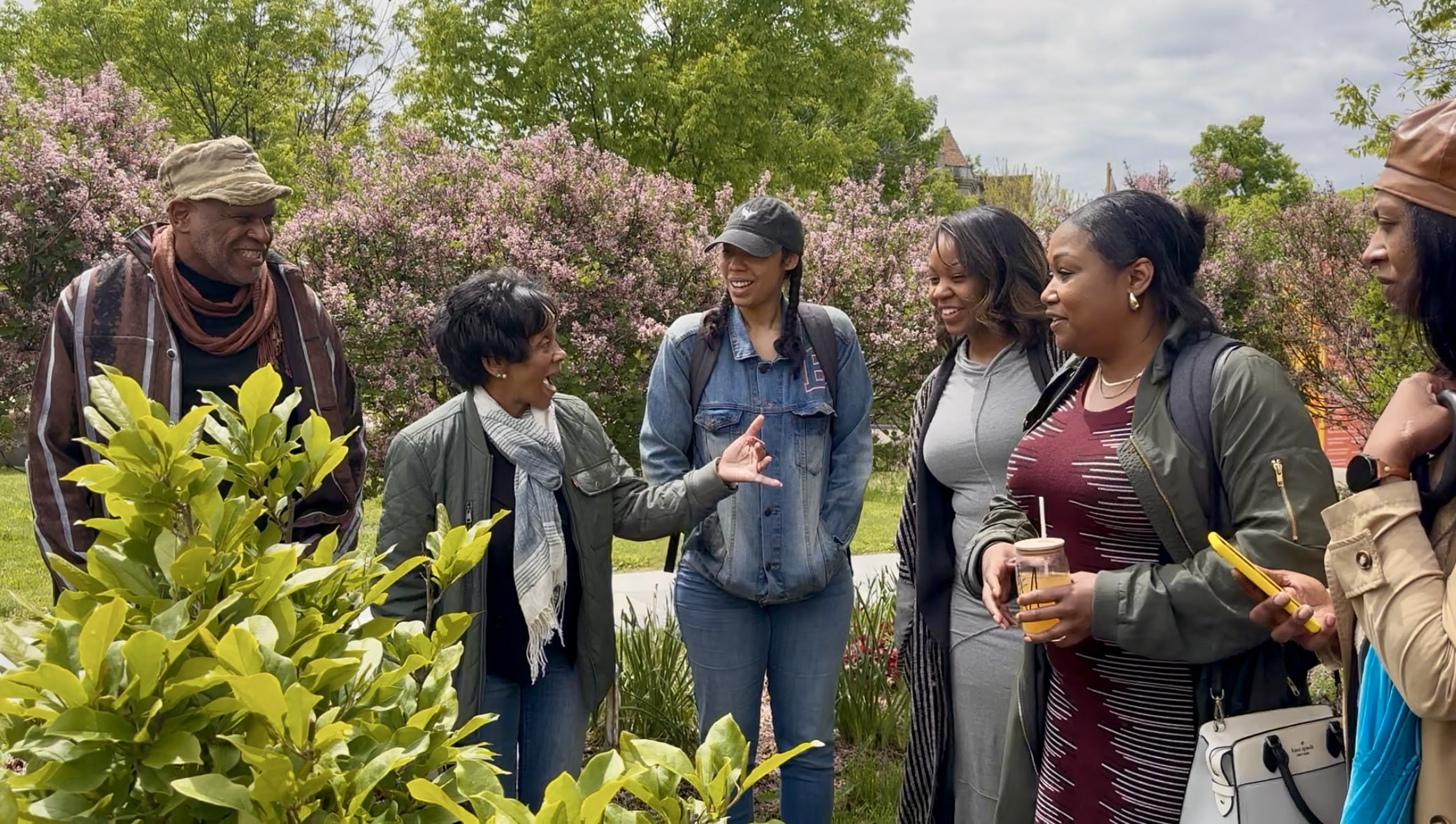
What unfolded across those 33 Thursdays was more than a traditional classroom experience, it was learning rooted in building relationships with other practitioners. Through participating in the 2025 Chicago Peace Fellows program, the Fellows visited sites that drive community-centered change, learned an asset based framework for understanding community development, and practiced thinking about the issues their communities face through a system-based lens.
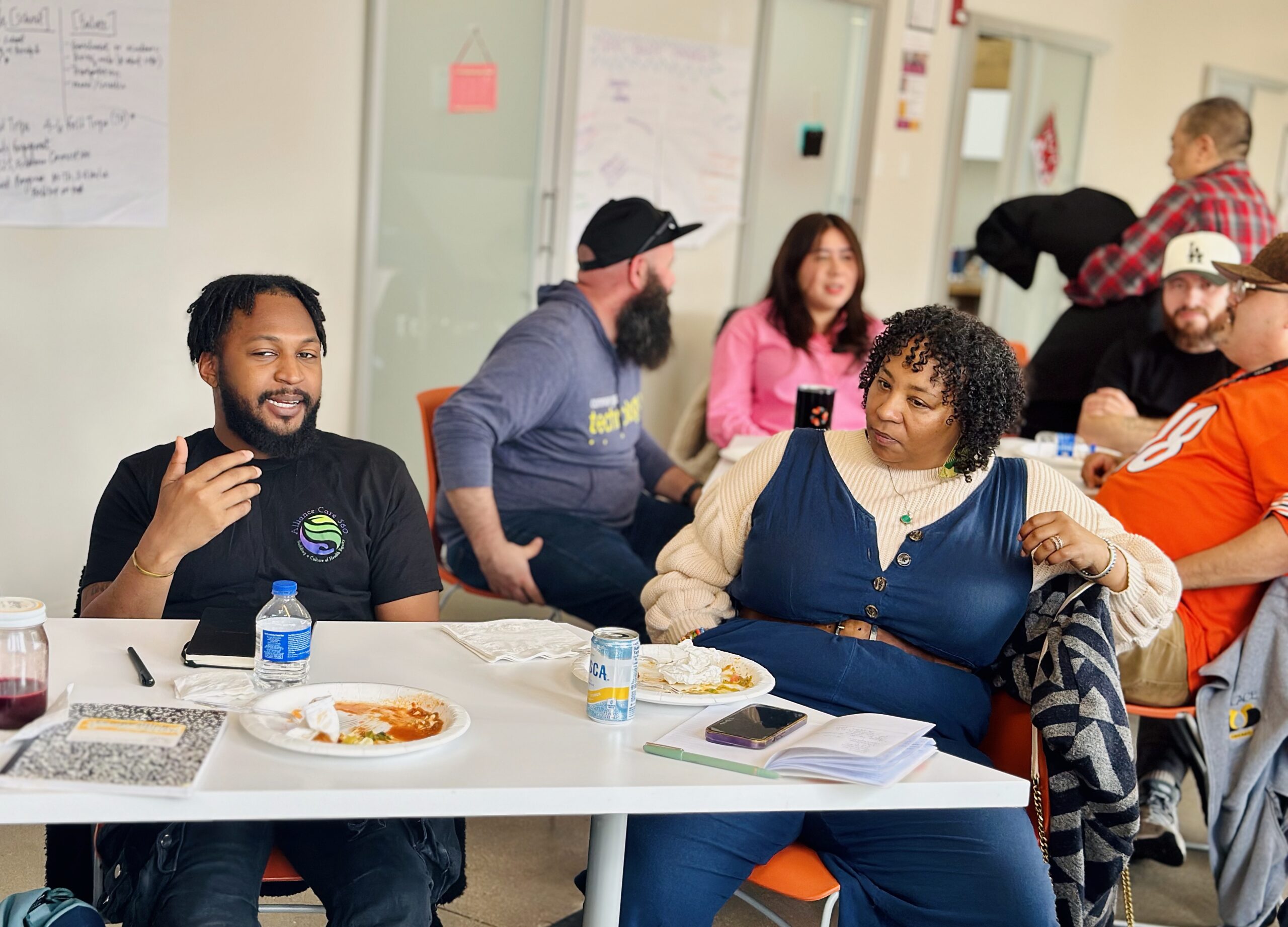
Learning happened in motion across our city, at sites rich with stories, where community-centered leadership, deep collaboration, and peace-building are ingrained in their culture and daily work. The Fellows met on a weekly basis and were hosted by community partners including: Chicago Cultural Center, Imagine Englewood IF, Enlace Chicago, Stone Temple Baptist Church, Breakthrough Urban Ministries, Self-Help Credit Union, and the Chicago Bee Library. Each gathering layered understanding how leadership shows up in community, how systems shape opportunity, and how stories determine who is seen and valued.
Early on, the fellowship introduced a grounding posture through Asset-Based Community Development. Instead of starting with what communities lack, Fellows practiced beginning with what is already present: skills, relationships, creativity, and resilience. Abundance became not just a concept, but a way of seeing, inviting, and working with neighbors and partners.
As the weeks unfolded, systems thinking helped the group widen their lens, examining how history, policy, power, and identity intersect with daily realities. Fellows learned the model of Appreciative Inquiry, which slowed the pace just enough to ask better questions about what could be, followed by collective design of a desired future state. Workshops on narrative change pressed the group to tell fuller, more authentic stories about their communities and about themselves.
Within that shared practice, individual gifts surfaced and strengthened the collective. Christina Rice reminded the group that narrative is power that how stories are told determines who is seen and valued. Wanakee Trask modeled intergenerational leadership grounded in respect and presence, showing how wisdom moves when space is made for relationships. Mercedes Pickett brought clarity to conversations about health, data, and healing, grounding vision in lived reality. Guillermo Niño demonstrated that peace is sustained not through spectacle, but through consistency, showing up again and again with care and intention. Through it all, one truth anchored the year spoken plainly and practiced daily. As LoLita Canady named it: “Our communities are not empty but abundant.”
Director Michael Henderson reflected on that early turning point:
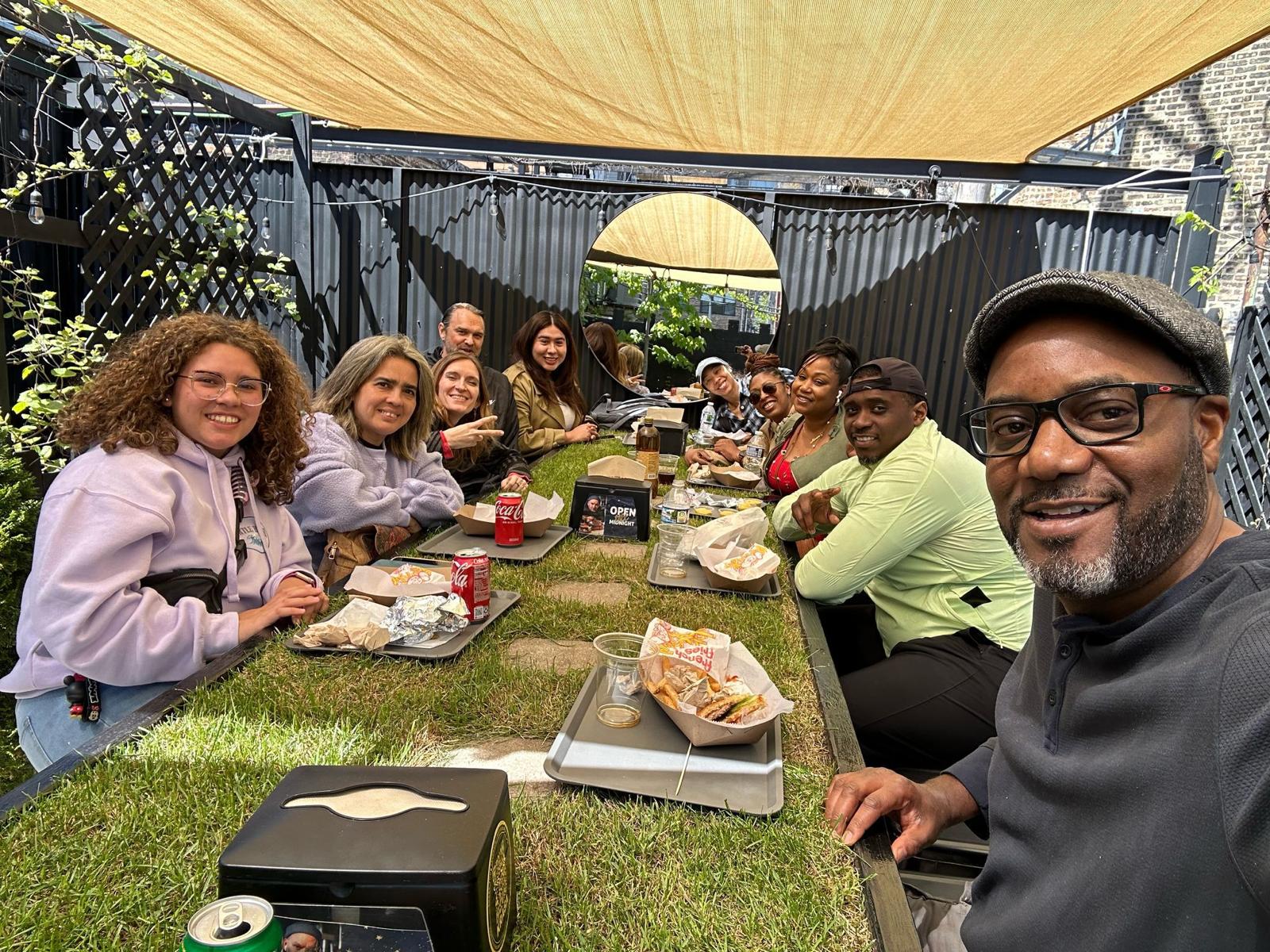
On March 20, no one knew that 19 strangers would become family.
That sense of family became unmistakable as the fellowship moved from reflection into shared action. Over the summer, the cohort co-designed three collaborative peacebuilding projects: The Dinner Party, The Moving Mosaic, and Reflect, Relax, Retreat. These projects were expressions of everything the group had been practicing: collaboration over competition, shared ownership, and a commitment to honoring people as much as outcomes.
"I was profoundly impressed," reflects CPF Facilitator and ABCD Institute Steward April Doner, "by the years of refined, robust practice each of the Fellows brought to this experience, by the generous ways in which they shared their knowledge, connections and time with one another, their flexibility and openness to learning new tools and techniques, and perhaps most of all, by the powerful spirit of love and faith that move each of their unique work."
What the work revealed was profound and straightforward: sustainability grows when people are given space to be whole and when restoration, creativity, and connection are treated as essential to the work itself rather than distractions from it.
By the time November arrived, something had shifted. Leadership was no longer held tightly; it was held together. Trust didn’t need to be announced; it lived in how decisions were made, how ideas were shared, and how people stood together.
Looking back on the journey, Michael Henderson named what the year had become:
I came in to help connect people, and I left feeling deeply connected. It never felt like a cohort, it felt like family.
That is the story of 33 Thursdays. Not a checklist of workshops. Not a timeline of sessions completed. But nineteen leaders who learned week by week how to move together with intention, humility, and care. By November 20, they didn’t just know each other’s work. They knew each other.
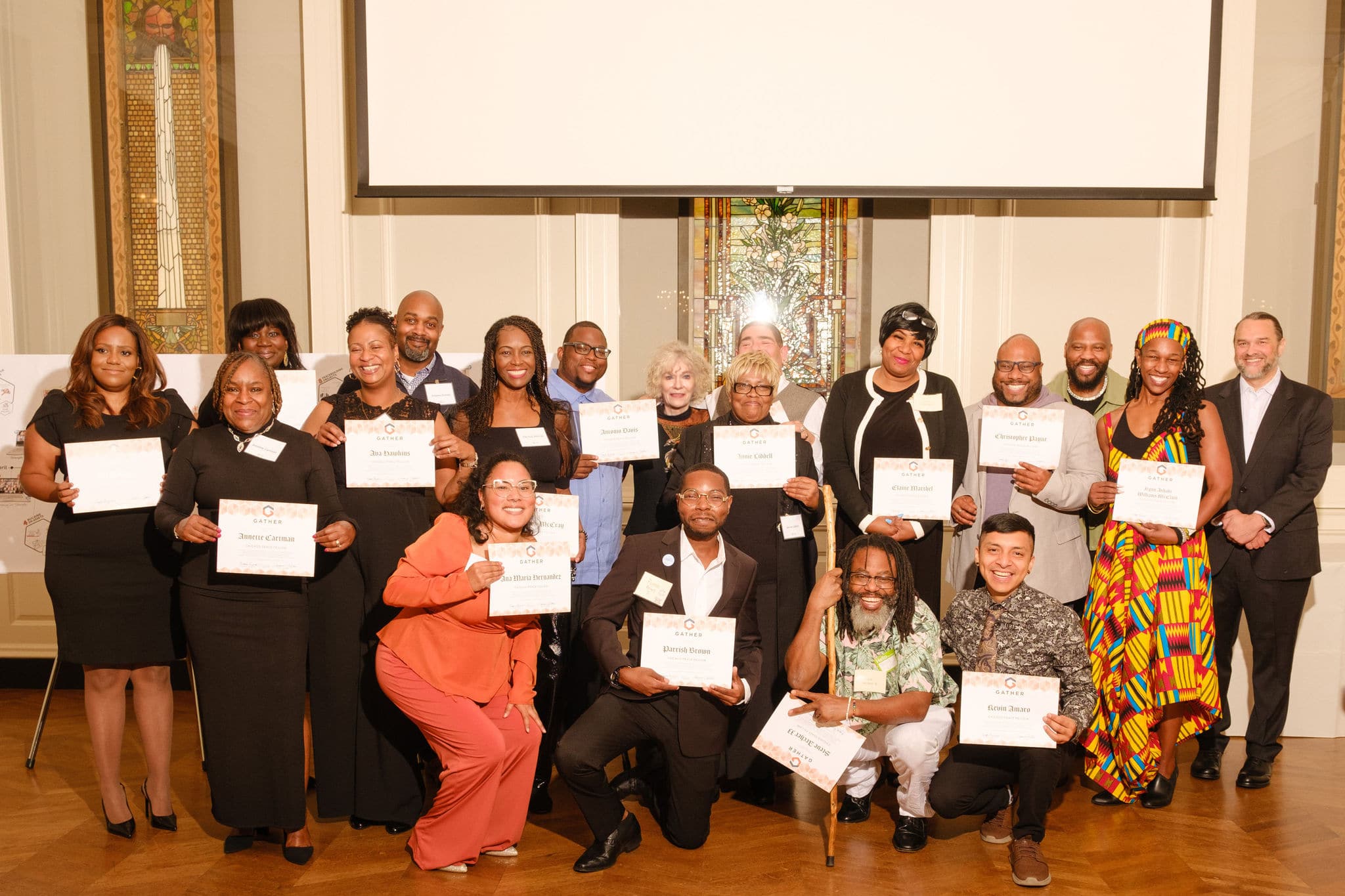
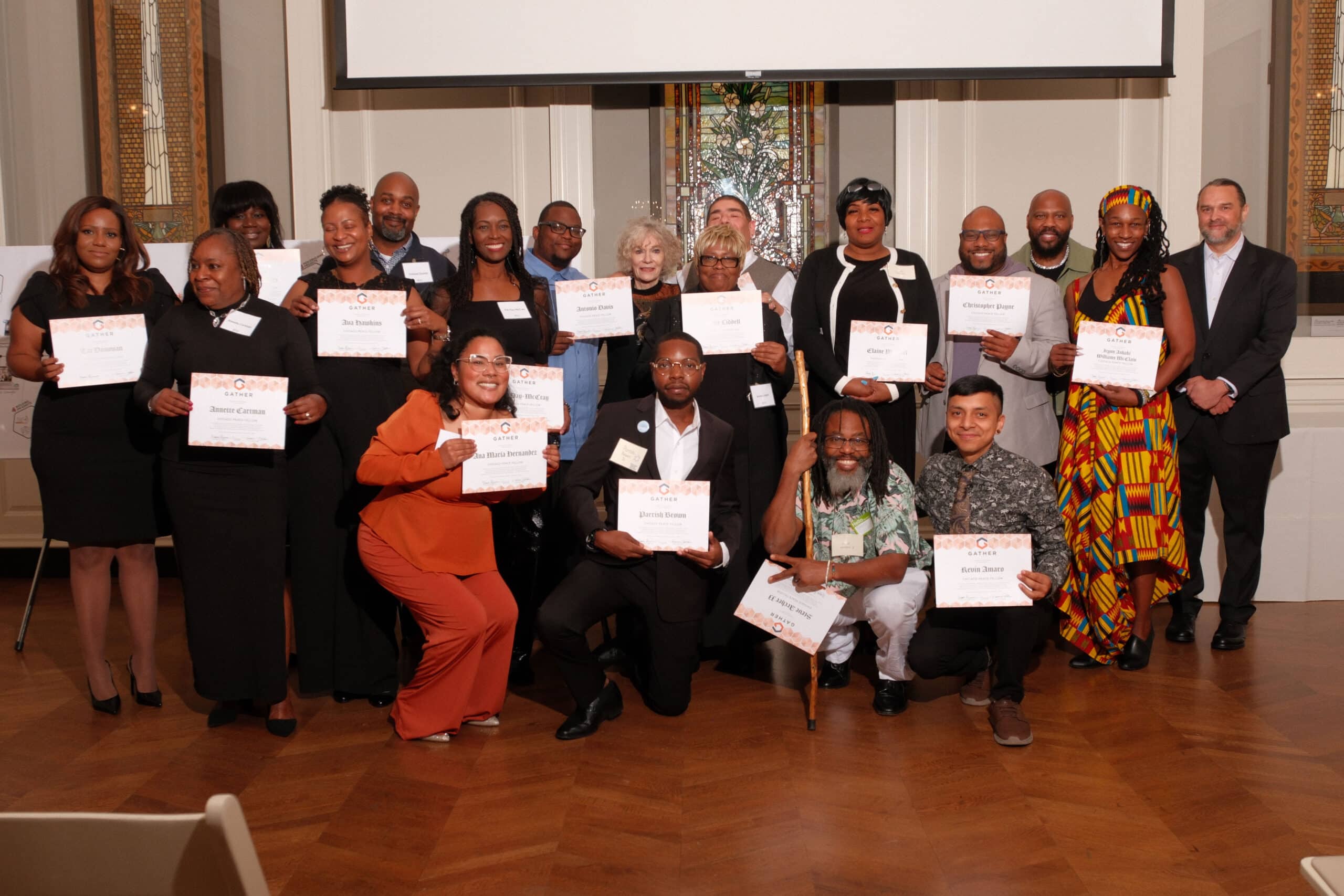
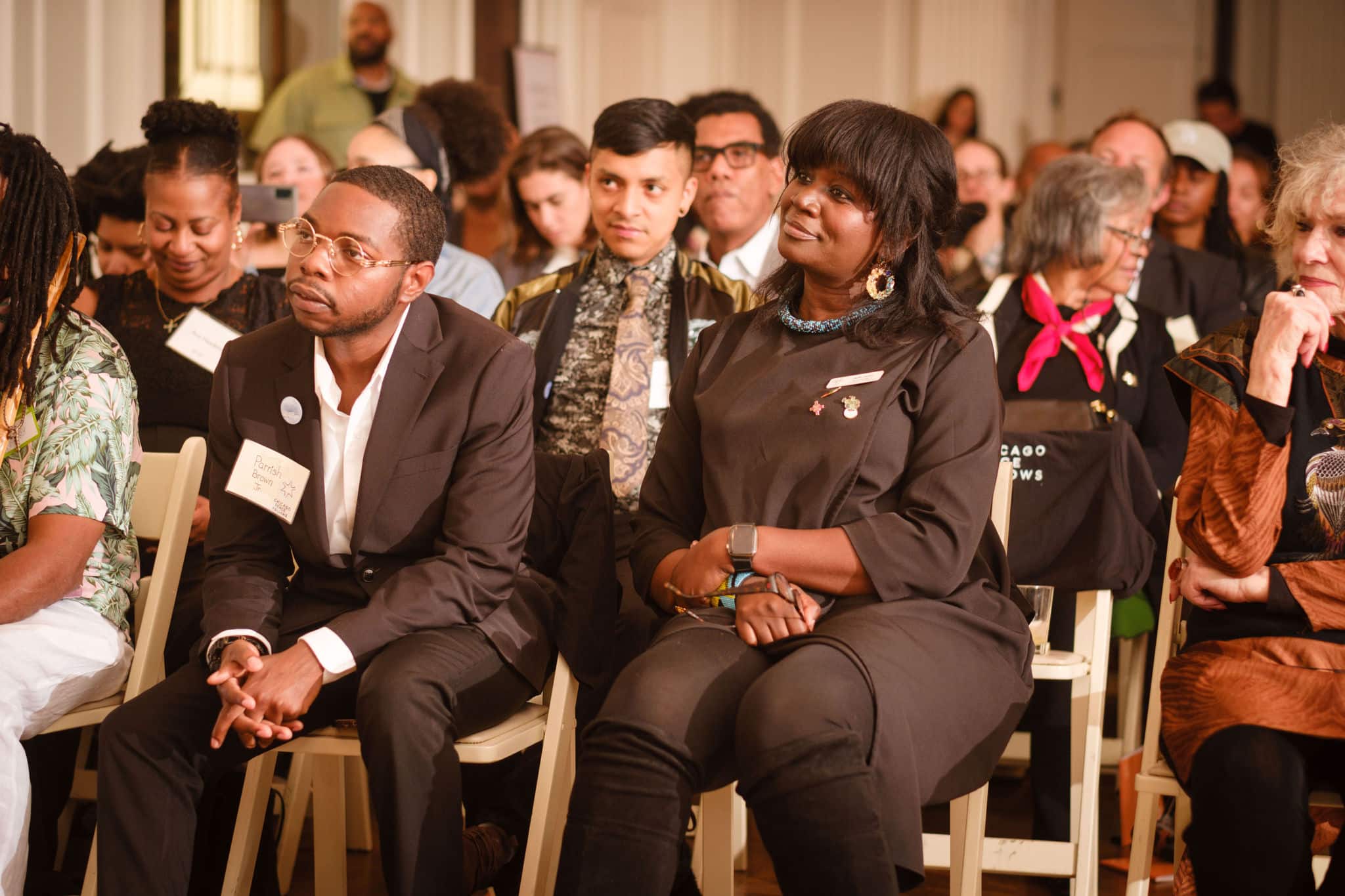
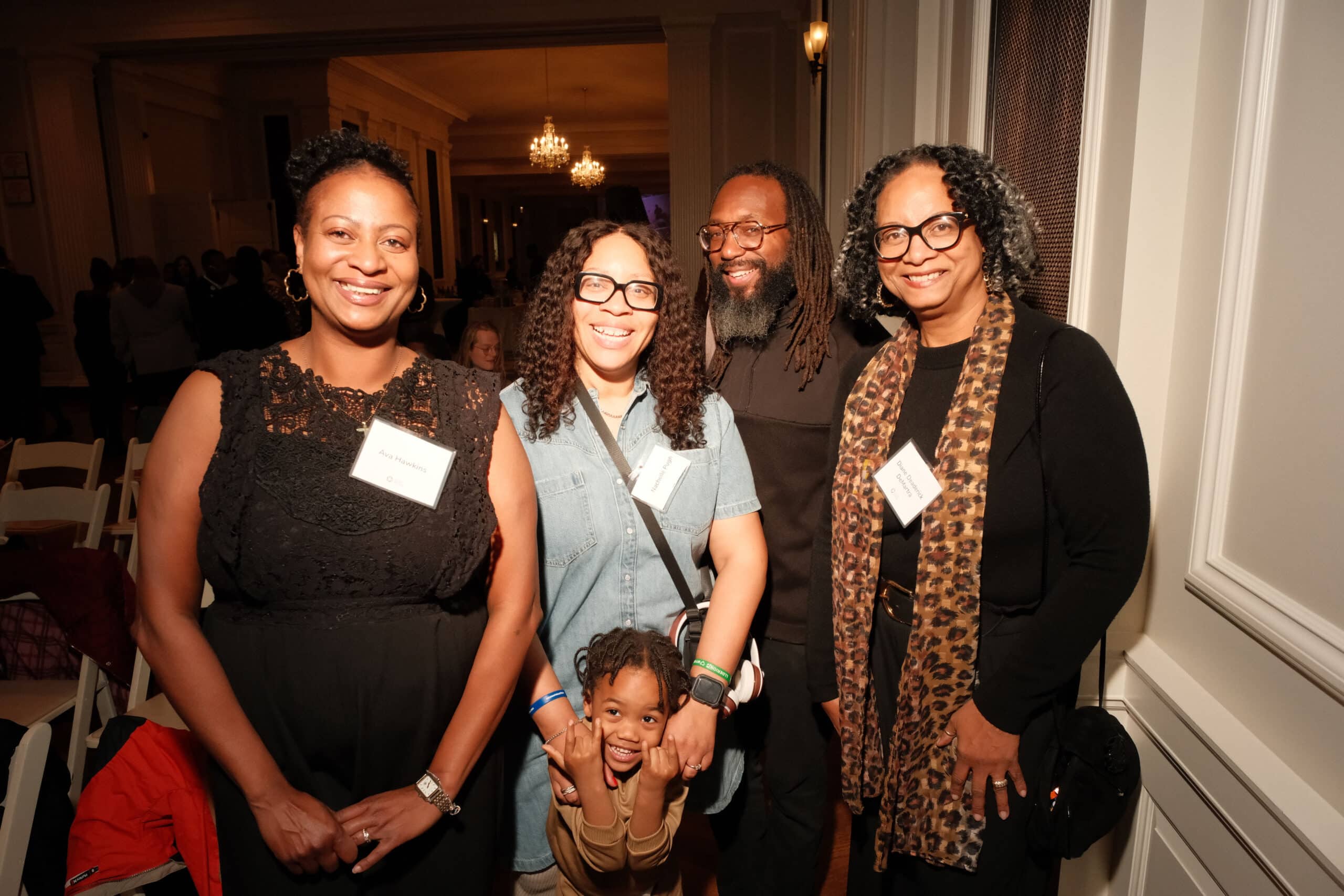
On November 20, 2025, nineteen grassroots leaders from across the city of Chicago gathered to mark a shared milestone: the graduation of the seventh cohort of the Chicago Peace Fellows. The Chicago History Museum was filled with leaders, partners, friends, and family members who had walked alongside the Fellows throughout the year, as well as those witnessing their journey for the first time.
At the center of the evening stood nineteen grassroots leaders, not as individuals completing a program, but as a community shaped by shared practice.
The 2025 Chicago Peace Fellows journey began on March 20 and unfolded over more than thirty Thursdays. What started as a cohort quickly evolved into a community of practice. Each week, Fellows gathered across the city to meet and learn from other grassroots practitioners. Throughout the year they learned how Imagine Englewood if creates safe spaces for youth, met with outreach workers at Enlace Chicago, and walked in the legacy of Dr. Martin Luther King Jr. at Stone Temple Baptist Church. Week after week, they returned to the GATHER platform for insights and conversations that challenged assumptions, sharpened purpose, and deepened their relationships.
As guests entered the museum that evening, the stage was set. A visual timeline illuminated the entrance, tracing the Fellows’ journey from their first gathering to their final steps toward graduation. It served as a reminder that peace had been built deliberately week by week, conversation by conversation.
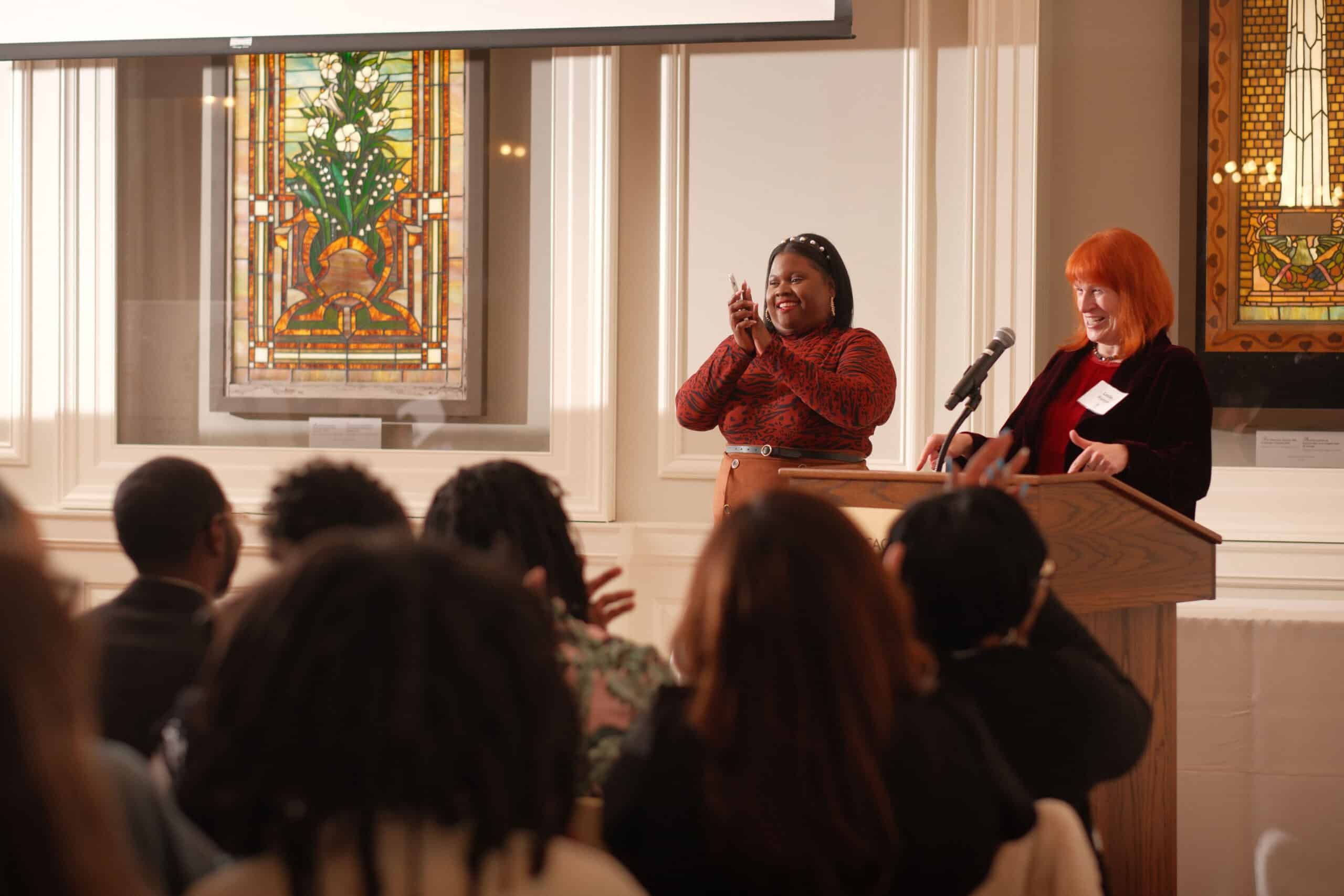
The ceremony opened with welcome remarks from Michael Henderson and April Doner, who invited the room to reflect on what this cohort had cultivated: connection over competition, collaboration without ego, and leadership rooted in community.
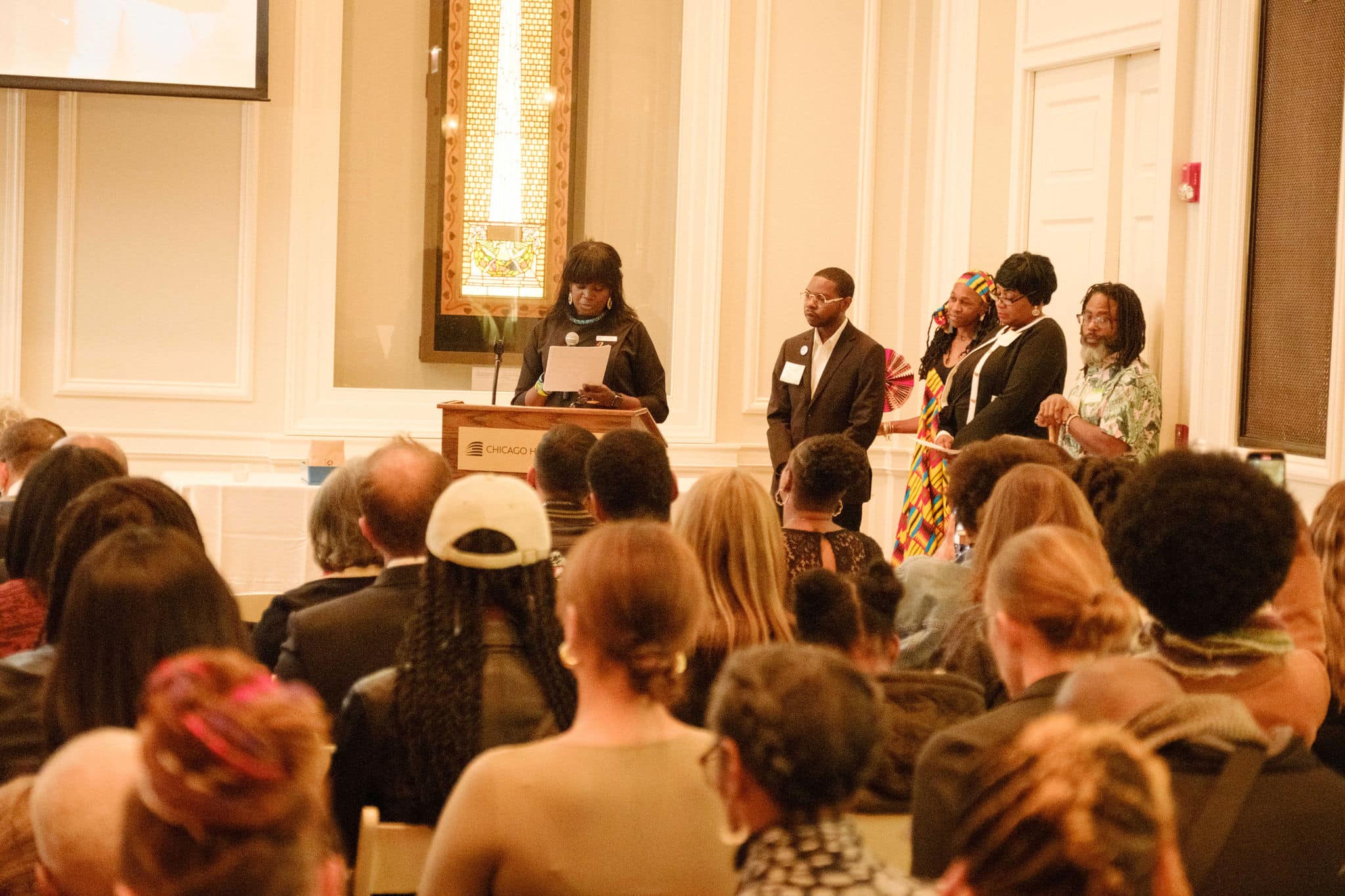
Graduates Christina Rice and Wanakee Trask then welcomed the room and framed the evening’s guiding theme: The Power of Collaboration. In a moment marked by uncertainty and division beyond the museum walls, Wankee reminded the audience that “collective power and mutual aid are not theories; they are lived practices”.
Christina echoed:
Throughout the fellowship, Asset-Based Community Development was not treated as an abstract model, but as something embodied week after week, grounded in abundance rather than deficit.
The 2025 Chicago Peace Fellows Graduation: Peace in Motion
The graduation program unfolded through three interwoven themes, each reflecting peace in motion across Chicago.
Community-Driven Social Change highlighted how investment in people creates sustainable transformation. Fellows shared how they built from what already exists: skills, culture, hospitality, and joy, inviting partners into a shared vision for citywide impact. Tyrell Shoemaker reminded the audience, “Across Chicago, the Peace Fellows model shows that when you invest in people, lasting transformation follows. By building on community strengths and strengthening collaboration, Fellows are creating sustainable impact.”
Connections & Testimonies brought the heart of the fellowship to the stage. Darius Caffey opened with deep gratitude for the journey they shared over these last 33 weeks: “To be in community with all of you, leaders, organizers, artists, healers, and bridge-builders, has been nothing short of transformational.” LoLita Canady offered words that became an anchor for the evening: “Everything we need is already in the room. Our communities are not empty but abundant.” She named how Fellows were actively using their personal, professional, and social networks: designing spaces for healing, transforming existing spaces into community hubs, connecting with community members through street outreach, and empowering young people to see themselves as leaders and storytellers.
Call to Action made a collective invitation in the room. Fellows invited partners, friends, funders, and family to contribute to participation through mapping out the assets in their communities. This is the heart of the fellowship, an embodied reminder that peace is a collective effort. This call to peace, impelled Fellows, partners, friends, and family to continue in transformation through a shared commitment.
Honoring Legacy, Sustaining the Work
The evening also held space for gratitude, remembrance, and transition. Former Peace Fellows Director Burrell Poe joined the gathering to honor and remember Bertha Purnell, a Peace Fellow alumni who passed in 2025. After losing a child to gun violence, Bertha founded Mothers on a Mission 28, an organization that supported mothers in her community who also lost their children to violence. Her life and work continue to shape the city of Chicago and Burrell called on the community to honor and celebrate her life.
A historic moment followed as Yusuph Masanja, a Facilitator of the Goldin Institute’s Global Fellows, formally welcomed the 2025 cohort into the Global Alumni Network, connecting them to more than 200 fellows across over 50 countries. This signaled to the Fellows that their work in Chicago is part of a much larger global movement, where grassroots leaders build meaningful partnerships rooted in their knowledge, skills and assets.
Finally, John Zeigler, Director of Community Partnerships, shared reflections on the Mutual Aid Collaborative, naming it as the long-term heartbeat of the Chicago Peace Fellows. The Mutual Aid Collaborative is more than an alumni network, but an active collective where Fellows remain connected, support one another across neighborhoods, strengthen leadership through shared learning and peer coaching, and pool skills and resources to build real community projects long after graduation.
The Next Chapter of Peacebuilding
As certificates were presented and the cohort gathered for a final photo, the shared understanding crystallized that this was not an ending, it was a call to continue the work
Though co-founder Diane Goldin could not be present in the room, her presence was unmistakably felt. Through a heartfelt letter, she welcomed and commissioned the cohort, honoring their journey while calling them forward into leadership, responsibility, and care. Her words combined gratitude and vision, blessing what has been built and inviting the Fellows into what comes next.
This cohort holds a unique place in the program's history. They are the seventh cohort of the Chicago Peace Fellows, and the final cohort to graduate under the Goldin Institute. Their graduation marked a turning point, as the Chicago Peace Fellows prepared to step forward as an independent organization within the city of Chicago, rooted in the legacy of the Goldin Institute and committed to shaping the next chapter of peacebuilding. The room understood it clearly: something was being handed forward.
Reflecting on the year, Michael Henderson shared that leading the 2025 cohort reinforced a simple truth: the power of peace lies in people willing to show up for one another, consistently and creatively. Over the course of eight months, the cohort did more than complete a fellowship, they developed a way of working together that Chicago needs.
The evening closed with a question that lingered beyond the museum walls:
How do you build peace in your community?
For the 2025 Chicago Peace Fellows, the answer is already taking shape in relationships strengthened, narratives rewritten, and communities choosing connection over isolation.
Stories of migration are the heartbeat of Chicago.
On a cold night in 2022, several buses pulled into Chicago, arriving from the Southern border, carrying exhausted families from Venezuela. They arrived with little more than the clothes on their backs, stepping into a city that promised sanctuary but also one that's still wrestling with what that word truly means.
This moment is not new for Chicago. The city has always been built on stories of migration. A landing ground for people in search of safety, work, and belonging. Long before the gleaming skyscrapers, there was Jean Baptiste Point du Sable, a Haitian of African descent, who became the city’s first non-Indigenous settler in the late 1770s or 1780s. After the Great Fire in 1871, waves of European immigrants rebuilt the city brick by brick.
In the early 20th century, thousands of African Americans journeyed north during the Great Migration, carrying with them the music, faith, and culture that transformed Chicago. Chinatown rose amid exclusionary laws; Latino communities laid roots through labor and struggle; and now, new arrivals from Central America, Venezuela, and Ukraine are adding their stories to the city’s living tapestry.
It is these often-overlooked histories that come to life in the new video series Chicago: Built by All, presented by the Westside Media Project and led by Chicago Peace Fellow Frank Latin.
A City Seen Through Stories of Migration
Each episode focuses on a pivotal era, not just through the lens of policy or statistics, but through the stories of the people who lived it. What emerges is a portrait of Chicago as it truly is: not one city, but many – layered, contested, resilient.
For Frank, the driving purpose was clear: to highlight that Chicago has always been a destination for those in search of a better life, whether it be immigrants from abroad or African-Americans seeking refuge from the harsh realities of southern life in America. “So much of the city’s identity—the neighborhoods, the culture, even the food comes from people who arrived here with nothing but their hopes,” he explains. “We wanted to show that these stories are not separate from Chicago’s story. They are Chicago’s story.”
Asking harder questions
Chicago has long declared itself a Sanctuary City. But sanctuary is not a static promise; it is a practice, and one that can be as fragile as it is aspirational. By tracing these histories, the series asks a question that resonates far beyond Chicago’s borders:
What does it mean to be a sanctuary in 2025 and who gets to belong?
More than a history lesson
Through its mix of history, personal testimony, and urgent questioning, Chicago: Built by All becomes more than a video series. It is an invitation: to listen, to reflect, and to join the conversation about what kind of city, and what kind of world, we want to build together.
This project is made possible through the generous support of the Walder Foundation. The Westside Media Project extends its gratitude for their commitment to uplifting community voices and ensuring these stories are told.
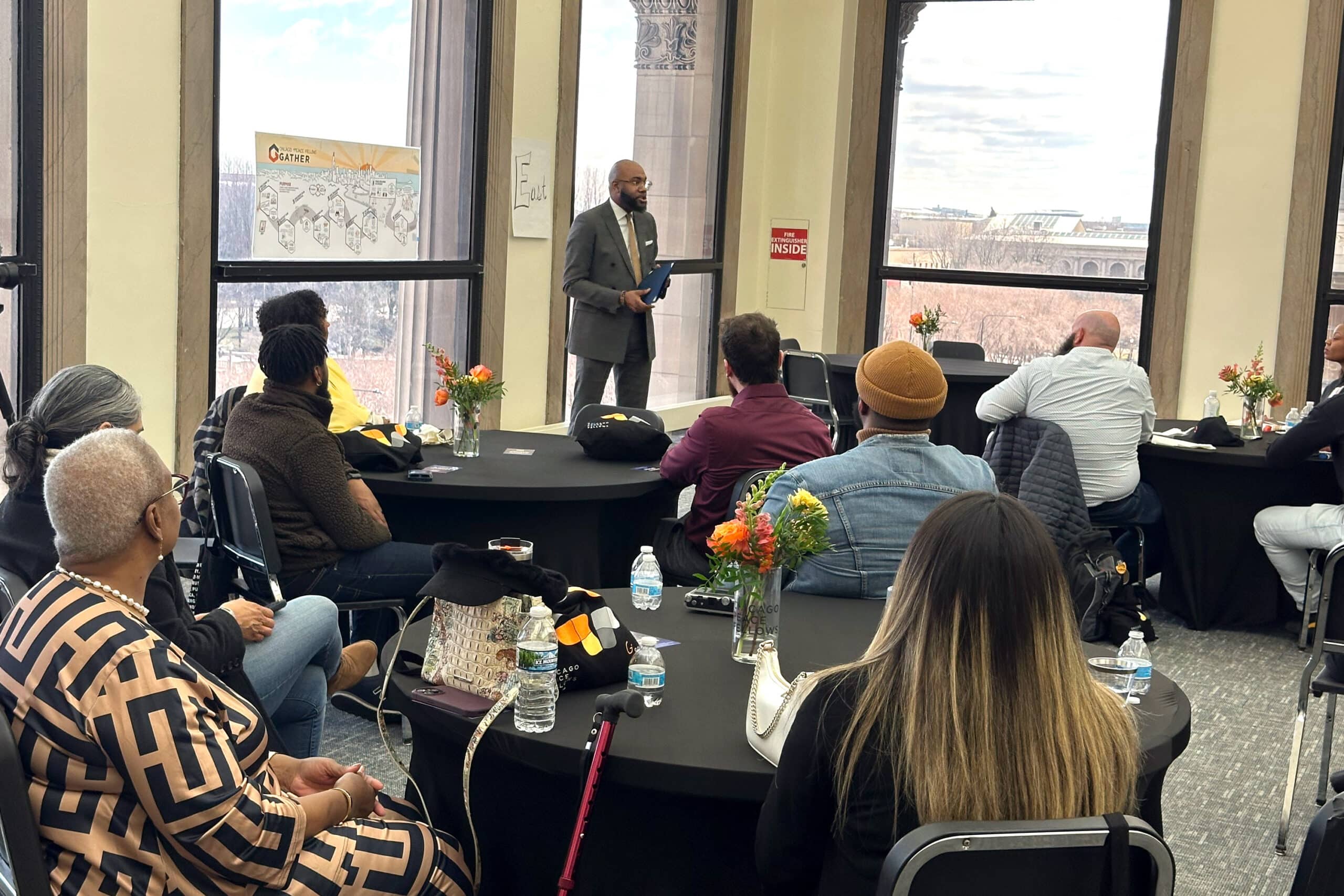
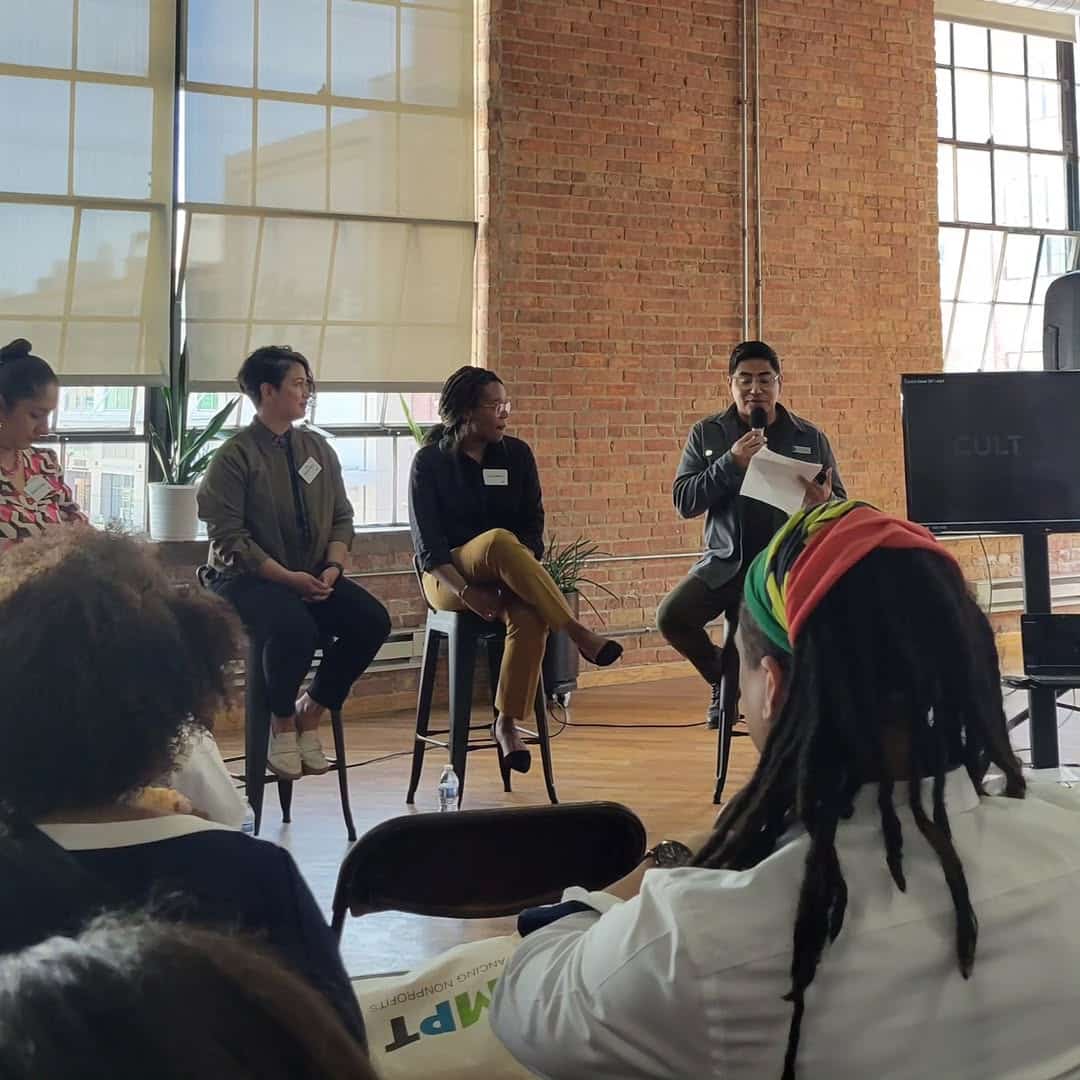
On March 20, the 2025 Chicago Peace Fellows met for the first time at the Chicago Cultural Center. Founded in 2019 in collaboration with the Partnership for Safe and Peaceful Communities, the Chicago Peace Fellows program is the only leadership development program that is built by and for grassroots community leaders on the South and West sides of Chicago.
The 2025 Peace Fellows Cohort will be the seventh group of Chicago Peace Fellows, following in the footsteps of over 130 alumni and joining a global network of Alumni that is nearing 300 grassroots leaders in over 50 countries. The 2025 Peace Fellows cohort consists of 20 activists, artists, outreach workers, and community leaders representing 15 community areas on the South and West sides of Chicago.
2025 Chicago Peace Fellows are Welcomed by Funders, Alumni, and the Mayor’s Office
The 2025 Peace Fellows were welcomed by Jai Jones of the Partnership for Safe and Peaceful Communities and Anita Alexander of the Dreihaus Foundation, who spoke to the lasting influence of the Peace Fellows program and its ability to provide tools and connections for grassroots leaders. Alexander noted the importance of the program as a way of making connections at a grassroots level: “You all are the building blocks that make neighborhoods safer and better for their communities”
“Grassroots organizations don’t talk about their communities from a place of deficit, but from a place of asset.”
-Jai Jones
In addition to a welcome from funders of the program, the 2025 class was also welcomed by Billy Evans, the Chief of Faith Engagement at Chicago’s Office of the Mayor. Evans presented a proclamation from Mayor Brandon Johnson that commended and honored the Chicago Peace Fellows and the Goldin Institute for “their unwavering commitment to fostering peace and equity.” The proclamation also emphasizes that “the work of the Chicago Peace Fellows aligns with the City of Chicago’s broader commitment to ensuring public safety, investing in communities, and supporting grassroots leadership as key pillars of long-term peace and prosperity.”
The 2025 Peace Fellows Cohort were also welcomed by two alumni: Jonathan Johnson, a 2023 Peace Fellow alumnus, and Ashaki Williams, a 2024 Peace Fellow alumna. Both Jonathan and Ashaki emphasized the importance of community and collaboration in the program. Jonathan began his speech by reflecting on the larger network that he gained through the Peace Fellows program: “You will be exposed and connected to like minded individuals and you will be counted on to represent not only yourself, but the Chicago Peace Fellows as a whole…You will be brought into a family. Think about the program as enlarging your territory, don’t go into this only concerned about your block or your nonprofit.”
Ashaki took a grassroots approach to her speech, beginning by reading responses from her cohort when she asked “What does it mean to be a Fellow?”. After reading quotes from her cohort that discussed the triumphs and obstacles they faced, she concluded: “You can be vulnerable in this program, you don’t have to hold up yourself and everyone else in this program.”
Building Relationships and Learning Together
Peace Fellows previewed the GATHER curriculum that they would be participating in over the course of their Fellowship. GATHER is both a mobile platform for shared learning and a curriculum for people who want to build on the talents of their neighbors and the assets of their communities to make real and lasting change. Members of the Goldin Institute emphasized that the Peace Fellows curriculum is not like a typical high school or college class, but is designed for Fellows to gain new tools and networks for their efforts at community engagement.
Through the GATHER platform, the 2025 Peace Fellows will engage in a 36-week course of intensive shared learning as well as group projects, culminating in a graduation event in November 2025. The curriculum has been designed in collaboration with grassroots leaders, based on their practical knowledge and hard-earned wisdom.
At their first meeting, the new Peace Fellows also had time to get to know one another and explore the diverse interests, skill sets, and leadership styles of their peers. The launch provided opportunities for Fellows to speak with one another about their interests and work as well as explore their different leadership styles.
As a way to begin building relationships, the Fellows engaged in a brief, energizing activity known as “Uncommon Commonalities,” led by Chicago Peace Fellows Facilitator April Doner. In this process, pairs of people have only 5 minutes to uncover the most interesting thing they have in common, then shared their learnings back to the larger group.
The Fellows explored their strengths and needs as leaders through a leadership compass activity, where they grouped themselves in four categories derived from the cardinal directions, using different sides of the room to gather. Led by Michael Henderson, Director of the Chicago Peace Fellows, the Leadership Compass activity energized the room as Fellows identified their leadership styles and how those styles shape their approach to community work. Whether bold and action-oriented or reflective and relationship-driven, every leadership type brought something valuable to the table. The room filled with conversation and connection, and “aha” moments were shared as each group reflected on how to best work together across diverse ways of thinking, communicating, and collaborating.
As the 2025 Peace Fellows progress through their curriculum, they will continue to build on the strength of their diversity through a series of collaborative GATHER based workshops. The 2025 cohort is made up of motivated problem-solvers and community-builders and their strengths will be shared. After working through the GATHER curriculum, the Peace Fellows will use the new techniques and concepts they’ve learned on community-oriented summer projects. The diverse skills of the Peace Fellows will go on to form projects that aim to have a continuing impact preventing violence and remediating its consequences.
Over the past six years, the Chicago Peace Fellows program has built a powerful network of 120 community leaders and peace activists dedicated to transforming neighborhoods most affected by violence in Chicago. The 2024 cohort, active from March to November, came together to learn, collaborate, and co-create solutions for lasting peace. Through interactive workshops, events, and roundtable discussions, they forged a shared vision and laid the groundwork for meaningful partnerships and collective action.
The 2024 cohort of Chicago Peace Fellows consisted of 19 grassroots leaders, who were selected from a pool of over 64 applicants recruited in collaboration with the Chicago Fund for Safe and Peaceful Communities. This diverse cohort of Peace Fellows primarily live, work and serve in the community areas most impacted by violence on the city’s South and West sides. Neighborhoods represented by the 2024 class include: Austin, Englewood, North Lawndale, South Lawndale, Roseland, South Shore, and Washington Park.
Throughout the program, Peace Fellows participated in GATHER, an online learning platform designed to support shared learning and collaboration between a community of practice. The 2024 GATHER curriculum unfolded over nine chapters, each organized around a key question or theme critical to peace building in Chicago. Complementing the content on the GATHER platform, the Peace Fellows also participated in 22 workshops, events and roundtable discussions over the course of the six month fellowship.
Creating a Community of Practice
The beginning of the Peace Fellows curriculum focused on building a community of practice by bringing the cohort together to determine their own principles and practices for their shared learning community. This began as the program launched on March 14, at the Chicago Cultural Center, where Fellows came together to meet with the Goldin Institute team and members of the philanthropic community. At the launch event, Fellows shared their reasons for joining the program and discussed their own leadership styles. Together they shared insights about how to best support one another throughout the journey ahead.
“I want to grow and build with other Chicagoans that are passionate about issues like gun violence prevention, community, and peace building.”
After the launch in March, Fellows focused on getting to know their peers and communities and reflected on their own strengths. The GATHER program emphasizes the importance of community leadership, with chapters focusing on how to “Actively Remove Barriers” and “Discover Our Strengths.” Alongside these chapters, Fellows took part in a workshop at Bethel New Life, where they learned about the public health model of violence reduction and explored how they can support existing efforts to address violence in their communities. In April, a virtual workshop on skills exploration was held by the Goldin Institute’s Director of the Mutual Aid Collaborative, Burrell Poe, who guided Fellows on self-reflection and developing an appreciation for the gifts of others in their cohort.
Building on Assets
As Fellows took stock of their gifts and explored approaches to violence prevention in the city, they were introduced to the methodology of Asset-Based Community Development (ABCD). Asset-Based Community Development does not ignore challenges or structural inequalities, but seeks to complement the analysis of what needs to be fixed with a robust exploration of “what’s working” or what can be built on in communities.
On April 25th, Chicago Peace Fellows met at the Logan Square Library to learn about asset mapping from the Goldin Institute’s Senior Director of Programs, John Zeigler. As part of the asset mapping workshop, Fellows mapped their locations on a large Chicago map, finding relationships, and identifying ways to collaborate across the city. The process of making an Asset Map can be just as important as the map itself, with participants thinking together about what strengths and unique identities fortify their neighborhoods. As part of the GATHER curriculum, Fellows were asked to make maps of their own neighborhoods as a starting place for conversations with community members. In this process, each Fellow went on a “community walk” with neighbors, identifying spaces, associations, and institutions where connections could be made to improve their communities.
“A community asset is all about capturing what makes a place special, the things that show the bonds between its people and celebrating its unique history and culture.”
Fellows delved deeper into Asset-Based Community Development by engaging in a roundtable with the 2024 Goldin Global Fellows in May. Each Chicago Peace Fellow was paired with a Global Peace Fellow to explore asset-building through meaningful dialogue. They practiced asking engaging questions to help communities recognize and activate their gifts in pursuit of shared goals. The discussion also emphasized why best principles often hold greater value than best practices when adapting successful solutions from other communities.
“It was so wonderful for us to be able to meet others in the Global Fellowship Program and learn about the work that they do. I was paired with Faisal Ilyas, who is the Executive Director of Peace Hope Pakistan, and it was just an instant connection: we shared the same faith, the same passion, the same desire for peace, for change.”
-Aniki Coates, 2024 Chicago Peace Fellow and Senior Manager of Horticulture & Wellness at Bethel New Life
In May, Fellows also met with alumni of the Chicago Peace Fellows program across two workshops that explored tools for violence prevention and peacebuilding. On May 16, Fellows met with 2020 alumnus Damen Morris, the Senior Director of Violence Prevention at Breakthrough Urban Ministries in Garfield Park. At this workshop, Fellows saw a variety of services provided by Breakthrough and learned about street outreach as a tool for violence reduction. On May 30, Fellows met with 2019 alumna Gloria Smith, the Executive Director of the Black Star Project in Bronzeville. In this workshop, Fellows learned of ways to differentiate between leadership and authority, ways to remove barriers for participation in neighborhoods, and strategies for convening the right people to add to your team.
“The highlight of working with the Chicago Peace Fellows has been working with the leaders, different meeting venues, meeting the other Fellows and learning about their work.”
After four months of intensive learning and trust building, the Fellows put the principles of community driven social change into practice by collaboratively planning and executing seven Summer Projects. Throughout their fellowship, the Chicago Peace Fellows had a series of planning meetings where they set the scope of their Summer Projects: determining which beneficiaries to target, choosing potential community partners, and drafting a program. The only guidelines for the group were that projects had to be collaborative, with more than two Fellows working together, and designed to have an impact or meet a significant milestone that summer.
After determining projects and team members, the Fellows engaged in participatory grant making, voting on how to spend a shared pool of $21,375 across various projects. Projects included a Block Club Development workshop, a Summer Cool Down festival in Washington Park, a Summer Block Club Celebration hosted by the Adams Block Club, 5500, a Back to School Carnival, a Little Library Workshop, a Re-entry Workshop focusing on Black and Brown unity, and the Fall Into Family Wellness Festival. Several of the projects will continue long after graduation, a testament to the ongoing commitment of the Fellows.
The penultimate chapter of the Chicago Peace Fellows experience focused on the “Power of Storytelling.” On September 19th, Chicago Peace Fellows attended a storytelling workshop at Free Street Theater. In this workshop, Fellows learned about the different elements of effective storytelling and the power of crafting compelling narratives. Fellows also had a chance to practice sharing their stories and receiving feedback, which helped Fellows reflect on the message they would share at their graduation.
Finally, October and November prepared Fellows for their graduation. Fellows used this time to reflect on the critical moments from their entire learning journey and spent time planning together how they wanted to celebrate their graduation event. The 2024 class of Chicago Peace Fellows graduated on November 7 at the Chicago History Museum. Upon graduating, the 2024 Chicago Peace Fellows now join the Goldin Institute’s Global Alumni Network which consists of 232 Fellows from over 50 countries around the world.
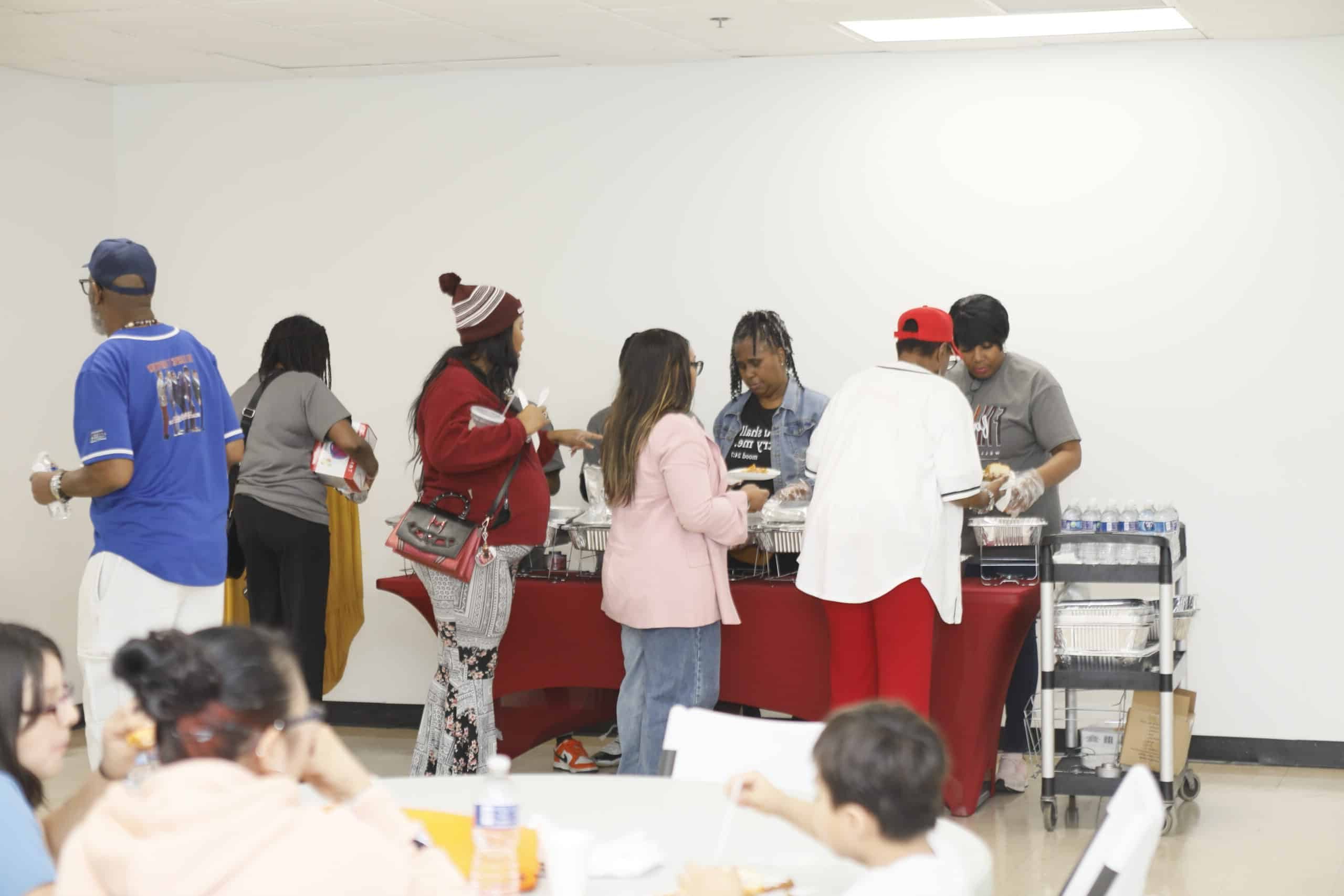
On November 16, the 2024 Chicago Peace Fellows hosted the vibrant Fall Into Family Wellness Festival at JLM Abundant Life on the West Side of Chicago. With over 100 families in attendance and more than 30 organizations offering essential resources and services, the event was a dynamic celebration of community well-being. As part of their Summer Projects, the Chicago Peace Fellows crafted this festival to connect families from marginalized and underserved communities with services and resources that promote wellness. The vision and execution were led by 2024 Chicago Peace Fellows Ariel DeNey Rainey, Aniki Coates, Pat Day-McCray, and Tai Donovan, making it an unforgettable day of empowerment and support.
The Fall into Family Wellness Festival was part of this series of Summer Projects organized and hosted by the 2024 Chicago Peace Fellows to apply lessons learned through the GATHER curriculum to build peace within their communities. Throughout their fellowship, the Chicago Peace Fellows had a series of planning meetings where they set the scope of their Summer Projects: determining which beneficiaries to target, choosing potential community partners, and drafting a program. After determining projects and team members, the Peace Fellows voted on how to spend a shared stipend across various projects and then met on their own to plan. The Fall Into Family Wellness Festival was one of the projects that the 2024 Fellows voted to fund, alongside six other shared projects.
Addressing Ten Dimensions of Wellness
When initially planning the project, the group chose to borrow the concept of the “ten dimensions of wellness” from Bethel New Life, where 2024 Chicago Peace Fellow Aniki Coates acts as the Senior Manager of Horticulture and Wellness. Bethel provides comprehensive care that aims to address ten dimensions of wellness: intellectual, spiritual, physical, civic, environmental, social, occupational, emotional, financial, and creative. Aniki elaborates: “Our mission [at Bethel] is to improve wellness outcomes and increase life expectancy. So, I thought those 10 dimensions would be a good base for the Peace Fellows to build on in the Wellness Festival.”
Other Peace Fellows liked the idea of planning the festival around the ten dimensions of wellness because they were initially interested in finding a theme for the festival that addressed the social determinants of health. Social determinants are the conditions in which people are born, grow, live, work, and age that affect their health outcomes. Tai Donovan described their role in the planning process:
“We spoke about the social determinants that deeply impact communities of color and underserved populations, recognizing how they drive the disparities we see today. Our goal was to find a theme that meaningfully addressed these factors at their core. When Aniki mentioned Bethel’s focus on the dimensions of wellness, it immediately resonated with us. By centering our efforts on these dimensions, we weren’t just acknowledging social determinants—we were actively targeting and addressing them in a way that fosters real change.”
Bringing Together a Community of Wellness
After deciding on a framework for planning, the Peace Fellows got to work seeking out different resources and services for the festival. In particular, they prioritized reaching out to people in the Peace Fellows network as an opportunity to build stronger relationships within an existing community. Current Peace Fellows and alumni were invited to table at the festival, hold presentations, and showcase services.
Participating organizations held trainings, provided free resources, and offered entertainment for the families who came. Since the ten dimensions of wellness take a holistic approach to health, there were a wide variety of offerings. Participants could visit stations where they could discuss mental health and the stigma around getting treatment, there was a bounce house where children could play and be supervised, and vendors set up tables where individuals could sign up for health care services or learn about nutrition.
Peace Fellows also stepped up to showcase their own talents and services. Bethel provided a dedicated station where individuals could craft bath bombs, promoting self-care and fostering conversations about mental health, Dr. Abdullah Pratt, founder of the organization MedCEEP and a 2023 Chicago Peace Fellow, held a Stop the Bleed and CPR training, and Parrish Brown, a 2024 Chicago Peace Fellow, conducted a healing circle/grief therapy session. One of the highlights for the families who came were four pallets of free food that were provided by the Kindness Campaign, a connection that was brought by 2024 Chicago Peace Fellow, Ariel DeNey Rainey.
“We successfully engaged our target audience of families, with children, parents, aunts, uncles, and extended relatives showing up in impressive numbers.”
- Aniki Coates
The festival also served the vendors and providers, who emphasized their gratitude at the opportunity to serve the community and connect with new organizations. During the course of the event, Tai Donovan notes, “5 or 6 vendors came and thanked us for letting them be a part of this. They felt like this was such a great event and they were feeling blessed just to be there.” Over the course of the event resources were provided not only to participants, but also between vendors and service providers. At one point in the festival, Tai reports, the DJ took a break to refresh her CPR skills at a training provided by Dr. Pratt.
“There was something about this event that brought everyone together in a really meaningful way. I don’t think I’ve ever felt more connected to my fellow Chicago Peace Fellows than I did that day. Being able to engage with the community, talk to people, and connect with the vendors made it even more special. Some of the vendors have even reached out since, saying how much the event meant to them and asking to be involved in anything we do in the future. It was an experience that really left a lasting impact.”
-Tai Donovan
In the future, the Peace Fellows involved in the project would like to host an annual wellness festival. They envision the festival growing in size, with more organizations getting involved and a longer planning stage being established. They also would like to hold the festival in the summer, so that they can take advantage of outdoor resources, such as Bethel’s garden. Aniki Coates sees the festival as expanding to target an even broader inter-generational population in the future. She believes that intentional intergenerational gatherings not only bridge the generational divide, but build social cohesion and trust, reduce isolation, and foster community advocacy to combat systemic challenges. She especially sees a need for this social cohesion in the present moment: “The community is yearning for connection”.
The Fall Into Family Wellness Festival received donations from:
On November 7, 2024, nineteen grassroots leaders from across Chicago gathered at the Chicago History Museum and celebrated their achievements as the sixth cohort to graduate from the Chicago Peace Fellows program. The graduation ceremony was collaboratively planned by the 2024 Chicago Peace Fellows to highlight their experiences, learning and accomplishments and was themed around the idea of “Transforming Together”.
The Chicago Peace Fellows program spanned from March to November and included workshops, partnership meetings, and discussions that helped Peace Fellows to deepen their shared understanding of grassroots leadership, violence prevention, and asset-based community development. Peace Fellows attended workshops at community organizations such as Free Street Theatre, Breakthrough Ministries, and The Institute for Non-Violence Chicago. Throughout the program, Peace Fellows participated in the GATHER, a platform and curriculum built around collaborative learning and action for communities of practice. This shared learning experience culminated in a series of summer projects organized and hosted by the 2024 Chicago Peace Fellows which applied lessons learned through the Peace Fellows program to build peace within their communities.
The Sixth Chicago Peace Fellows Graduation
This was the fourth year that the Chicago Peace Fellows graduation has been held at the Chicago History Museum. As fellows, friends, and family members entered the balcony gallery they saw the halls lined with portraits of each of the 2024 Chicago Peace Fellows. In the main hall, they also saw a timeline of the fellows’ journey that broke down each step of the Chicago Peace Fellows program. After taking time to enjoy food, drink, music, and laughter, fellows gathered to begin the graduation ceremony.
The graduation ceremony was opened by the Goldin Institute’s Senior Director of Programs John Zeigler, who called the fellows into community and took a moment to honor our ancestors. John took a moment to honor John McKnight in particular, who co-founded the Asset-Based Community Development Institute alongside Jody Kretzmann at DePaul University. Asset-Based Community Development is a central focus of the GATHER curriculum and models community change on building up assets and resources that already exist within neighborhoods.
Michael Henderson, Director of the Chicago Peace Fellows, followed John Zeigler by recapping highlights from the 2024 Chicago Peace Fellows Program and then introducing four groups of fellows. The groups organized around the theme of “Transforming Together” and each took a separate sub-theme to reflect on their experiences as Peace Fellows: “Growth”, “Perspective”, “Fellowship”, and “The Power of One”.
How Fellows Transformed Together
The “Growth” group consisted of Elaine Martel, Steve Archer II, Parish Brown, and Aniki Coates. They began their presentation with a quote used by Mexican activists in support of the Ayotzinapa 43: “They tried to bury us but they did not know we are seeds.” Each member of the group took time to reflect on how leadership can begin as something small and full of potential and can grow into something large and impactful.
The “Perspective” group consisted of Tai Donovan, Ava Hawkins, Kevin Amaro, Anthony Jones, and Ariel Rainey. They shared a video where Peace Fellows from the 2024 class shared how their perspective on activism and change-making was expanded by the program. They focused in particular on how the program shifted their perspective from a problem based view to an asset-based approach.
“In medicine we are trained to zero in on problems, to diagnose what’s wrong and fix it, and that's the mindset I brought with me. I was ready to help fix what I saw as gaps or issues in our communities. But being a part of this program has truly changed the way I see things and my perspective. I’ve learned to focus on not just the challenges, but the strengths, resilience, and unique assets that our communities have.”
-Tai Donovan, 2024 Peace Fellow and Director of Operations at the Medical Careers Exposure and Emergency Preparedness Initiative
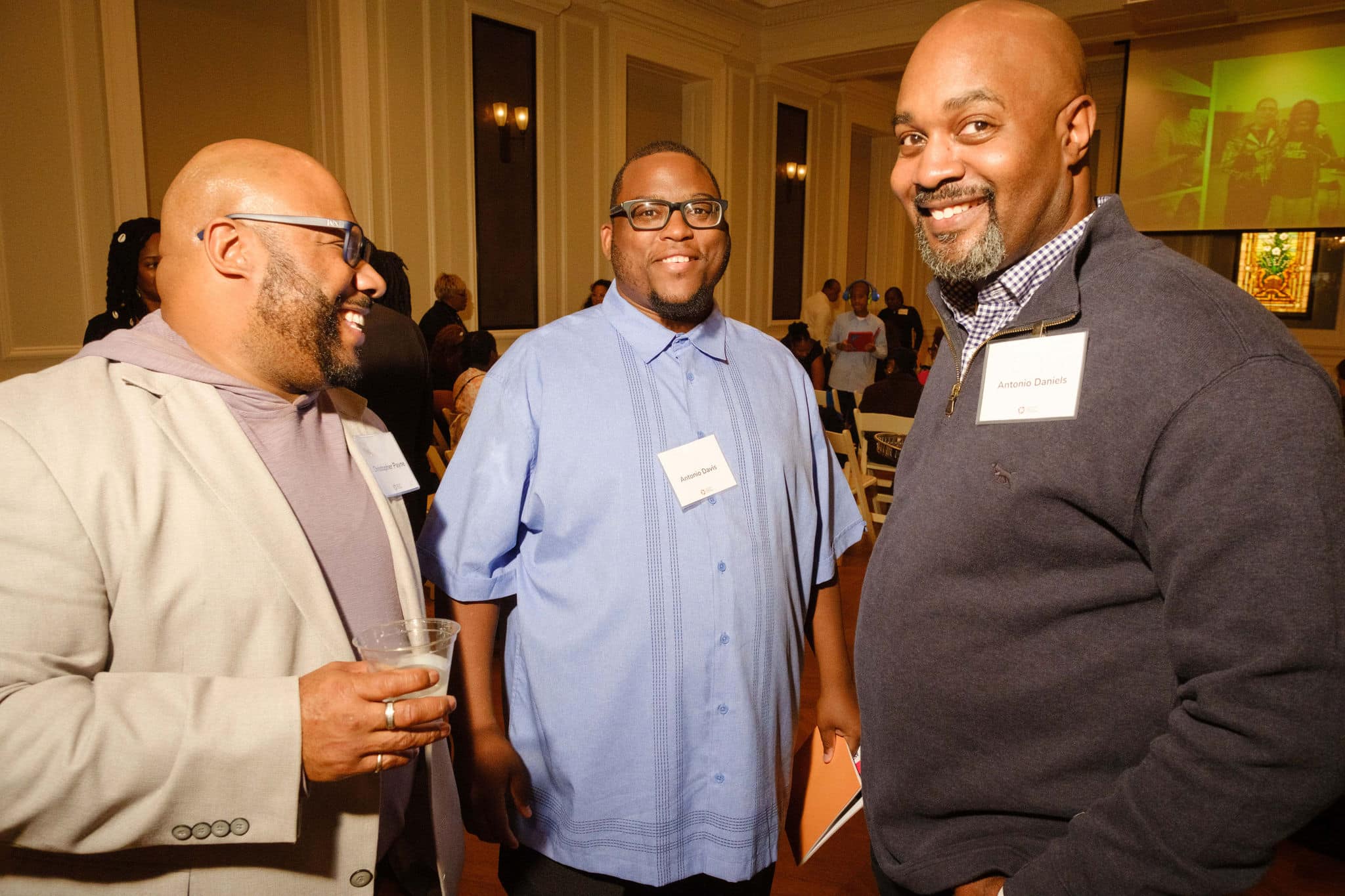
The “Fellowship” group consisted of Tony Daniels, Antonio Davis, Christopher Payne, Annette Cartman, and Riccadonna Chaidez. They presented a video that focused on how the Peace Fellows program provided opportunities for connection and collaboration between different community organizations. Throughout the video different Peace Fellows reflected workshops and events where they came together to make little libraries, learned about different block clubs throughout Chicago, went on community walks, and more.
“The Fellowship has supported my professional growth in a number of different ways. Outside of being in connection with other leaders throughout the city, it has also given me some great training tools and modules that have allowed me to walk through and really reexamine the kind of work I am doing as a block club president and how that affects peace in our community.”
-Tony Daniels, 2024 Peace Fellows and President of the Adams Block Club, 5500
As the 2024 Chicago Peace Fellows graduation ceremony came to a close, Travis Rejman, the Executive Director of the Goldin Institute welcomed two representatives of funders of the Peace Fellows program. Travis welcomed Jai Jones from the Partnership for Safe and Peaceful Communities and Leslie Ramyk from the Conant Family Foundation who both congratulated the 2024 class and praised the work of peace building that they had witnessed first-hand from the Peace Fellow community at large.
“You give me hope, but it’s so much more than that, you heal me, and I hope others feel the same way.”
-Jai Jones, Program Specialist at the Partnership for Safe and Peaceful Communities
The ceremony concluded with the handing out of graduation certificates. Michael Henderson called the Peace Fellows to receive their certificates and welcomed them as alumni of the program. Upon graduating, the 2024 Chicago Peace Fellows now join the Goldin Institute’s Global Alumni Network which consists of 232 Fellows from over 50 countries around the world.
In a retrospective, Michael reflects on his experience leading the 2024 class of Chicago Peace Fellows:
Leading the 2024 Chicago Peace Fellows cohort was a transformative experience, marking my first time in this role. As a proud alumnus from the 2020 class and having directed the mutual aid alumni in 2023, I stepped into this position with a mix of nerves, anxiety, and excitement.
Throughout the journey, I grappled with the fear of the unknown and often questioned whether I was doing things right or striving for perfection.
However, witnessing the cohort's perseverance and dedication was incredibly rewarding; seeing each group successfully completing their peace-building projects and the impact it made in the communities, had a profound impact on me. Hosting the inaugural Chicago and Global meeting, which reinforced our theme of shared learning and showcased the power of collaboration across communities made me a pride leader. Watching them graduate was truly amazing! I believe this journey not only allowed this year’s cohort participants to transform but has also significantly changed me; we have all grown through this experience, truly embodying this year’s graduating theme "Transforming Together."
-Michael Henderson, Director of the Chicago Peace Fellows and 2020 Chicago Peace Fellow
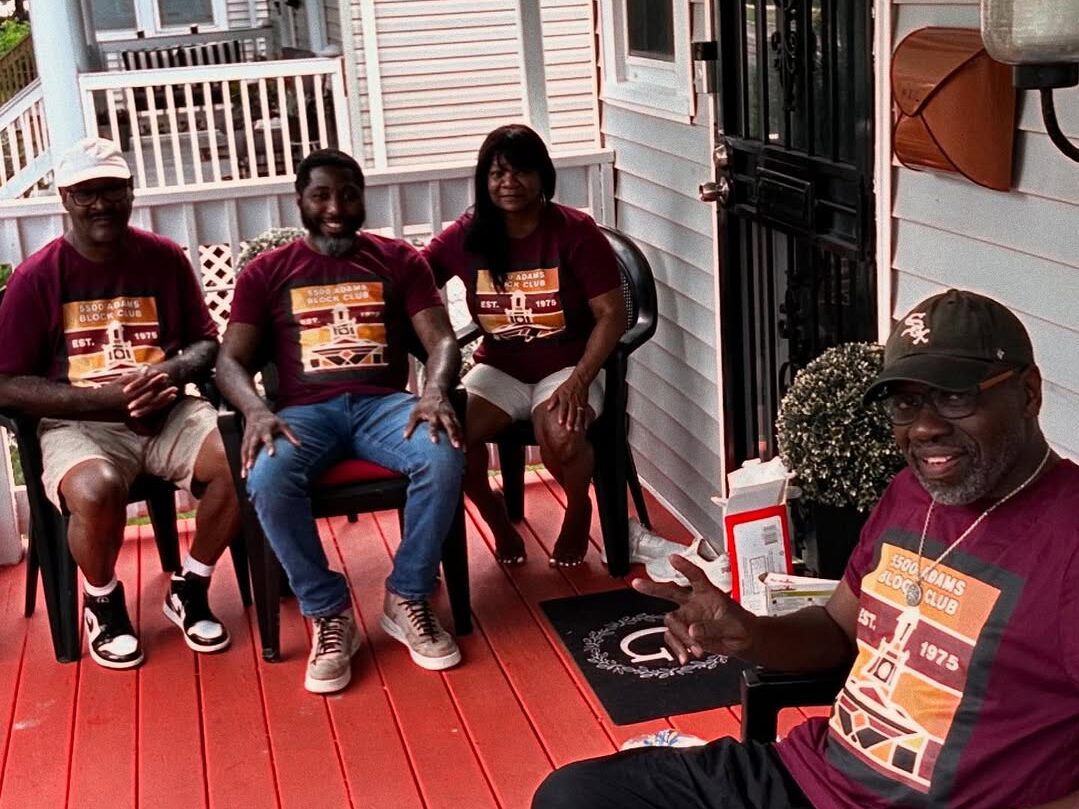
Antonio “Tony” Daniels has been the President of the Adams Block Club, 5500 since 2012. He moved to the neighborhood in 2009 and quickly got involved in the block club, which has been in existence since 1975. Recently, the Adams Block Club, 5500 has seen increases in community engagement and institutional support. This growth has allowed them to not only refine the annual block party they hold, but also to draw on the perspectives of community members to create and enact new visions for their neighborhood.
Tony’s position as the president of the Adams Block Club, 5500 is directly linked to their annual block party. In 2011, a block party wasn't yet organized and a neighbor asked Tony when it would be. Tony told her to ask Victor Polk, the president of the block club since its founding. The neighbor replied that Victor had told her to ask Tony, who Victor stated was now the block club’s president. Tony then went to Victor’s home: “So I went to his house with my wife and said ‘Hey we want to talk about this block club thing.’ and he said ‘Come one in!’ and goes to a backroom where he has all these papers and starts talking to us about this takeover plan. [...] Over the years, he’s helped me understand why he made that choice.”
Tony took over the Adams Block Club, 5500 during a time of decline. Many of the neighbors who formed the leadership of the block club had moved or were preparing to move and the Austin Community Bank which served the neighborhood had also closed. Tony explains: “From 2012 to the beginning of the pandemic, I was struggling to figure out what our block needed and who I could talk to and focused on building my own cabinet. [...] I really wanted to move away from just doing block parties.”
Expanding Beyond the Annual Block Party
In 2020, the COVID-19 Pandemic directed the Adams Block Club, 5500 towards planning programming outside of the usual annual block party. When the block party was cancelled, the block club turned towards figuring out other ways they could discern the needs of neighbors and serve the community. Tony elaborates:
“We had been working with My Block My Hood My City for about two years, they had started doing community clean ups on our block which was new and fresh and [they] invited volunteers to our block who engaged with our neighbors. This got our neighbors to really start thinking about beautification and the things they could contribute to the block, so this swell of energy started to come about. That partnership with My Block My Hood My City also turned into grants for us, which started with a monthly stipend of $100 that we used to keep things in storage. Then we were also able to get other grants that allowed us to purchase chairs and tables and tents, and things of that nature which came from [My Block My Hood My City] and the Chicago Fund for Safe and Peaceful Communities. Between those two we were able to do more on the block, which allowed other people to start vision-casting and thinking.”
Connecting with Neighbors to Build a Better Block
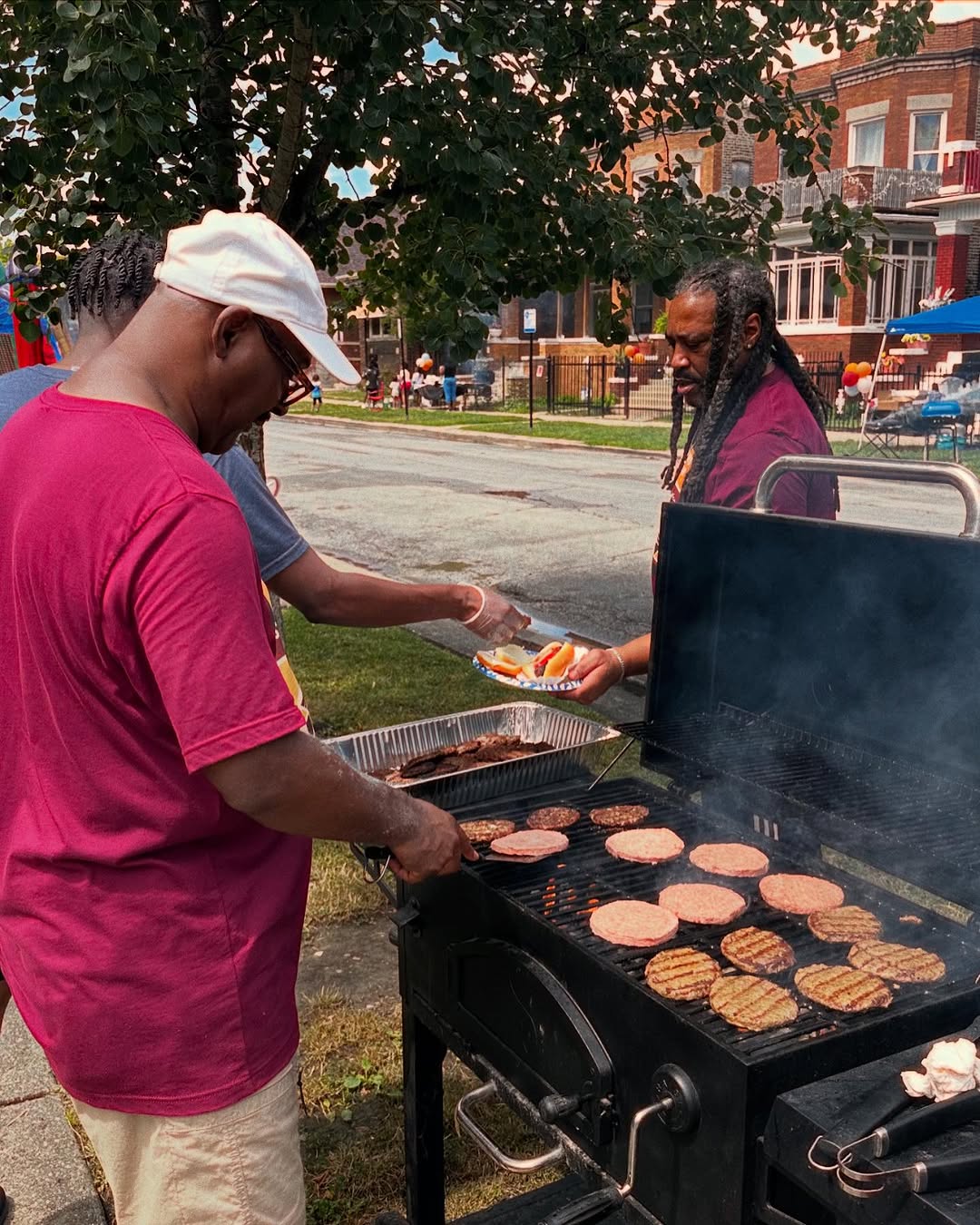
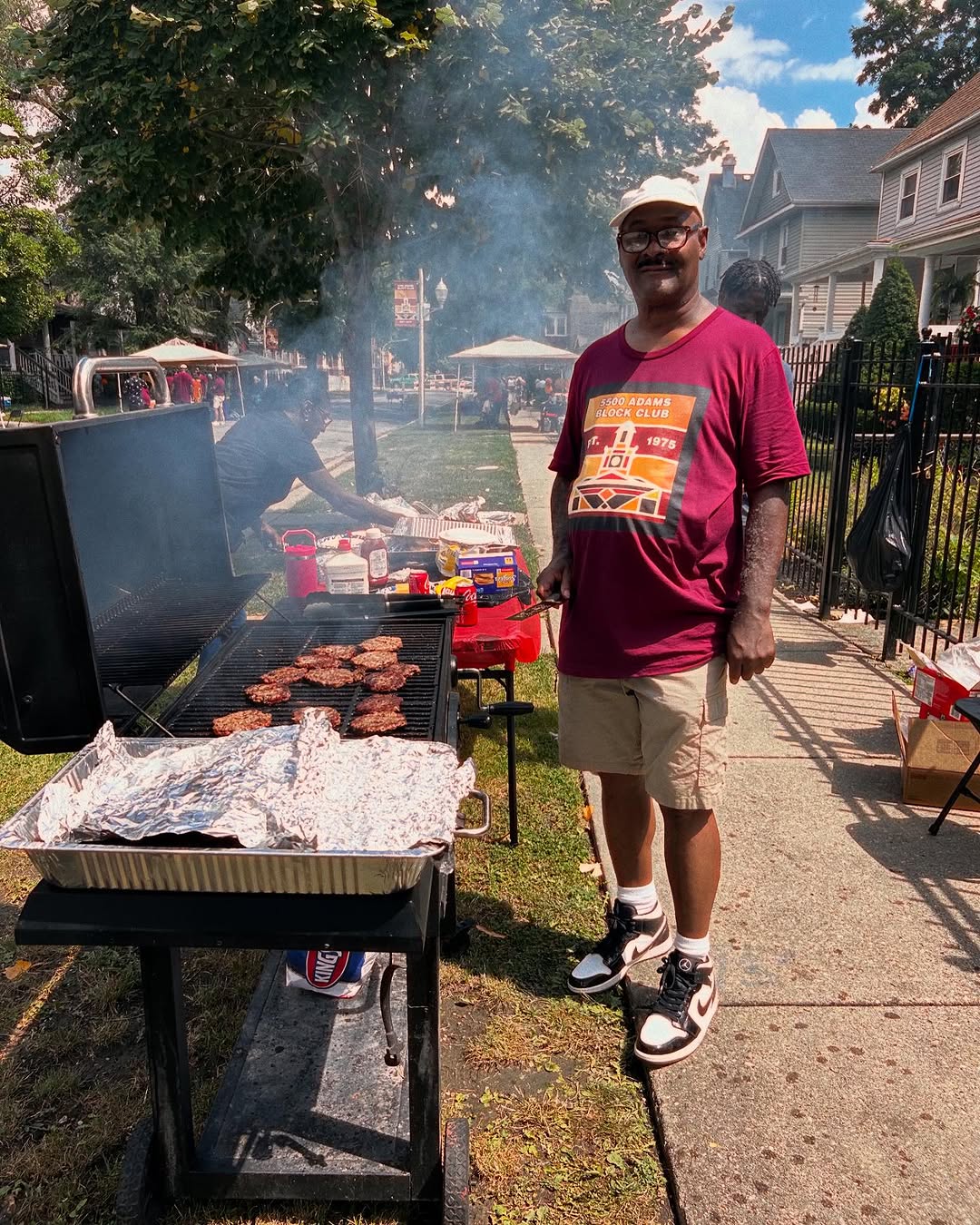
Connecting with the neighborhood by vision-casting and planning community clean ups and other beautification projects taught Tony a lot about community engagement and working with assets. This in turn improved the annual block party as well. Tony elaborates: “This year’s block party was probably one of the best ones we’ve had in my 15 years I’ve been on the block. And it wasn’t because we had a lot of new stuff [...] but it was really because everyone contributed to the ideas of what the block party would look like. This element of this old school block party, allowing people to come out and barbecue in front of their houses, hasn’t happened for a number of years, so people were very engaged.”
Discerning community needs and assets helped the Adams Block Club, 5500 hold a block party that served neighbors, while also generating more value from less resources. One example was food, rather than hiring caterers, neighbors brought out grills to their yards and cooked for the community. This helped save money for other attractions, such as inflatable obstacle courses, waterslides, and bounce houses for children. By creating a designated area for children, with a sign-up sheet and supervision, the block felt comfortable having a separate area that could be catered towards adults and seniors.
Seniors are a particular constituency in the neighborhood that the Adams Block Club, 5500 is interested in supporting. There are 17 houses on the block that are occupied by seniors and they have communicated that they want to be more engaged, checked in on, and celebrated. For the block party, Tony was able to use his professional connections as the Associate Director of Volunteer Engagement at Breakthrough Ministries to book a live band: “Seniors were super excited. It was more of a concert kind of feel for them, they weren’t out dancing, but they were very engaged.” Outside of the block party, the Adams Block Club, 5500 is also working on a documentary for their 50th anniversary next year to capture the stories of seniors on the block.
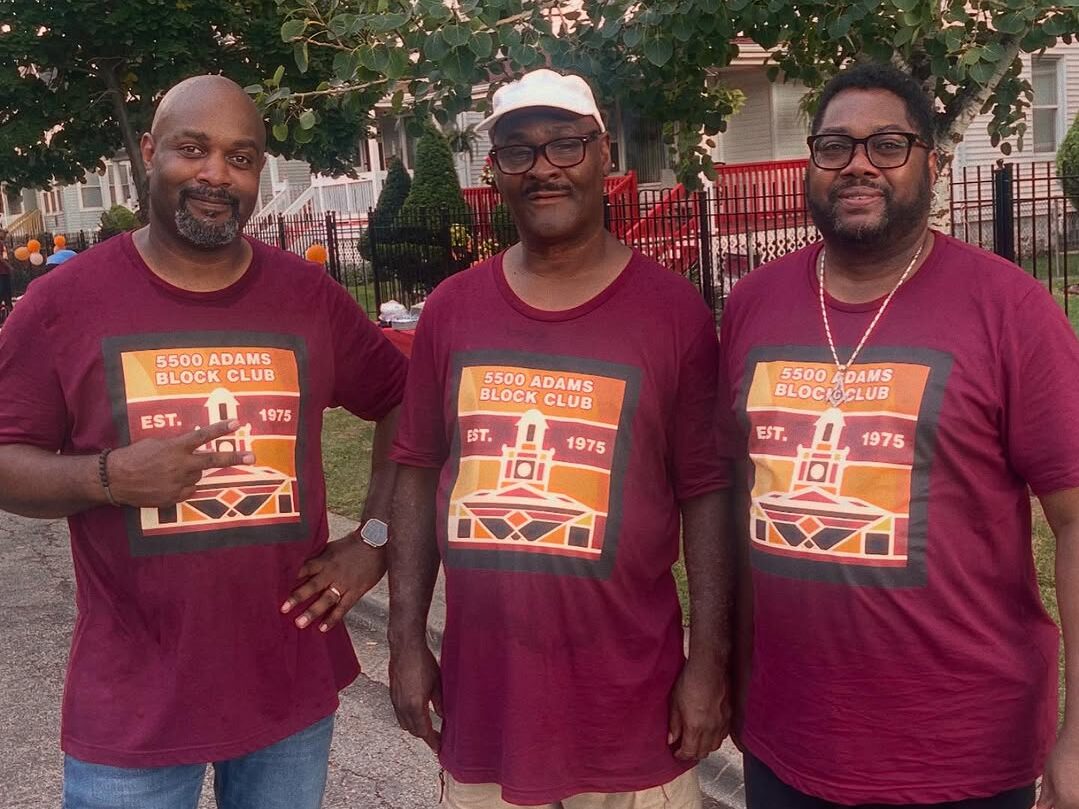
By connecting with neighbors, the Adams Block Club, 5500 has also been able to create a more unified culture. As they have expanded, they have used new resources to help fuel that culture by creating a common branding that is used throughout the neighborhood. That includes creating new yard signs, street banners, and t-shirts. This year, funds from the 2024 class of Chicago Peace Fellows were used to purchase block club t-shirts: “We did the t-shirts because we wanted them to feel like they’re a part of something and that there is unity there. Same with the banners and same with the block club sign. It gives a uniform feel and a clear indication that we’re unified.”
Creating a unified culture and building on assets has helped the Adams Block Club, 5500 support families and build community on their block. This collaborative effort has relied on input from neighbors on the block and support from local organizations. Through hosting block parties, sharing resources, conducting community clean ups, and seeking the perspectives of neighbors, the Adams Block Club, 5500 has promoted peace, unity, and beauty on their block.
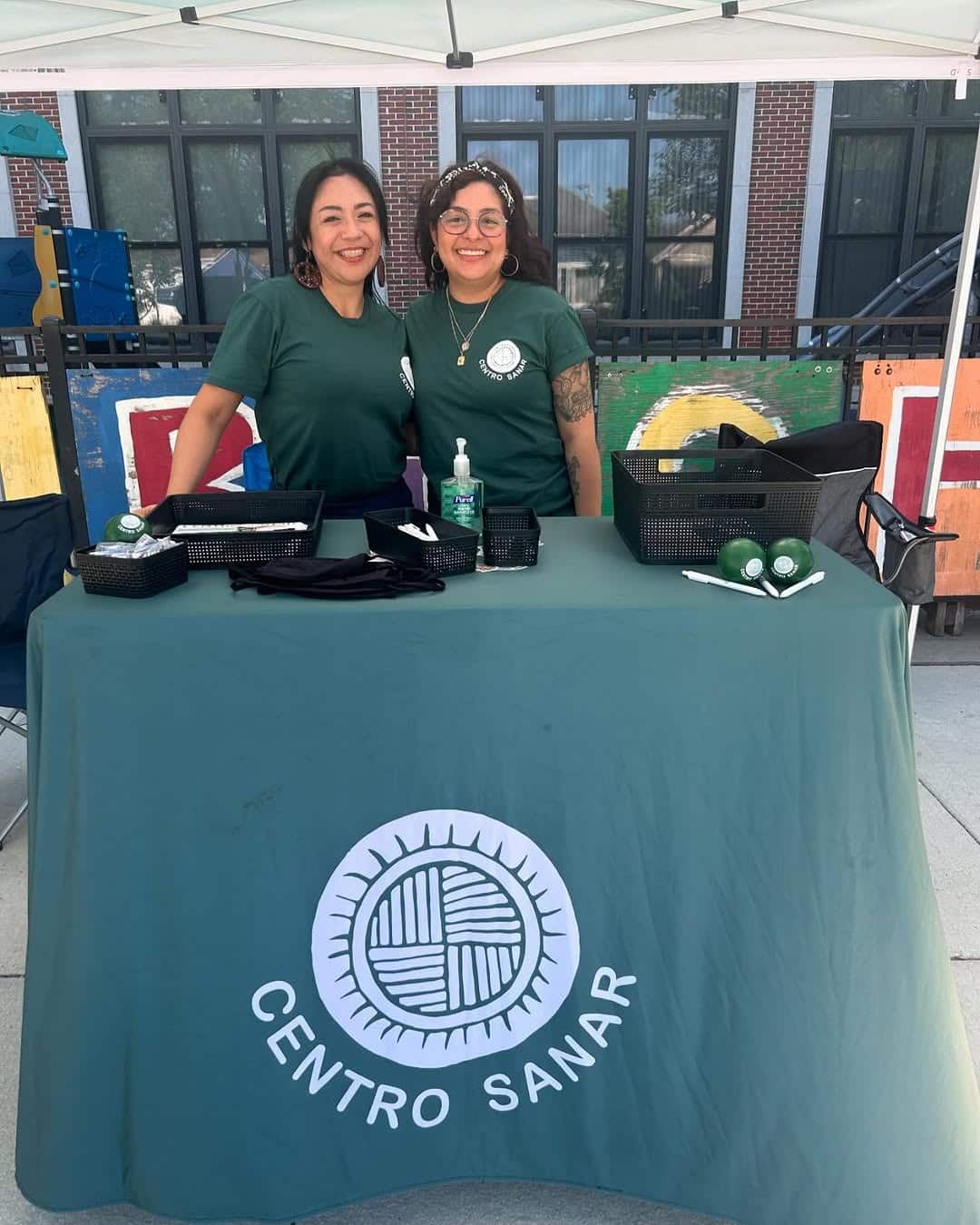
Edwin Martinez is the Co-founder & Executive Director of Centro Sanar, a place dedicated to addressing the impact of violence and trauma happening on the Southwest side of Chicago. In this article he shares more on the organization’s work, activism, and how crossing paths with Goldin Institute in 2022 allowed him to expand his network and community impact. Speaking from his experience in providing mental health care to adults and families in Brighton Park, Gage Park, Little Village, and Back of the Yards. Edwin highlights that there is no streamlined approach to crisis management for an acute form of trauma, such as homicidal gun violence.
Initially, he speaks about the multilayered challenges that survivors of gun violence face in their journey toward mental health recovery, and how these two things relate. “This issue intersects, for instance with undocumented populations, or people that are not working, lose work right after the loss of a loved one, or after a gun violence incident, we're talking about access to insurance- and having it is helpful. Different programs are three to six months out, but what happens after their insurance is terminated because it's not working? So, this impacts a person's ability to seek health services, especially in terms of their age, in terms of whether they identify as an adult or a child, but also in the sense of are they insured, are not insured, things of that nature, and also where do they live?” He adds that it’s crucial to have a targeted approach to gun violence in areas where most likely violence would occur and a public mental health approach for sustainable healing resources.
Edwin also explains the disparities between services for youth survivors and the lack of adequate support for adults, calling for centering these practices and policies around the community and what the community is going through. ‘’Survivors of gun violence are mostly youth, so services are tailored for them. But, there's very little support for what it looks like for the adults. And that's something that is at the forefront of our minds, especially as we're centering the family and centering the adults in the room so that they can also get support for their children.”Again, this layers itself with systemic issues around mental health care and access.
"Youth come from somewhere. And if youth is a reflection of the family, of the community, if you center healthy parents, you also center healthy youth."
-Edwin Martinez, Executive Director of Centro Sanar
Further, Edwin stresses the importance of addressing basic needs—such as financial stability and housing—before mental health services can be effective, emphasizing that healing begins with meeting these foundational needs. “If survivors were to be able to be stabilized in a financial, safe way that is not associated to quote-unquote mental health, it's interconnected for sure, but if the person can access resources, not a housing perspective, not a food perspective, on all these different things, our mental health will be, we would be able to do our job more effectively, less therapist.”
On Healing and Finding Better Help
Speaking on what healing looks like, he briefly elaborates on the meaning of the word. “I compromise on what healing looks like. A person’s mental health would be better if we had systems in place that address their immediate needs. If someone is touched by gun violence, there’s financial support or reimbursement in place to make the giving process a lot better. So, they don’t also have to worry about having food.”
"The healing process is addressed when the person does not feel isolated."
-Edwin Martinez, Executive Director of Centro Sanar
According to him, when a person is impacted by gun violence or homicide, some financial reimbursements can be helpful, but it's still complicated to navigate. “As an example, if a person were to be able to expedite the victim's comp reimbursement for their funeral, for loss of employment, for guaranteed rental income, that would make the healing process a lot better.”
He emphasizes that when thinking long-term, and not just about individual therapy, you're looking at a more robust system- a system that is strong reliable, and able to withstand disruptions. “Then, it is a system where it incorporates family therapy, couples therapy, group therapy, or social support. When a homicide occurs, specifically, that impacts the surviving mother, as an example, you just had a group yesterday, that impacts the surviving mother's ability to connect with surviving children.”
Creating Inclusive Mental Health Solutions through Collaboration
Acknowledging the vital importance of Centro Sanar in advancing and providing free clinical services to Chicago's South West Side, he touches upon how the organization addresses the complex trauma experienced by gun violence survivors.
We've observed that a public mental health center is crucial, especially for families affected by homicide, who often face insurance instability. These challenges must be considered when developing sustainable approaches to care. This aligns with Centro Sanar's commitment to addressing systemic issues in public access to mental health services, ensuring that our approach remains focused on long-term solutions."
Edwin also reflects on his time as a Goldin Fellow, emphasizing the value of connecting with fellow activists to develop more inclusive mental health solutions. "I continue to stay connected with my Goldin Global cohort, particularly those who are nearby, like Guillermo Gutierrez. This network offers us a chance to reflect on our experiences, challenge one another, and collaborate on addressing key mental health issues. Each of us comes from a different community, and our perspectives- especially in areas like Chihuahua- are invaluable in shaping a more comprehensive approach."
He concludes by urging a shift toward mental health structures that are not only responsive to immediate needs but also designed to support long-term healing and prevention.
You can help Edwin to achieve the goal of developing a community mental health model that provides an alternative to the current mental health industry, by donating to Centro Sanar.
On July 13, The Paving the Way Project hosted their 9th annual Summer Cool Down. The Summer Cool Down was an event designed to promote fun and safety in the Washington Park community and was supported by the 2024 Chicago Peace Fellows as part of their Summer Projects. Planning for the Summer Cool Down was led by 2024 Chicago Peace Fellow, Antonio Davis, the Founder and Executive Director of the Paving the Way Project.
The Summer Cool Down was part of this series of Summer Projects organized and hosted by the 2024 Chicago Peace Fellows to apply lessons learned through the GATHER curriculum to build peace within their communities. Throughout their fellowship, the Chicago Peace Fellows had a series of planning meetings where they set the scope of their Summer Projects: determining which beneficiaries to target, choosing potential community partners, and drafting a program. After determining projects and team members, the Peace Fellows voted on how to spend a shared stipend across various projects and then met on their own to plan. The 9th Annual Summer Cool Down was one of the projects that the 2024 Fellows voted to fund, alongside six other shared projects.
History of the Summer Cool Down
The first Summer Cool Down was held in 2015 and was also organized by Antonio and the Paving the Way Project. Initially, the event served as a way to reduce tensions between two rival gangs that were affecting community members. Antonio describes the situation: “It started in front of my church. We were smack in the middle of two gang territories and at the time when we first started [the Summer Cool Down] they were fighting.” Antonio was able to communicate with members of both sides and find out that they each had something that the other was lacking: one side was interested in using a park and basketball courts that were in the other side’s territory, and the other side was interested in using a mall that was in opposing territory. Antonio saw this as an opportunity to ask: “How can we deal with this? How can we make our space a neutral ground?”.
Antonio was able to use the self-interests of both gangs to create a safe space where they could work on resolving their conflicts. The event started out small, with a basketball court and waterslide for members of the community to use. However there still wasn’t a lot of interaction between the two sides, so Antonio addressed them: “It started out hard because one side would come and once they left the other side would come. So I said ‘Come on y’all, I kept my promise so I want y’all to keep your promise, so interact.’ So then we created a basketball tournament with a cash prize, [...] which at least got them together to play basketball.” The event ended up being a success, with 50-75 members of the community coming together, including community members not involved in either gang. As a safe space was starting to be established, Antonio knew he could scale the event up further.
Our attendance started growing from 100 in attendance, to 200, to 300, until this year when we topped it with 500 in attendance. It has become a staple and a tradition for our organization and the community. The kids look forward to it and the parents look forward to it.
-Antonio Davis, Founder and Executive Director of The Paving the Way Project, 2024 Chicago Peace Fellow
The Summer Cool Down has steadily grown since, and now serves a much broader audience. After the first two years, Antonio felt like there was no longer a need to hire security, and instead spent more on attractions. While the initial event may have revolved around resolving neighborhood conflicts, the Summer Cool Down now revolves around creating a safe and fun environment for the Washington Park community.
Fun and Resources for the Community
At the Summer Cool Down, there is a combination of free entertainment and resources for the community. Each year, Antonio finds more water slides, jump houses, and carnival rides to add to the event: “The carnival doesn’t come to this neighborhood, so I’m going to turn this into a carnival.” Other organizations are also invited to share resources with the community: “The third and fourth year we started adding resource partners to come serve the community, so having thirty resource partners this year was hot.” Organizations provided a range of offerings, including insurance options, mental health resources, job resources, health resources, and more.
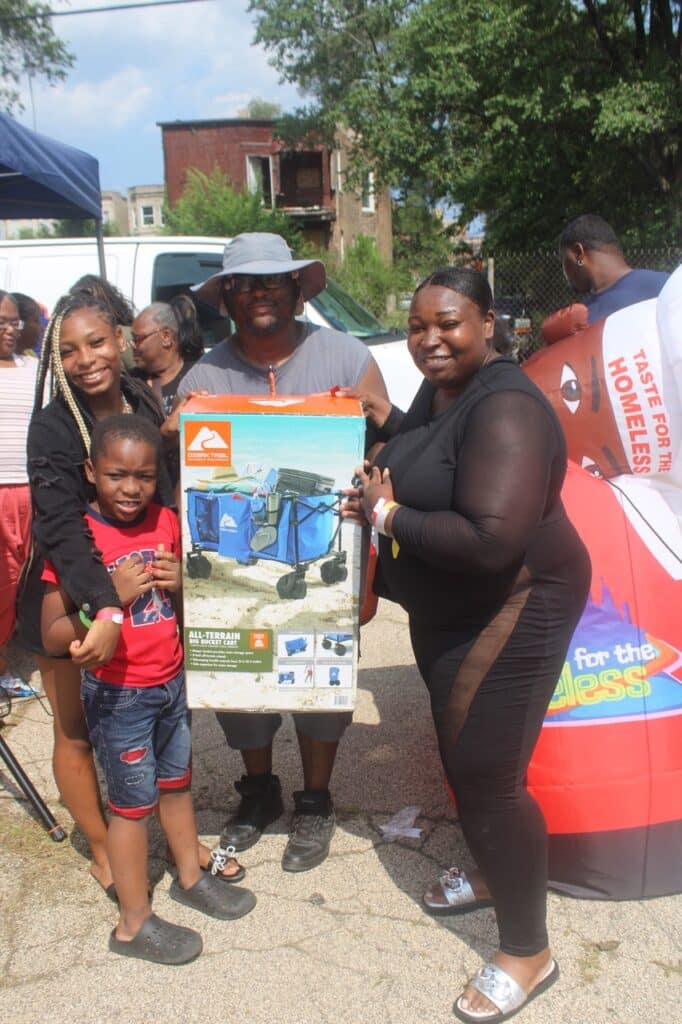
Free clothes, shoes, and other essential items are also provided to the community for free. Food was also provided by a community partner, Michael Airhart’s Taste for the Homeless. “Every year he comes and provides a full length of food, and he tops it off every year. This year we had pork chops, salads, hamburgers, tacos, Italian beefs, like everything.”, Antonio reported. Funds from the Peace Fellows’ Summer Planning were used to organize a raffle. A free raffle ticket was also provided to each person who attended and there were three separate raffles catered to children, teens and adults and winners won gift cards, pots, pans, wagons, scooters, and more.
I’ve always striven to not charge the community…before I started my organization I was a problem child, so this is one of the ways of giving back to the community that I hurt.
This year was also the first year that the City of Chicago was involved in the event. Antonio met some city officials at a Task Force meeting about community development in Parkway Gardens and learned that the city can help events with essential planning such as tables, port-o-potties, barricades, and other amenities that he usually pays for. “Now every year we will have some items we will get from the city. I was also able to share those resources with my community partners for their events.”
Over the last nine years, the Summer Cool Down has grown into a staple of the Washington Park neighborhood, providing a safe place for families to have fun and come together as a community. Antonio emphasizes: “The biggest thing accomplished through the Summer Cool Down was safety and fun. You want to come to an event where there are no problems, where you can let your kids be kids, where you can relax. I think we have accomplished that in the nine years where we have been doing this.” In the coming years, Antonio would like to see the Summer Cool Down continue to grow: “For the tenth anniversary, I want to hold the Summer Cool Down in Washington Park. That would not only give access for more attendees, but would give me more space for all of the things that I can bring to the community, such as a stage and live entertainment.”

 Learning happened in motion across our city, at sites rich with stories, where community-centered leadership, deep collaboration, and peace-building are ingrained in their culture and daily work. The Fellows met on a weekly basis and were hosted by community partners including: Chicago Cultural Center, Imagine Englewood IF, Enlace Chicago, Stone Temple Baptist Church, Breakthrough Urban Ministries, Self-Help Credit Union, and the Chicago Bee Library. Each gathering layered understanding how leadership shows up in community, how systems shape opportunity, and how stories determine who is seen and valued.