
Developing Grassroots Infrastructure and Building Peace in Chicago
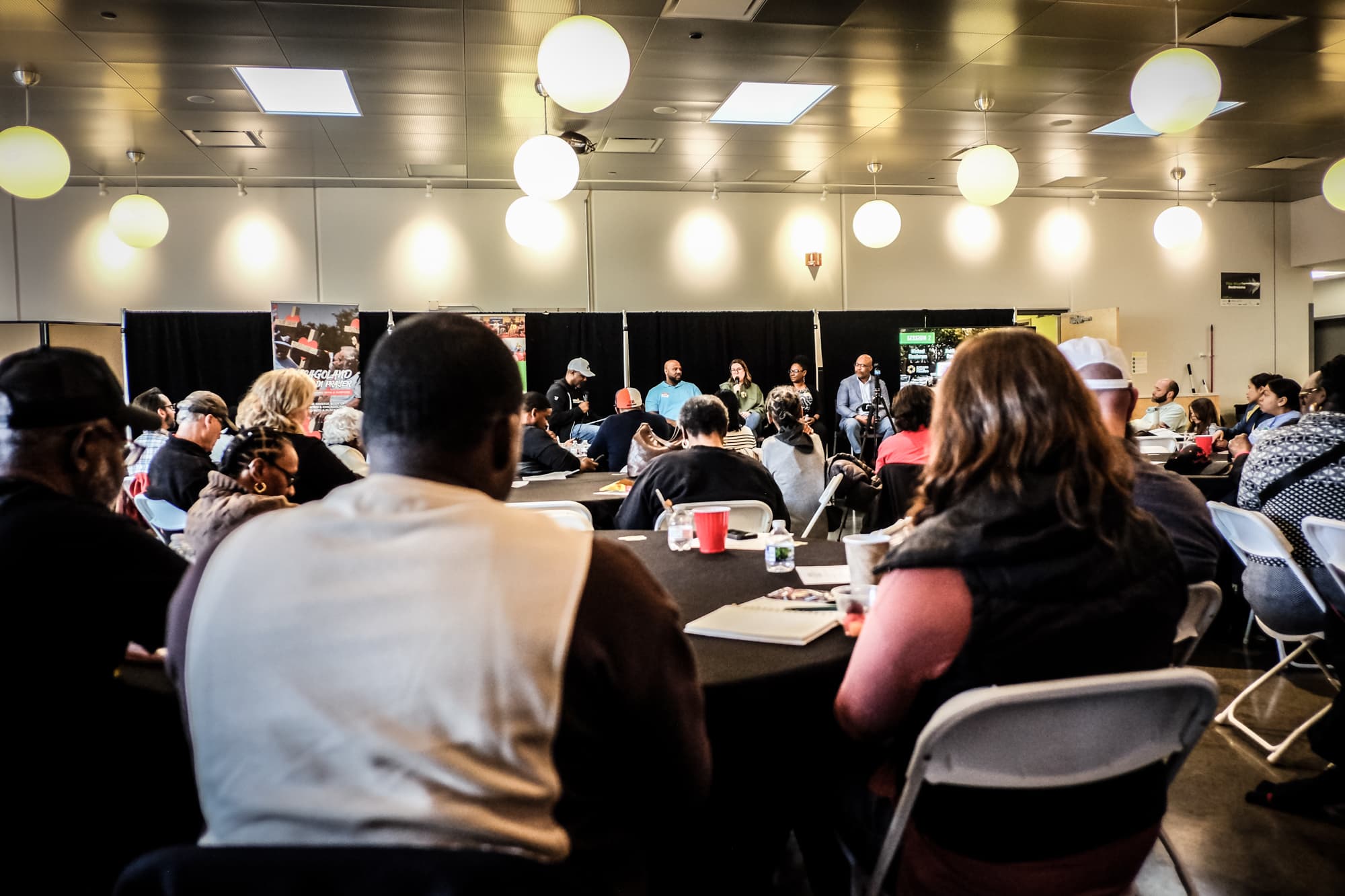
Since 2018, community leaders across Chicago have been coming together at Building Blocks of Peace to collaborate on taking collective action to improve their neighborhoods. Building Blocks of Peace is a spring workshop series that centers around the idea of hyper-local place-based commitments made by individuals and organizations.
This year, Chicago Peace Fellows Alum acted as some of the facilitators for these workshops, learning and sharing the roles they play in the safety of our communities, the social fabric and well being of our neighborhoods. The program was specifically timed to occur before Memorial Day, since gun violence in Chicago typically rises in the summer.
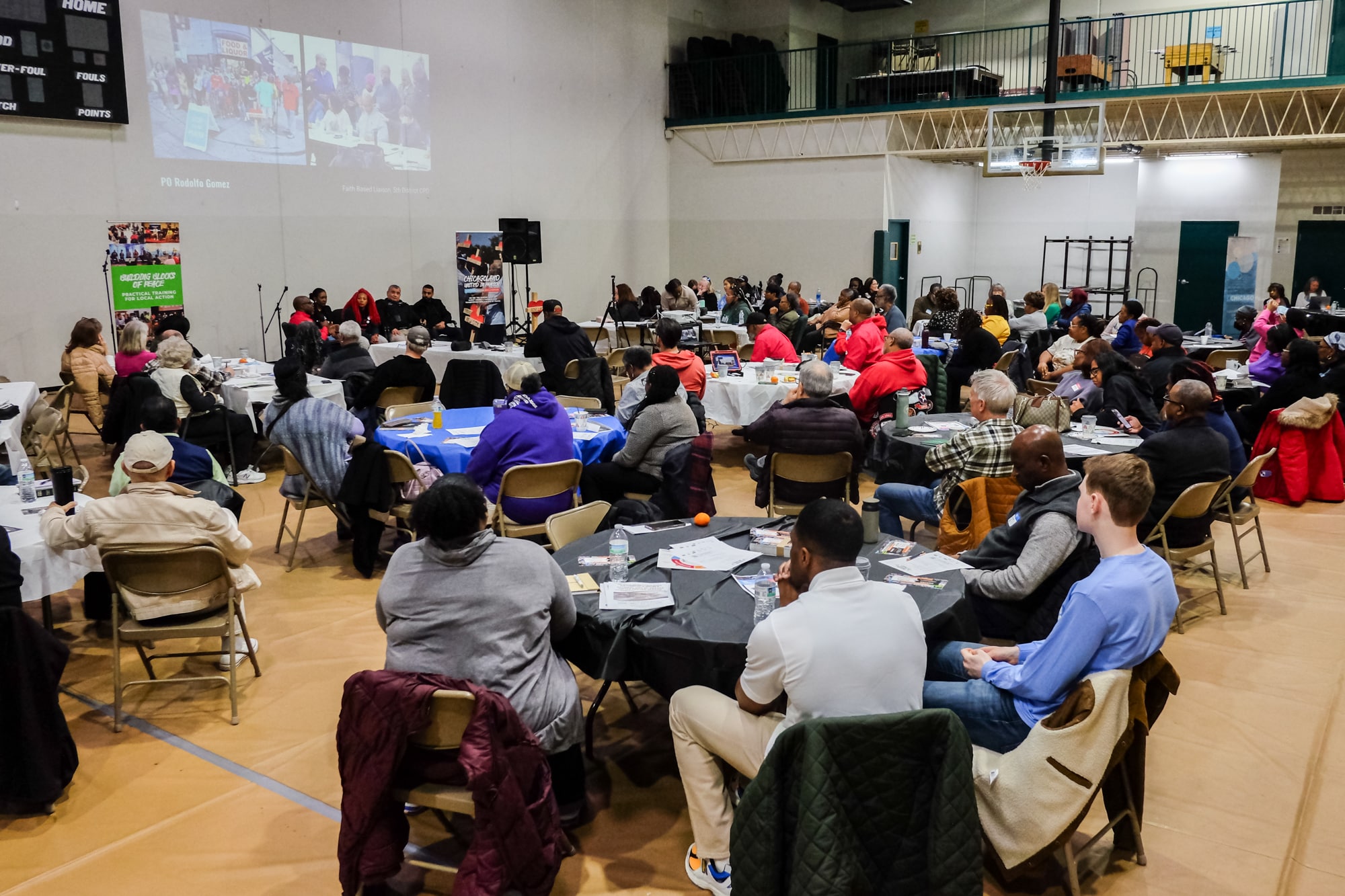
Building Blocks of Peace (formerly 'Love Your Neighborhood') was initially started in collaboration with Vance Henry, who served as Chief of Faith-Based Initiatives under several Chicago Mayors. The program aimed to connect local community leaders to facilitate dialogue about improving their communities. “Building Blocks of Peace is a collaboration that belongs to everyone involved… we believe that we all can learn from each other across neighborhoods and methodologies.”, says Nate Tubbs, a 2023 Chicago Peace Fellows alumnus who is involved in planning and facilitating the workshops.
Building Peace with Faithful Presence
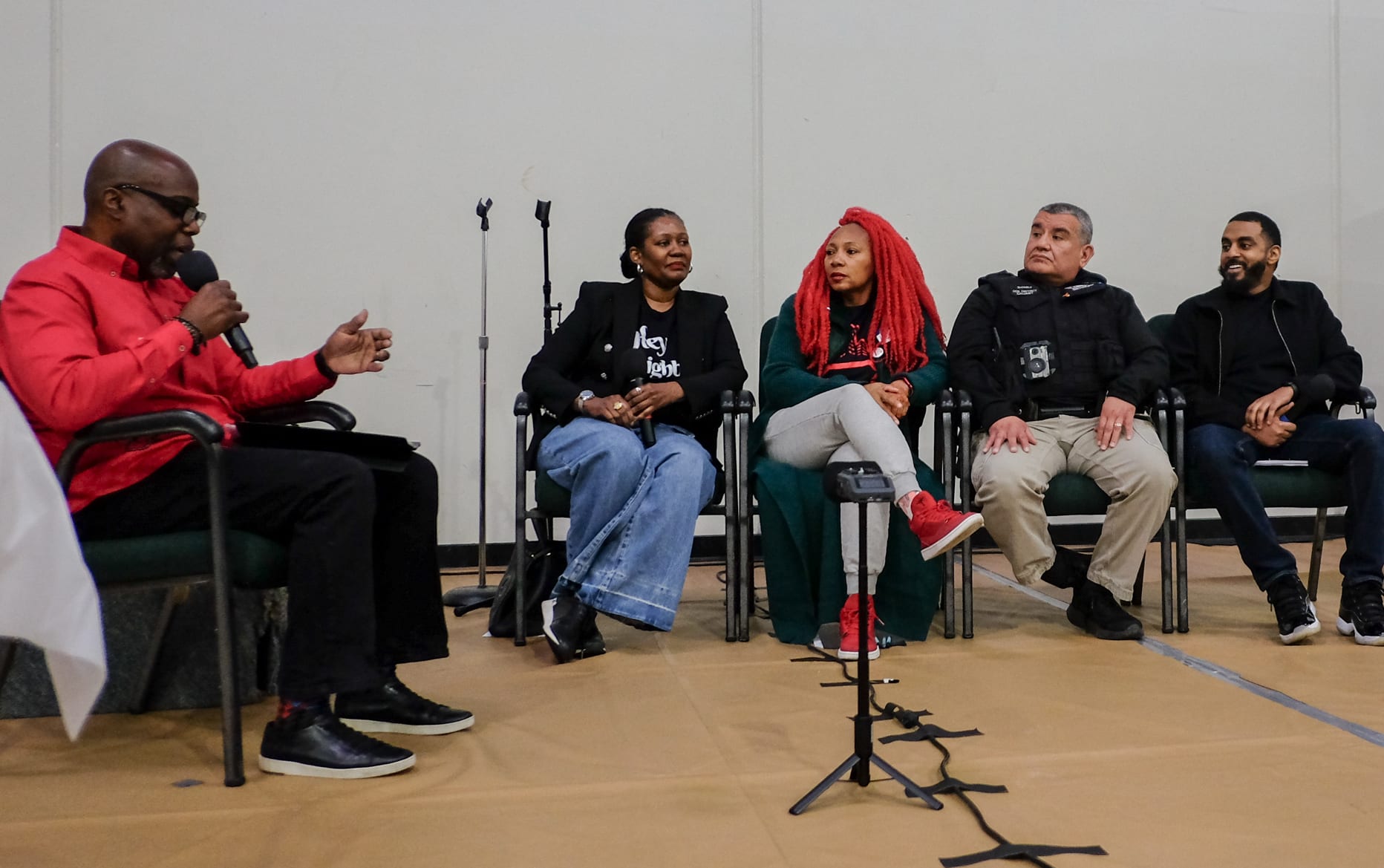
Central to Building Blocks of Peace is the idea of faithful presence, which encourages participants in the program to be active in, and committed, to their neighborhood. Nate elaborates “The idea is that just having a great event or program isn’t enough, but that we need to be present and faithfully involved somewhere and committed to that place. It is a place-based focus, we’re not asking people to be everywhere, but to be faithfully committed somewhere particular.” To reflect on this idea, participants were asked: “If you or your organization were to leave your block, would anybody notice and would anybody care? Have you been involved in such a way that people notice that you do good for the community?”
We can’t take a satellite view towards our communities when we think of ways to improve them, the people closest to the ground are our experts.
-Michael Henderson, Director of the Chicago Peace Fellows and Workshop Facilitator at Building Blocks of Peace
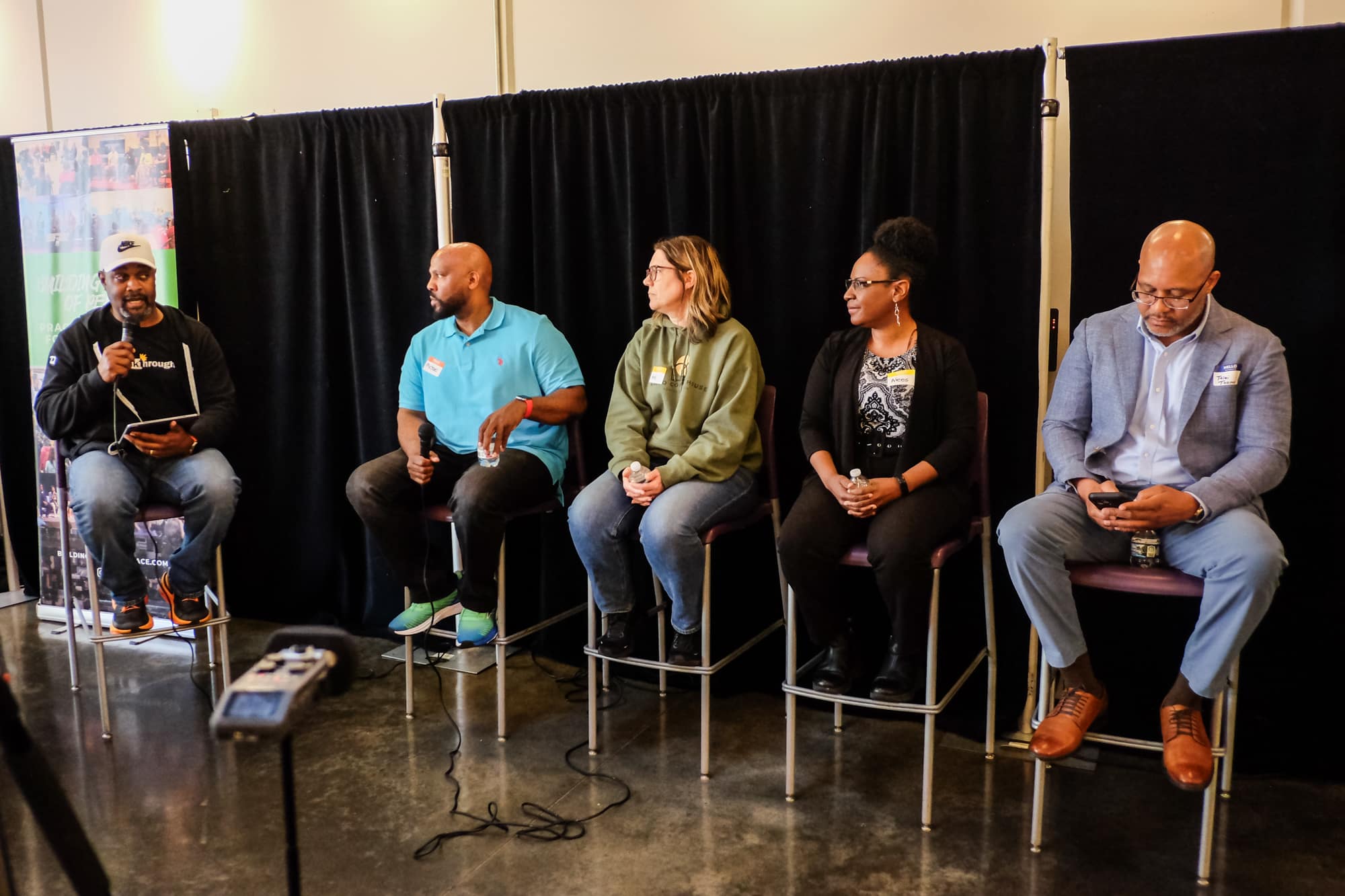
Building Blocks of Peace has successfully grown with a change in its format: from a series of Zoom meetings during the COVID-19 pandemic to a workshop series that brings in local practitioners to facilitate. 2024 Chicago Peace Fellow alumnus, Tony Daniels, has been part of both formats, initially getting involved at the Zoom meetings to then facilitating panels, where he spoke about his work with block clubs. Tony, the president of the Adams Block Club, 5500, a non-profit organization celebrating 50 years this year, notes how participating in the Chicago Peace Fellows inspired him to step up as a facilitator: “During our 2024 Peace Fellows Program, I was really inspired and encouraged to present trainings for block club captains, as a lot of what I experienced was trial and error. During the program, I realized there are a lot of people who want to start block clubs, enhance their clubs, and think differently.”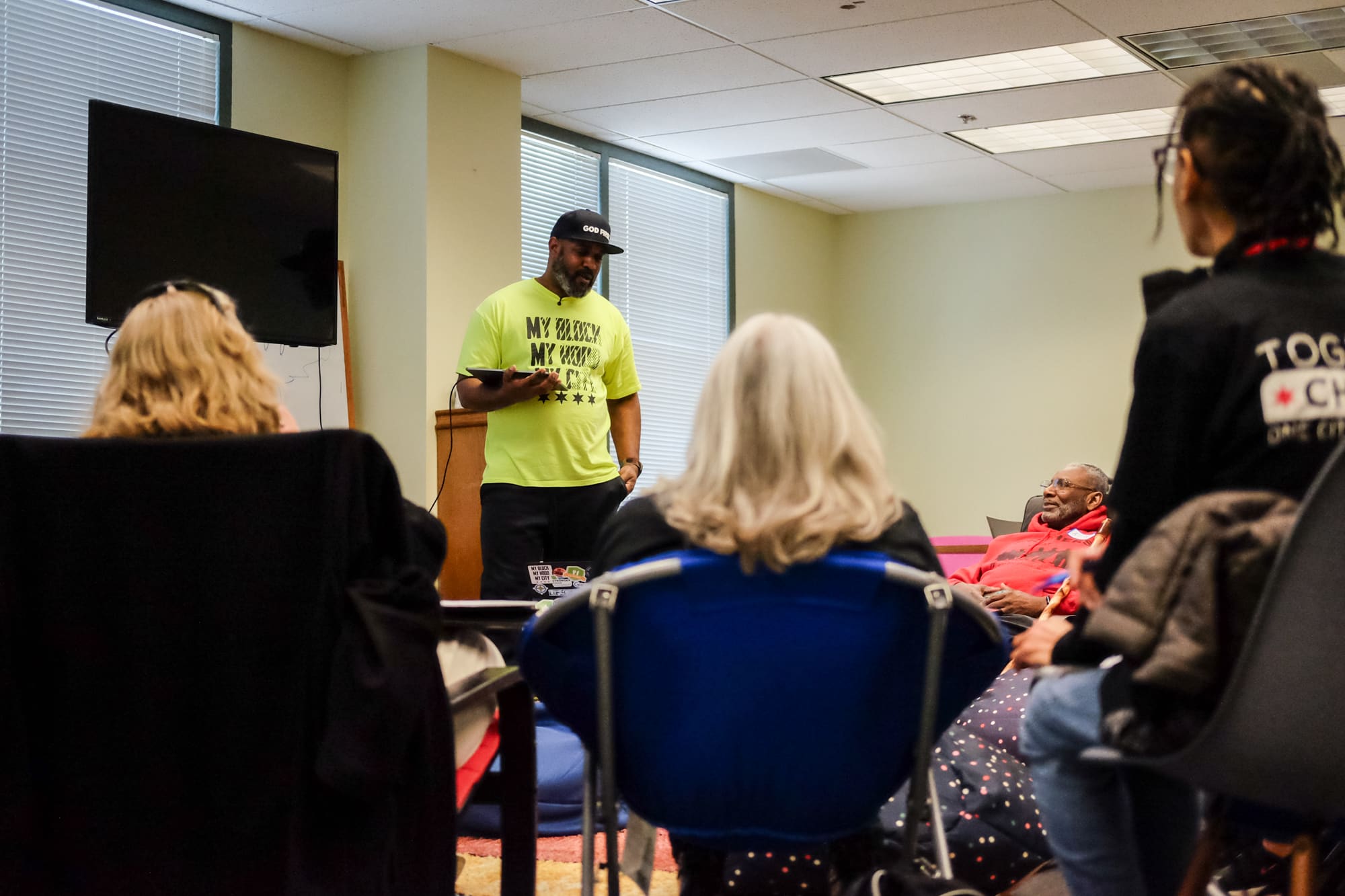
Strengthening Block Clubs, Community Associations, and Grassroots Groups
Many of the participants in Building Blocks of Peace are involved in their neighborhood through block clubs, community associations, organizations, and congregations. These backgrounds encourage fruitful conversations as participants and facilitators share their experiences managing their organizations and working in their neighborhoods. Tony explains, “When you gather these types of people together, you are inspiring people to ask ‘What can I do?’... Helping your neighbor is not complicated, but you can add systems and structures and order to it that helps people know how to better get after it.” Tony found particular value in a workshop called “Weaving a Community of Care”, by Robbie Johnson, Outreach Community Coordinator at The Firehouse Community Arts Center.
Tony explains “I’m an ideas person, I can come up with a thousand ideas and get people excited, but then it’s like ‘How do you flesh this out?’. Robbie talked really simply about some of the things that you can do to be a good neighbor, but also to think outside the box about how you can care for people, how you can show up for them and be intentional.”
Robbie’s class helped you think about your seniors, helped you think about your youth, helped you think about the children on your block and how to plug into them in a way that is not threatening and not invasive, but caring.
-Tony Daniels, 2024 Chicago Peace Fellow and President of Adams Block Club, 5500
Nate, who serves his community through the Island Civic Association, found particular value in connecting with LoLita Canady, a 2025 Chicago Peace Fellow and the Executive Director and President of the Rosemoor Community Association. After connecting with her during these workshops prior, Nate has found great value in the relationship they have built: “I think we have common goals and common struggles. For me to hear from her perspective and to learn from somebody who is in a similar type of organization, but a different context, is really helpful and encouraging.”
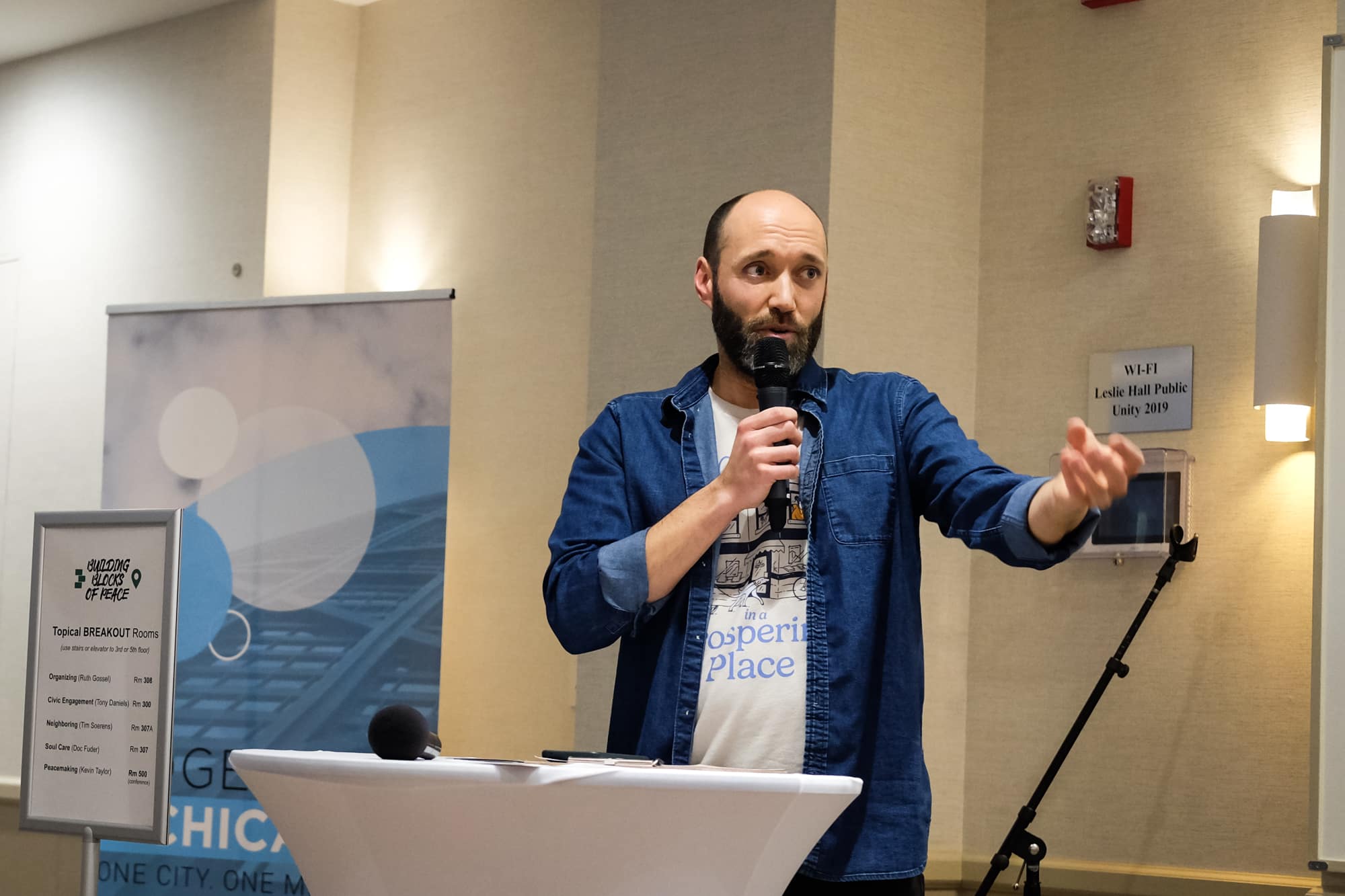
Following each workshop session, participants in Building Blocks of Peace go on an optional prayer walk where they explore the hosting neighborhood to learn about the structures, people, organizations, and work that is being done in the community. Tony led the prayer walk following the workshop hosted at Breakthrough in Garfield Park this year.
“It helps people see what's happening in the community from a different lens; it gives participants a way to reflect on why you care about what you care about.” he says.
On the prayer walk, Tony encourages participants to pick up trash along the way: “We are contributing something besides the prayer that allows people to engage as well.” The prayer walk invites people to see how they can approach change in their neighborhood. “It’s that place-based idea, this is the place that others are committed to. And when you see how others are committed to their places, it inspires you to be committed to yours.” Nate adds.
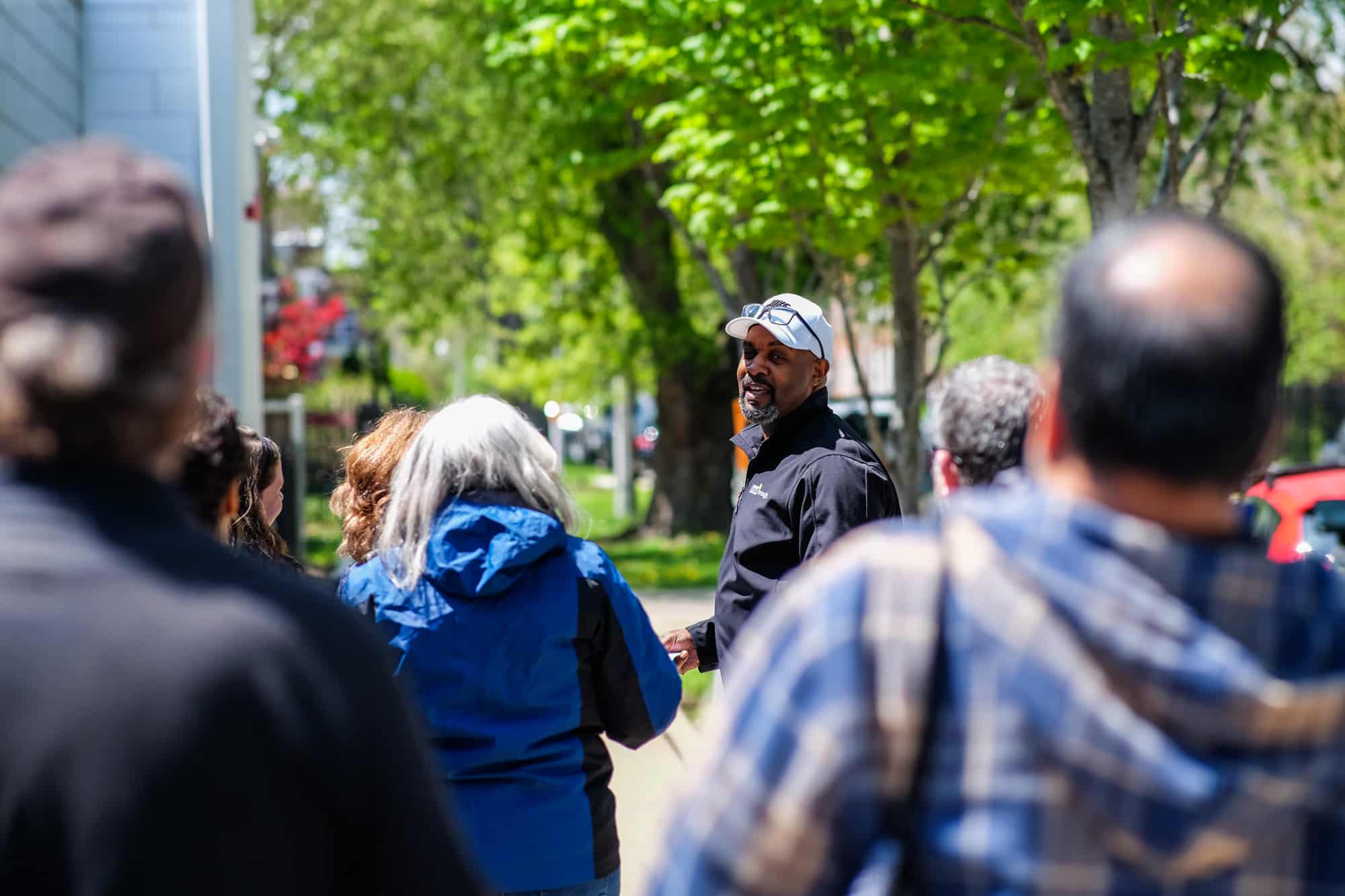
While the framing of Building Blocks of Peace is hyper-local, the workshop is deliberate about inviting participants to cross neighborhood lines, sharing and borrowing from other communities.
We have hosted a three-part series for a number of years, with one on the North Side, one on the West Side and one on the South Side. Each features local leaders from those parts of the city with this idea that we all have something to learn from each other. As good as some examples or methodologies are, the goal is always learning and asking what it means for your specific context.
- Nate Tubbs, 2023 Chicago Peace Fellow and Director of Civic Engagement, Together Chicago
By sharing techniques, practices, and community, Building Blocks of Peace empowers community leaders to serve their neighborhoods while centering their individual contexts. Learn more about Building Blocks of Peace and view past workshop recordings at www.buildingblocksofpeace.com

Pollinating Peace in Chicago
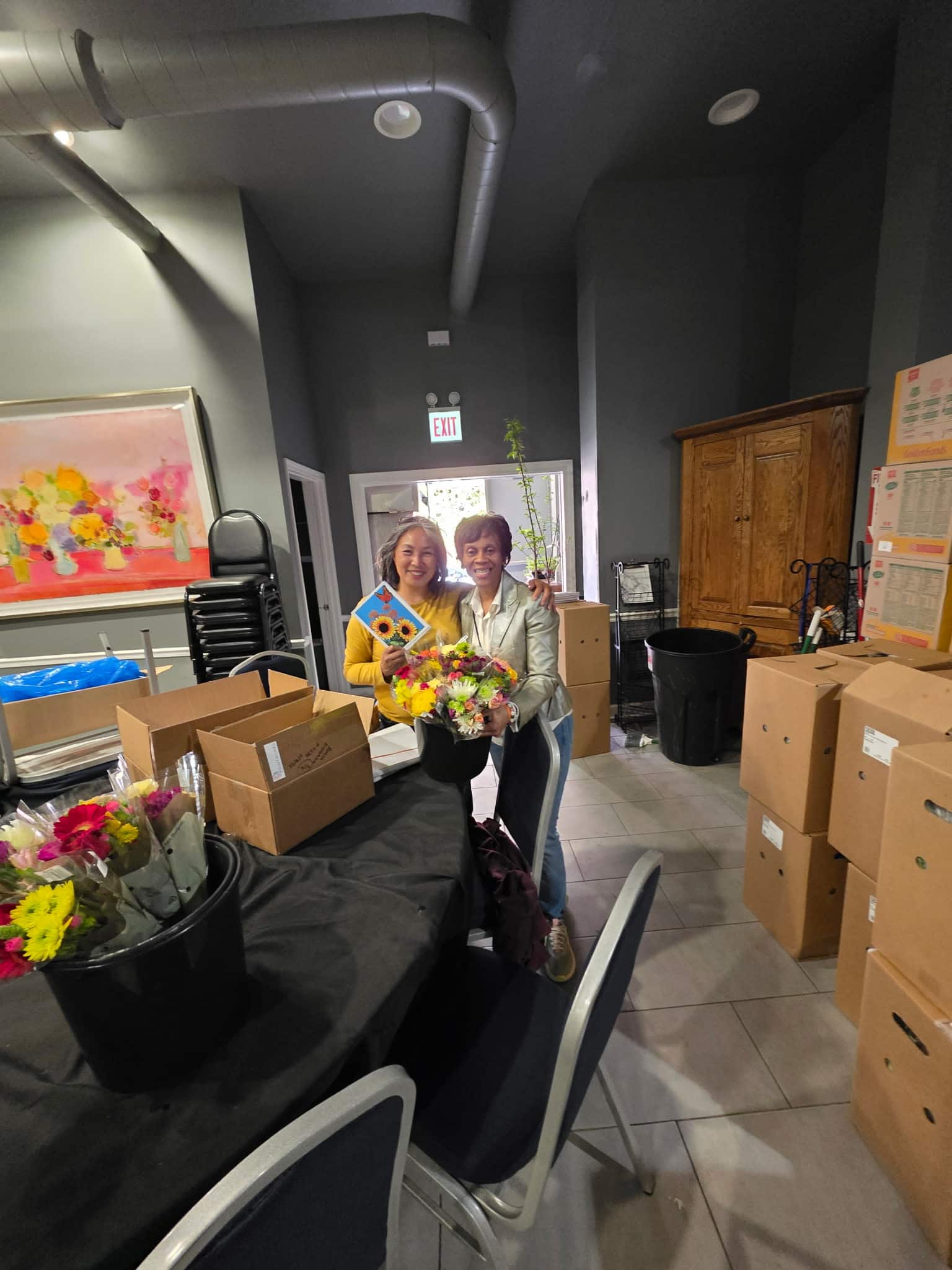
For the last five years, the Peace Flowers initiative has distributed flowers to mothers, on Mother’s Day, who lost children to gun violence. This project exists as a collaboration between organizations that are committed to both supporting victims of gun violence and developing green spaces in Chicago including: Purpose Over Pain, the Stone Temple Baptist Church, Homan Grown L3C, Chicago Survivors, and the Goldin Institute. This year, the Chicago Peace Flowers campaign delivered to 600 mothers across the city of Chicago through 10 different organizations.
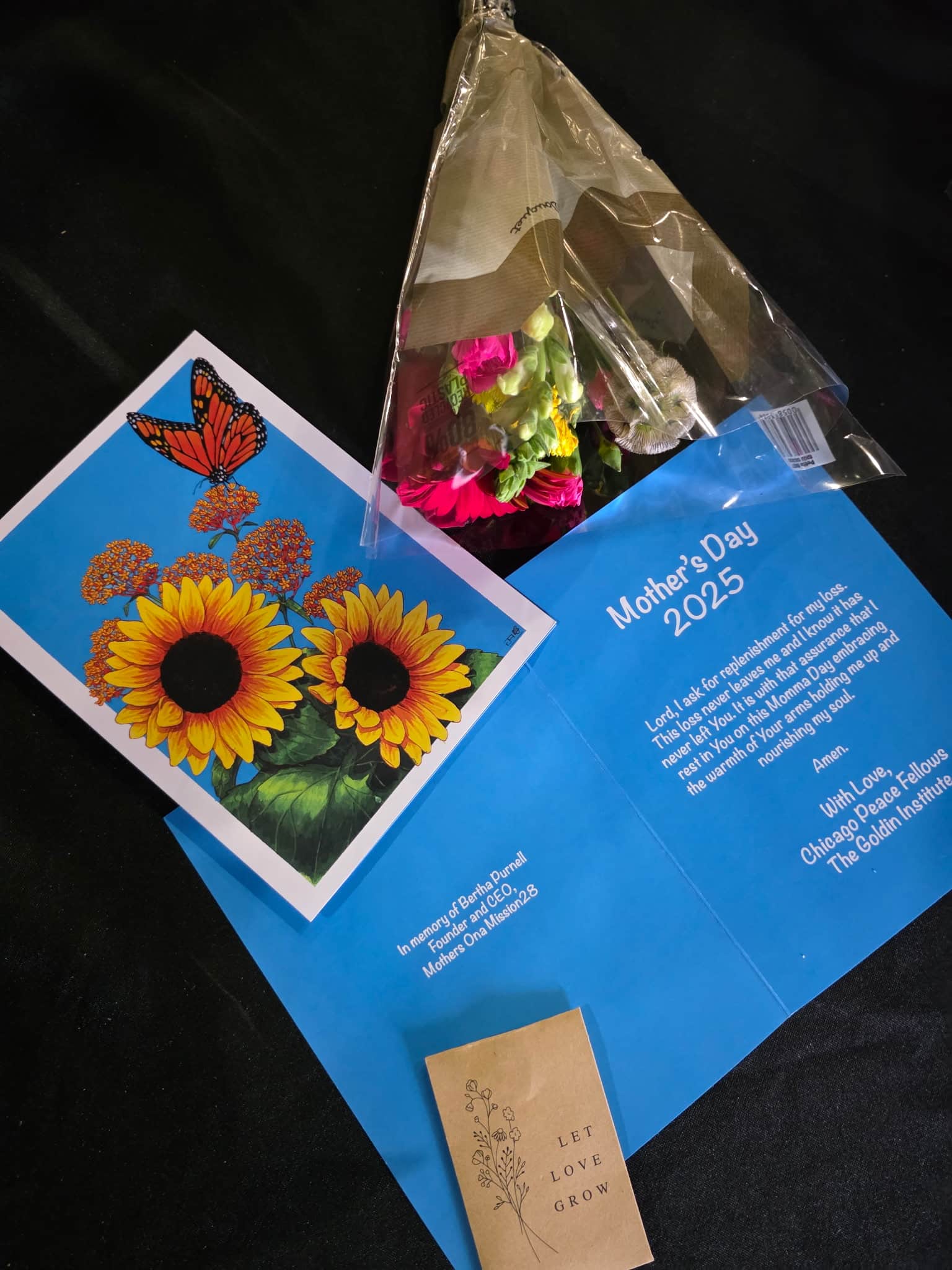
The Peace Flowers Campaign began in 2020 as a project of the Chicago Peace Fellows Mutual Aid Collaborative, a network that emerged in response to the twin epidemics of COVID-19 and violence in Chicago. The project was developed by the Mutual Aid Collaborative with the goals of bringing comfort to mothers who had lost their children to gun violence and to build lasting peacebuilding and greening projects in CHicago . Founding members include Annamaria Leon of Homan Grown, L3C, Reshorna Fitzpatrick of the Historic Stone Temple, Pamela Montgomery-Bosley of Purpose Over Pain, and Bertha Purnell of Mothers on a Mission 28. Early in 2025, Bertha Purnell, a bold activist for gun violence prevention, died and this year’s Peace Flowers campaign was held in memory of her work.
Building Peace in Chicago and Promoting Green Spaces
This year, the Peace Flowers campaign focused their strategy on making the project more sustainable by defining their branding and mission. They established the Mexican Sunflower and Milkweed as their official flowers and created a logo featuring the Monarch Butterfly. Both the Mexican Sunflower and the Milkweed attract pollinators, including the Monarch Butterfly, which resonates with the project’s desire to pollinate healing and peace-making practices in Chicago and beyond. In 2025, the migratory Monarch is proposed to be listed as a threatened species under the Endangered Species Act.
“On so many levels the Monarch and its endangered status serve as a metaphor for the struggles our communities of color face—our struggle for a natural and peaceful existence, to have a life path filled with opportunity and sustenance, and to be granted freedom of movement through the world and the ability to share our beauty and creativity with life and our fellow creatures.”
-Annamaria Leon
Bringing in New Partners
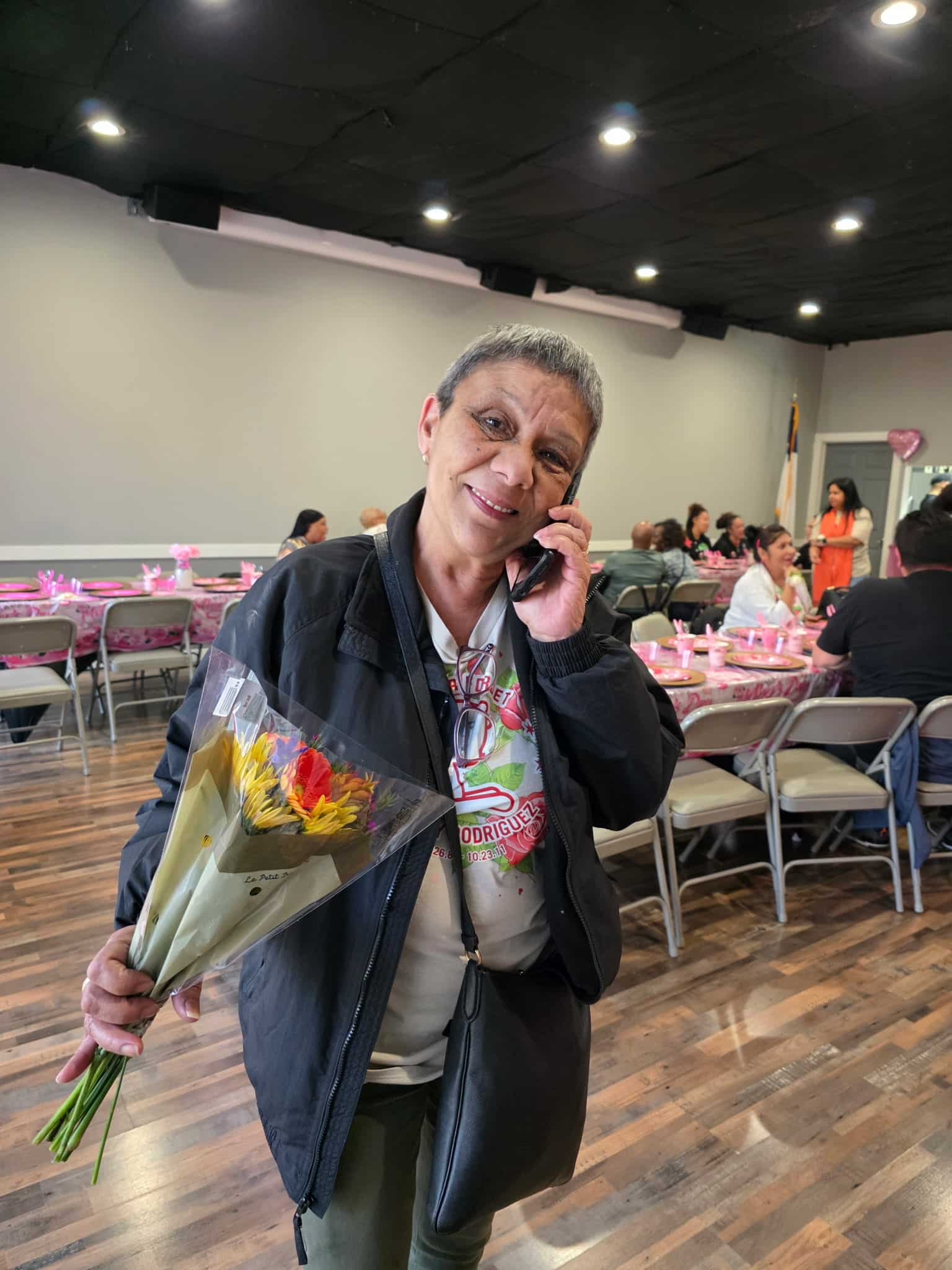
The Peace Flowers project also brought in new collaborators, who helped with distributing the flowers to a broader network of mothers. This year, 2022 Chicago Peace Fellow, Maria Pike, joined the committee to help distribute flowers to a number of gun violence survivor groups that she is connected with. Jasmine Rhone from Chicago Survivors also joined the committee and assisted in sharing flowers with a group of mothers who she holds a Mother’s Day brunch for. Bouquets were also shared with long-time collaborators including Purpose Over Pain for their annual Mother’s Day Spa Day and Stone Temple Baptist Church.
Despite ongoing concerns surrounding violence, the work of community-based organizations on projects like the Peace Flowers campaign makes Chicago a more peaceful and beautiful place to live. The Peace Flowers committee is now focused on continuing the campaign’s impact outside of Mother’s Day weekend. The committee is currently looking to bring in urban gardeners and greening activists who can grow and arrange flowers and use the proceeds to spread awareness about gun violence and create green spaces in communities impacted by gun violence. Their goal is to create a long term sustainable funding stream for peace organizations to make Chicago a healthier and more beautiful place for all of its residents. You can support the work of the Peace Flowers project here.

Daddy-Daughter Dance Promotes Positive Male Mentorship
On February 7, 2025, Mr. Dad’s Fathers Club hosted their inaugural Daddy-Daughter dance, an event where male role models supported young women in their lives. The event was held at the South Shore Cultural Center and was a major success in the community. Registrations sold out quickly as fathers were eager to act as positive figures in their daughters’ lives.
Joseph Williams, the Founder and President of Mr. Dad’s Fathers Club and a 2020 Chicago Peace Fellow, initially conceived of the event by considering his own role as a father. He reflects, “I have four daughters at home, and said to myself, ‘Out of the 7 years that Mr. Dad’s Fathers Club has been around we have never done a daddy-daughter dance.’” As he brought his team together to discuss planning, a broader vision with greater intention formed.

Creating an Inclusive Daddy-Daughter Dance
One question that Joseph’s team considered as they planned was “What can we do for the girls who don’t have dads?” Joseph provides insight into their planning process: “Whatever we do I want to make sure it is intentional. So we decided to do something called ‘Fill in the Gap’, which paired members of Mr. Dad’s Fathers Club and other positive male role models with young ladies who didn’t have a father, so that they still had someone to escort them to the dance.” Positive male role models who acted to “fill in the gap” included police officers, firemen, and even the 17th ward alderman, David Moore.
There was also significance to the timing of the event, with February being Black History Month. Father-daughter dances are popular around Valentine’s Day, but Joseph sees the dance as an event that also helps promote a kind of narrative change: “There is a stereotype that black fathers aren’t actively engaged in their children’s lives when it is actually the opposite. We saw 150+ men with their daughters at this event. It shows that they are showing up and they are here for their babies.”

Building on Community Connections
Mr Dad’s Fathers Club tapped into their connections with the community to promote the event. A large part of the event's success was due to existing connections that the organization has built. “Over time we have built a large network of fathers who have subscribed to our emails, who want to be notified of events, who want to know what’s happening. So that list helped a lot with our outreach”, Joseph explains. Mr. Dad’s Fathers Club also provides a range of literacy and mentoring programs at schools, which also helped them spread the word: “We’re now at 14 schools, so we did outreach to every school where we are involved so that they could promote it to those families.” They also connected to people outside of their existing network through the radio as Darryl Dennard, from the station v103, promoted the event on air.
The dance was also timed so that Mr. Dad’s Fathers Club could save on costs and deliver the most they could to the community. When Joseph booked a space at the South Shore Cultural Center, he was able to obtain a discounted rate by booking the event in a 90-day window. Fathers were suggested to donate $25 to help cover costs, but food, cosmetic products, a photo booth, and a build-a-bear station were all offered for free. While he was initially worried about ticket sales, the event sold quickly, with registration closing two weeks before the event, until Joseph opened it back up due to demand from the community.

As the dance grew closer and closer, Joseph realized how important the event was to members of the community. He received calls from foster parents who saw it as an opportunity to bond with their foster daughter before she returned to her birth parents. A mother with four daughters who had lost their father to gun violence also reached out to Joseph and he paired her children with men from the “Fill in the Gap” program. One father also used the event as an opportunity to reconnect with his daughter who he had not seen in years. By providing a space where there was an opportunity for community members to take an active role in their children’s lives, Mr. Dad’s Fathers Club was able to provide a space for connection and support that touched a broad variety of family circumstances.
The community also provided a great deal of support for the event through acting as volunteers, sponsors, and promoters. Prominent members of the community attended the event, with the 5th ward alderman, Desmon Yancy, opening the ceremony and v103 host, Darryl Dennard, acting as a DJ for the event. Local organizations also donated, with Luster Products donating cosmetic products such as hair masques, hair oil, and hair lotion and Fanfares Catering donating food. The dance also received financial sponsorships from community organizations, including White Castle, Blue Cross Blue Shield, the Resident Association of Greater Englewood (R.A.G.E.), and CHAMPS Male Mentoring.

Looking forward, Mr Dad’s Fathers Club would like to expand the Daddy-Daughter dance with Joseph anticipating the event doubling in size to host 600 people next year. Now that they have seen how successful the event can be, they can plan better for the future. “Going forward I can be more intentional about reaching out to and sitting down with more partners who love our work and want to support us.”, Joseph says. With more time to plan, build connections, and fundraise, next year's dance will be able to touch even more members of the community.

Empowering Teens to Foster Racial Healing
In 2024, Cosette Nazon-Wilburn, Executive Director of the Love, Unity & Values (LUV) Institute and 2020 Chicago Peace Fellow, initiated the “Racial Healing Collaborative,” a six-week program promoting racial healing, growth, and self-identity among eight Black and Asian American Pacific Islander teenagers in Chicago.
In partnership with the Coalition for a Better Chinese American Community, LUV achieved this through restorative circles, storytelling, poetry, and artistic expression. The Racial Healing Collaborative taught a cohort of youth representing Bronzeville and Chinatown how to identify and address inherent biases, reject stereotypes, and build relationships.
Speaking to Goldin Institute, Cosette shares her personal experiences and the challenges she faced in launching the program with limited funding—obstacles that did not diminish the project's significance and success. She also reflects on her journey with the Goldin Institute and how it has enriched her path as an activist.

Racial Healing and its Meaning for Teens
Initially, Cosette speaks about the Racial Healing Collaborative’s aim: “The program's goal is to empower teens to address racial inequity issues and celebrate their differences. From my own experience, I know that people often make assumptions about individuals based on their appearance. We envisioned a dialogue between African-American students and Chinese-American students. What we discovered is that there were more similarities than differences.” Inspired by Cosette's community work around healing, healing circle facilitators encouraged students to think deeply about what racial healing looks like for both communities.
When asked what social healing means in practice, Cosette shares: “Racial healing looks like a couple of things. It looks like a community where differences are celebrated and explored. Through racial healing, the differences that were there from not knowing are discovered. Each person has a tool to address racial healing, if an issue arises, they also have the confidence to do that.” She believes this conversation is crucial, especially in light of the racial inequities that have emerged during the COVID-19 pandemic, among other issues.
Cosette also shares what has been the most rewarding aspect of working on the Racial Healing Collaborative. “What I recently witnessed is that they [Black and Asian young people] are friends, they are talking to each other, doing collages, and sharing experiences.” According to Cosette, this is particularly important in light of potential communication and stereotype issues between the two communities.She emphasizes that the program has been well-received by the participants who have formed strong bonds and are creating artwork to represent their journey.

Goldin Institute Fellowship - A Hub for Meaningful Connections
It’s been almost four years since Cosette participated in the Chicago Peace Fellowship. In this piece, she also speaks on how this experience influenced her perspective and journey.
“I had such a rich experience as a Chicago Peace Fellow. It was so impressive because I participated during a time when we had the COVID-19 crisis and world polarization. And also, what was on our minds at the time was a lack of funding for Black and Brown-led organizations.”
–Cosette Nazon-Wilburn
In response to this situation, she recalls collaborating with other Fellows and initiating a petition in support of Black and brown-led organizations. “I would not have been able to do this without the Goldin Institute and the relationships created through the Chicago Peace Fellowship. And then love grew!”
2020 Chicago Peace Fellows, she adds, started to better understand their role and how they could work together to shift the community. While she was a Fellow, they launched the Parade of Hearts, an arts initiative with the LUV Institute.
Supporting LUV’s Important Community Work
Conclusively, Cosette expresses her hope to continue funding and exploring new pathways for the program, which has had a significant impact on young people, especially those from underprivileged backgrounds. “I hope that we have uncovered something that will be beneficial to youth. I saw that when we took youth from Englewood to downtown Chicago, there was a difference. They were like, ‘Oh my God, I've never been in town before.’ This is a shift! I saw that when we took the youth to Little Rock, Arkansas, to understand and explore their own Little Rock Nine stories.”
“I witnessed change, and this is the true power of our work.”
Cosette believes in the power of this initiative, and you can support LUV and such programs by donating today!

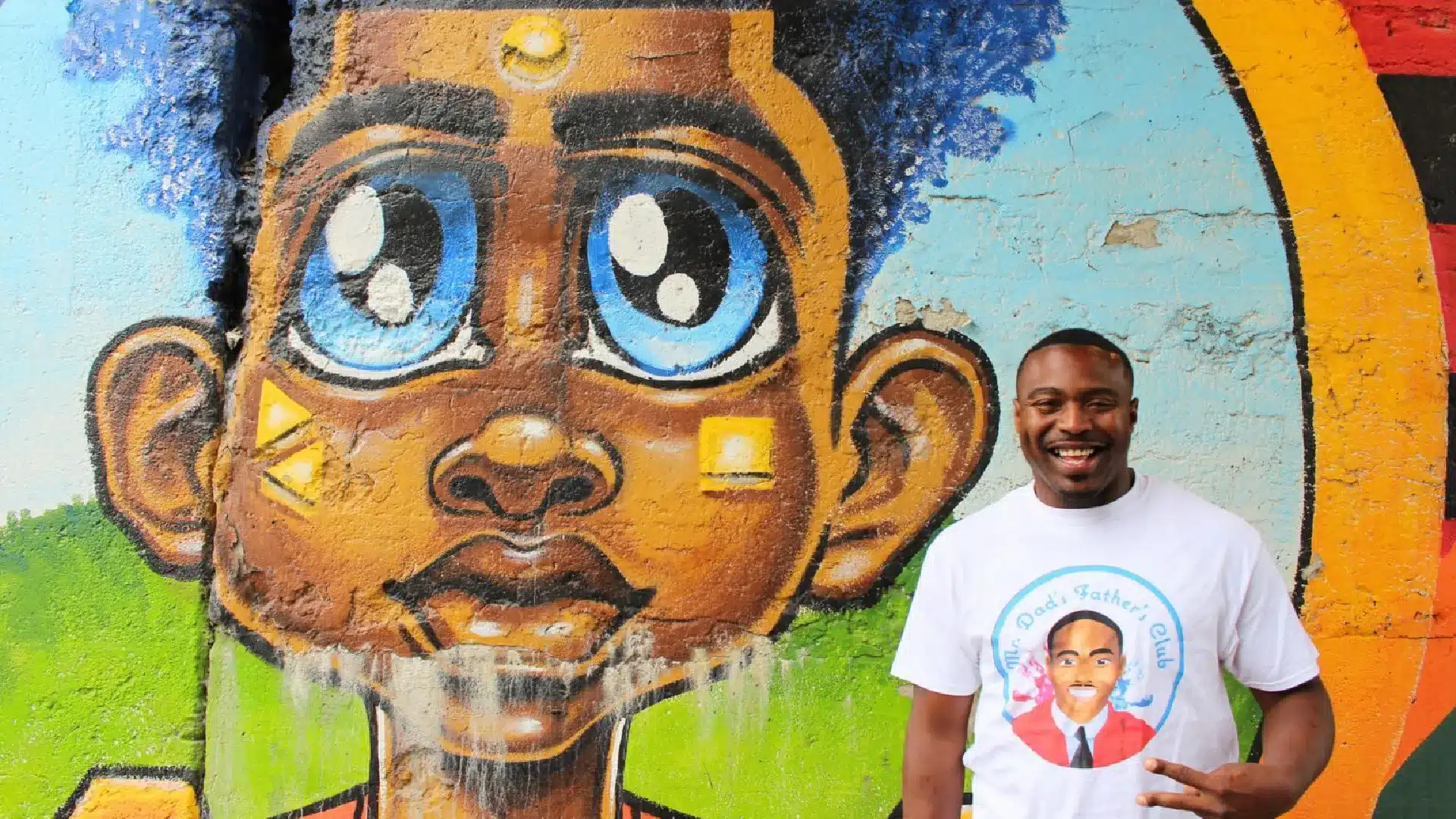
Father's Day March Unites Englewood
On June 17, Mr. Dad’s Father’s Club held their fifth annual Father’s Day March in Ogden Park. Mr. Dad’s Father’s Club was founded in 2017 by Joseph Williams, a 2020 Chicago Peace Fellow, to get fathers and male-mentors actively involved in their childrens’ lives. Mr. Dad’s Father’s Club uses literacy and mentorship to nurture the social-emotional learning of Chicago youth so that they are better equipped to handle the world around them. This year, they held their fifth annual Father’s Day March, a family-friendly event filled with food, music, games, and giveaways.

Community Involvement at the Father's Day March
Over the past five years, the Father’s Day March has grown in scale and has gained the attention of local businesses, community organizations, and political figures. All food, entertainment, and services at the parade were provided for free and local businesses donated meals, haircuts, and more. When asked about the development of the Father’s Day March, Joseph noted, “I will never forget when we started the event. We used to do it inside of the park and then we expanded out to the track field. We added dance teams, the Jesse White tumblers, face painters, and so on. Now it’s at the point where last year we had the mayor and superintendent come out, this year we had the superintendent come out again, so it has continued to expand.” As attention to the Father’s Day march has increased, the services provided have also grown in scale with more options for food and entertainment being delivered to the growing audience. In total, over 25 vendors came out to support the event and over 500 people attended.
We were really able to tie together businesses, nonprofits, elected officials under one event, for one cause. Every year we come to bring together peace and unity throughout the community… Each year I think the event might be more difficult to put on as it grows in scale, but it actually gets easier, because the more folks know about it, the more support we get.
Joseph Williams, Founder of Mr. Dad's Father's Club and 2020 Chicago Peace Fellow
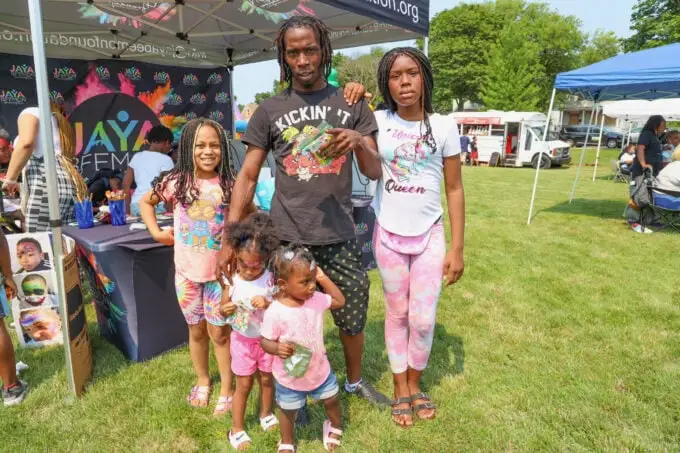
With over 500 people attending this year’s Father’s Day March, it became a site where members of the Englewood community could receive free resources and services while also spending time with their families. This year, Josephine’s Southern Cooking and White Castle donated food, while Michael Airhart of Taste for the Homeless cooked free meals. The Father’s Day March also distributed 50,000 free diapers and provided 100 attendees with free haircuts. By providing free food and entertainment, the Father’s Day March allowed family members to focus on connecting with one another in a fun environment. Attendees were also happy with the resources that the event provided. Tabling organizations provided opportunities for individuals to apply for jobs on the spot, receive phones or tablets with service for free, and other similar services.
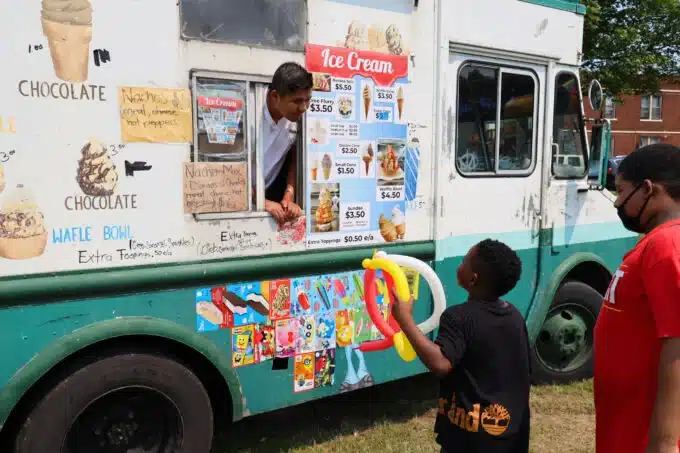
A central goal of the Father’s Day March was to bring attention to fathers’ continued involvement in their children’s lives. The event provided an opportunity to fathers and their children to relax and enjoy free face painting, balloons, an ice cream truck, crafts, and more. At the event, fathers approached Joseph and mentioned how they enjoyed the opportunity to not only spend time with their children, but also to have fun and to have a space in their neighborhood to relax.
For the future, Joseph imagines expanding the Father’s Day Parade to have themes, which would bring more attention to the event and complement the programming. He imagines bringing a carnival to the next Father’s Day March, providing rides, popcorn, ICEEs, and similar fare. As Mr. Dad’s Father’s Club continues to hold Father’s Day Marches for the Englewood community, they will continue to provide foods, services, and entertainment to the neighborhood. This celebration of community and family is the joint effort of community organizers, businesses, and other neighborhood organizations collaborating on a common goal.

A New Resource for Victims of Gun Violence
A new resource for families of victims of gun violence was recently released by 2020 Chicago Peace Fellow, Pamela Montgomery-Bosely. Her organization, Purpose Over Pain, launched a 24-hour crisis response hotline for people coping with the loss of a loved one from violence. The hotline is active from 7pm on Friday to 7pm on Sunday and can be reached by dialing 872-3CRISIS or (872) 327-4747.
Providing Crisis Support for Victims of Gun Violence
Since its inception in 2007, Purpose Over Pain has expanded from a small non-profit run by parents of victims of gun violence to an organization with full-time staff that work Monday through Friday. The organization provides positive development activities for children and youth, advocates for and promotes safer communities, and strengthens families by providing crisis support to parents or guardians whose children have been victimized. Most of Purpose Over Pain’s services are provided on weekdays, which up until now has left a gap in the services provided to families of victims of gun violence over the weekend.

The crisis response hotline is intended to serve families at any point during the weekend, which is when the number of incidents tends to peak. Prior to opening the hotline, Purpose Over Pain would receive messages and calls throughout the weekend from people needing support after friends or family members had been shot. Pam explains: “Over the weekend, people struggle, because that's when the violence is extremely high. So, while we are available Monday through Friday, I wanted to be available on the weekends, but not my full time staff since they are survivors too.”

Purpose Over Pain hired four operators to work the gun violence prevention hotline over the weekend, so that Purpose Over Pain’s existing staff would not be overburdened. All of the operators have first hand experience with gun violence, having lost either children or relatives, and are trained to listen to and provide guidance to people dealing with a tragic loss. Pam describes the role of the responders:
We want to be there to support people and let them know that they’re not alone. Our staff is there to listen. Many parents have their children shot and killed in the middle of the night and might receive a call at 2 in the morning with the news. You can’t sleep after news like that, so we wanted to make sure that there is someone there to listen to them, to provide support, to provide guidance, and to provide resources.
Pam also works on the hotline covering for the other responders in case they are unavailable or if it is the anniversary date of their loved one being murdered.

Resources Shared on the Hotline
Resources that the operators can link victims include support circles, counseling, financial resources, and job programs. Purpose Over Pain offers memorial services, support days, and mentoring sessions as part of its regular programming. Hotline operators can also link victims to outside resources. For instance, hotline operators often help victims fill out a Crime Victim Compensation Form. This form is part of the Illinois Attorney General’s Crime Victims Compensation Program which is intended to reduce the financial burden imposed on victims of violent crime and their families by providing up to $45,000 for expenses incurred by eligible victims as a result of a violent crime. Purpose Over Pain also has a full resource book that can link victims to programs that provide housing, food, clothes, and jobs. They network with other organizations, such as St. Sabina’s, so that they can connect victims with resources close to them and that are relevant to their needs.

Purpose Over Pain’s hotline is the first of its kind in Chicago, previously there was no 24-hour crisis hotline for the friends and families of victims of gun violence. Now, victims can be supported by community members that have lived through similar experiences. Pam emphasizes, “When you call and they pick up the phone you’ll have a survivor, someone who understands what you’re going through. It’s not like you’re getting an automated message, you’re getting a live voice. I don’t want people to think they’re alone because they’re not, we’re here for them.” The Purpose Over Pain hotline has been created by community members for community members and will continue to provide pertinent and needed care.

West Garfield Park Boxing Club is a Haven for Youth
Brothers Tony and Sylvester Raggs recently started a youth boxing club in West Garfield Park. The club, Boxing Off the Block, is intended to teach young people from ages 13-18 discipline and the skill set of boxing. The club is located in Bethel Lutheran Church & School, and training is held on weekdays from 4pm-8pm. It is the Raggs brothers’ goal to encourage good habits in young people through the club and provide a space in which they can feel safe and have positive role models in an area where gun violence is a serious problem.
A Boxing Club that Provides a Safe Space for Youth
Boxing Off the Block serves as a haven for families in and around West Garfield Park. Tony, a 2021 Chicago Peace Fellow, has worked in violence prevention since 1981 and has served as a volunteer street outreach worker in West Garfield Park and West Humboldt Park. He and his brother Sylvester have worked alongside one another on projects working with youths and adults dealing with issues of violence and community outreach. They have used music and entertainment as a way to build community, with boxing later becoming an addition to that work. Over the course of the last two years they have found funding, trainers, and a space for their youth boxing club. They have been holding the club in Bethel Lutheran Church since October of 2022. Though the club is intended for teens aged 13-18, mothers and younger children also come to workout, box, and watch the teens spar.

The club is stocked with workout equipment and trainers that provide the necessary tools for young people to learn boxing. The space includes a 10’x10’ ring that the brothers built themselves, punching bags, weights, and stationary bikes. They have hired two boxing coaches as well as a conditioning coach to train the young people who attend and they provide dinner for them as well. Activities are split between two groups with ages 13-15 training from 4pm - 6pm and ages 16-18 training from 6pm - 8 pm. Each group has around 15-20 young people attend.
Coaches Provide Mentorship and Structure
The coaches at Boxing Off the Block are often teens’ first mentors in boxing, providing them with training regimes and encouraging them to keep up their routines. The strength and conditioning coach, Travis Whittington, mentioned that he uses the discipline of training as a way to encourage good behavior in the gym, “when kids act out I ask them to do push-ups or run a lap so that they know what we’re here to do.” Travis provides personal coaching for the teens, giving them regimens to do outside of the gym. This is often teens’ first structured workout regime, so it provides them with a structure for building a habit of exercising.

The two boxing coaches, Shawn Boyd and Levelle Whittington, emphasize the technique of boxing and its demands for control of the emotions. Shawn stresses that boxing acts as a form of stress relief and that a cool head is required to win rounds in the ring. He noted that the young people he sees excel at boxing are those who “are able to keep up a technique in a fight rather than resorting to street fighting.” Part of their hope in encouraging this kind of mindset in the youth through boxing is to help them deal with the possible threat of violence on the streets. They hope that by practicing the skill of emotional regulation in the ring, teens will be able to keep calm when confronted on the streets to know when they should back away or practice restraint.
Coach Levelle Whittington sees himself and the other boxing coaches as positive role models for the young people. He noted that many of the young people who attend the club have lost family members to gun violence and lack guidance. Boxing coaches can provide some direction and guidance by teaching the value of discipline, technique, and emotional regulation. Levelle also noted that boxing has the potential to distract from other more dangerous behaviors because it is something that can be framed as cool. Being cool allows boxing to compete with other interests, such as drugs or guns, and channels that energy into a positive direction.

Boxing is not the only thing taught at Boxing off the Block, with a community of trainers, coaches, and students teaching the value of cooperation, self-control, and the study of technique. The club is quickly growing, with members from outside of West Garfield park also joining to learn the skill of boxing. It is the Raggs Brothers’ hope that the club will continue to gain both resources and members so that they can build community and encourage positive values in young people on the West Side.

Chicago Youth Boxing Club: Building Community, Character, and Togetherness
By: Sylvia Del Raso, 2022 Chicago Peace Fellow and Board Treasurer, Chicago Youth Boxing Club Inc
Almost 15 years ago, I was asked to join the Chicago Youth Boxing Club (CYBC) board, a nonprofit sports-based youth development program serving the North Lawndale and Little Village communities on the southwest side of Chicago. What I started as a six-month commitment, I am continuing to this day as a rewarding initiative where young people can resolve their difficulties, find community, and prosper in the sport and beyond.
I remain, to this day, a volunteer and an avid supporter of the mission of this boxing club, which provides an outlet and safe space for youth and acts as a preventive measure to avert young people away from potential gang activities. I have experienced many fulfilling moments during this work.
One of the best and earliest moments was around 12 years ago when one of our young people, then nine-year-old Felix Gonzalez, was apprehensive about getting up in the ring; then he won. His happy glow still stays with me.

I remember thinking: I am in it. It is helping them [young people], and I am helping the community. Felix grew up and recently came to thank us, this time under the uniform of a Chicago Paramedic. Seeing how he came back as a 22-year-old made me, once again, understand how crucial it is for the community to maintain our service to them, and how long-lasting our positive impact is.
Now, we are serving approximately 140 young people. We offer them a boxing club and a place that listens to them. This platform helps them build discipline, character, and self-confidence and allows them to add value to their future. We talk to them about going to school, about possibilities to graduate and, to go to college. We offer scholarships and guide them. It is more than just a boxing club.
A Place of Many Benefits
Regrettably, our neighborhood is not among the best in Chicago; however, there is a lot of hope and talent here. Our community needs something like this because we only have a few activities for youth.
I see the commitment from the kids; they want to be better. Sure, there is a lot of work because some kids come with baggage, from broken homes, suffer from anger issues and anxiety, and have dealt with hard things in life.
Witnessing the meaningful impact of our club on young people, their families, and the community throughout all these years gave me all the encouragement and reasons to work and spread the word about how this place helps marginalized youth.
I work the night shift at my full-time job with the U.S. Postal Service, so I can come to the boxing club during the day and do what is needed as a Board Treasurer.Still, this is not the hard part of the job. This has so much value for my community; I don’t see it as a job. The difficult part is convincing our funders and others that boxing is good for our community.
Some people still don’t see boxing as a good sport for kids. A lot of people still perceive boxing as violence.From my experience as an observer, boxing needs a lot of discipline – and this club creates and maintains the ties required for the betterment of our community.
I have seen many kids coming in here with anxiety and anger. They think they can take on anyone. However, when we put them in a ring, they cannot take a round because it takes a lot of conditioning. At this point, they take it as a challenge that changes their attitude.
I see them grow; I see them engage for the better. Besides the youth themselves, I have seen firsthand how the community respects what happens in this church basement. In Mexican culture, boxing is very integral in our lives. This is a sport that Mexicans like a lot, so we see a lot of families coming here.
Looking Forward, While Cherishing our Progress
Initially, people saw boxing as violence. But then they started to see that these kids were not fighting but boxing. They started to see that thanks to this club, these kids were staying out of street fights and were being more respectful.
It was new for the community that these kids were also competing nationally. Our kids have gone to Utah, California, Missouri, and Texas. We had four Olympic contenders right before COVID-19 hit. The community started changing their perception when they started seeing the results of our work. We are constantly open to the community, and we engage them.
We open the gym and we invite everyone to come and watch the kids. We learned that before kids go to compete, they get nervous and want to take a step back. So, we do sparring sessions here and invite family and friends so kids start familiarizing themselves with the competition. We also hold community gatherings that include food, entertaining games, and fun together.

Enhancing Brown and Black Cooperation
Little Village is separated into North Lawndale (mostly Black) and South Lawndale (primarily Mexican). We unite the kids from both sides. We promote unity and show them that brown and black can work together, engage, and love each other.
This aspect of our work brings me closer to Goldin Institute’s mission and its community-driven approach to social justice. Participating in the Goldin Institute’s Chicago Peace Fellows Program in 2022 taught me to speak my mind and be more open. I gained many friendships and networking from the Goldin Institute; it is ongoing. Just because I graduated, it doesn't mean that the connection ended. I see it as a valuable process and appreciate the process Goldin Institute put me through. They brought me into Chicago neighborhoods that I would not go otherwise.
***
For the symbolic amount of $25 a month, anyone aged eight and up can join our club and be a part of our growing community.
Another way to be part of us and support us is by donating.
Whichever form of contribution you choose, we will wholeheartedly appreciate it.

Students Visit Little Rock to Explore the Civil Rights Movement
On March 28, the LUV Institute arranged for 60 middle and high school students to travel to Little Rock, Arkansas, to learn about the Little Rock Nine, the group of nine Black students who enrolled at the formerly all-white Central High School in Little Rock, Arkansas, in 1957. The Love, Unity & Values (LUV) Institute has been working with underserved youth since 2012 to inspire hope and empower them with economic opportunities while building resiliency and social-emotional competencies. Cosette Nazon-Wilburn, Executive Director of the LUV Institute and a 2020 Chicago Peace Fellow, formed partnerships between the LUV Institute, local schools, the Illinois State Board of Education (ISBE), and a community of teachers to facilitate the trip.
Students at University of Chicago Charter School and Ariel Community Academy participated as a part of LUV Institute’s bi-weekly Media Empowerment Program. LUV was able to expand the program this year through funding from the ISBE’s Phillip Jackson Freedom Schools Grant. The LUV Institute has held Journey to My Better Self programs for the past eight years, but this is the first year that the program has included an out of state trip. The programs prepare youth and young adults ages 16-24 to be job-ready for economically sustainable employment in high-growth industries and occupations. The Media Empowerment Program focuses on training students in journalism and storytelling.

The LUV Institute also hired teachers from University of Chicago Charter School and Ariel Community Academy with funding from theFreedom Schools Grant. The grant is intended to fund a Freedom Schools network, offering a research-based, multicultural curriculum during the summer and/or school year to improve outcomes for low-income students. This funding allowed the LUV Institute to pay particular attention to hiring teachers from neighborhood schools to take part in the program. Each teacher was paid $60 an hour, which is higher than what teachers are usually paid to work for afterschool programs. By hiring neighborhood teachers, the LUV Institute not only contributed to the community of teachers but also invested in the schools they teach in. Teachers, deans, and administrators also learned restorative practices, which provided them with tools to improve their classrooms.
Leading up to the trip to Little Rock, the LUV Institute taught a six-week course on the Civil Rights Movement. The curriculum for the program aimed to teach students how to tell stories under the lens of racial healing and grasp the idea of looking at history as a way forward. The curriculum was provided by nonprofit Facing History and Ourselves, and was designed to create a pathway for young people to explore Little Rock Nine narratives within their own lives. One of the books offered as part of the curriculum is ”Warriors Don’t Cry: A Searing Memoir of the Battle to Integrate Little Rock’s Central High” by Melba Patillo Beals, one of the Little Rock Nine. “Warriors Don’t Cry” emphasizes the role media played in theLittle Rock Nine and the Civil Rights Movement as a whole, making it a strong tie-in to the program. Students were also provided with iPads to document their experiences and participate in the curriculum.

There was an additional layer of opportunity for high school students who took part in the program as they received leadership training and served as mentors for the middle school students. Both high school and middle school students took the course side-by-side to learn history and create their own narratives. All of the high school students who participated attend University of Chicago Charter School in Woodlawn. The next phase of their project is to create a mosaic that will be at the school and serve as a reminder of their experience.
When it came time to visit Little Rock, the students had a full day of activities, visiting Little Rock Central High, the Arkansas Capitol building, as well as various memorials. Central High is now a National Historic Site and students were able to visit a memorial park, the historic Mobil/Magnolia gas station, and the visitor center. On their trip, students watched a documentary about the Little Rock Nine and also got a chance to see memorabilia and purchase souvenirs. The trip included a visit to the Arkansas Capitol Building, which features a statue of every member of the Little Rock Nine, as well as quotes from them.

The visit to Central High revealed the resources offered by the school's campus and how the diversity of the school has advanced since the integration of the Little Rock Nine. They met with two assistant principals from Central High who provided updates on the current status of the school. The assistant principals emphasized the diversity of Central High, which now accommodates students internationally who speak over 30 languages. Today, young people all over the world attend Central High, since it is a large school with the resources to support a diverse student body.
As students visited Central High and other historical sites related to the Little Rock Nine, they reflected on their own experiences and the current opportunities they have to address social injustice. Cosette emphasizes that the trip was intended to have the students ask, “What are the Little Rock Nine situations in my life? What have my parents and grandparents had to do? And when have I had to stand up to injustice?”
Visiting Little Rock will hopefully inspire ongoing leadership within the students. By focusing on the Little Rock Nine, who were kids between the ages of 14-16 when they transferred schools, the curriculum focuses on young peoples’ capacity to be change makers.

Opportunities for reflection were extended to the families of students. One of the adult chaperone’s is the grandmother of one of the children in the program. She stood on the street in front of Central High and provided testimony of what happened when the Little Rock Nine were escorted into the school by the National Guard. She noted how the neighborhood around Central High used to be an entirely white neighborhood and has now become a Black neighborhood. She also talked about how the Little Rock Nine saw Central High School as an opportunity for educational advancement. Central is a large high school close in size to a college campus, which was a stark contrast to the much smaller all-Black Horace Mann High School that was built during the same period.
Following their visit to Little Rock, the students’ experience of the trip will be used to tell their own stories. They used their iPads to create narratives about their trip. A documentarian accompanied them and will work with the students to combine their narratives and footage to create a documentary. Through connecting with history and actively applying it to their lived experiences, the students will see the importance of telling their own stories and engaging with their community.

A Reflection on Black History through Handwriting: An Interview with Dr. Dorothy Thompson
2021 Chicago Peace Fellow, Dr. Dorothy Towns-Thompson and her daughter, Antonette Parker, a teacher, recently co-authored three books on Black history and handwriting for children of all ages. Dr. Thompson has over three decades of experience as an educator, alcohol, and drug prevention professional, administrator, and ordained minister and has used the skills she acquired community activist and teacher to author these books.
The books cover arts, social studies, and social-emotional learning. They also include a motivational word for each letter of the alphabet, a definition or explanation of the word, and historical locations and personalities. The author also focuses on the importance of inter-generational connections and the need for communication within families and schools.
A unique aspect of these books is their spotlight on cursive writing and handwriting as a way of inscribing and honoring Black history. Dr. Thompson stresses that the books are not only a step further in bridging the educational gap in our society, but also inform future action-oriented strides.

Flipping the Pages
The facts, photos, and biographies encourage youth to do more research on Black history once they read the books. Volumes 1, 2, and 3 of the books, released in February in connection with Black History Month, are for children of all ages, focusing on the experiences of Black people. "One reason I thought to write this is that I did not want just to have a book dealing with history or writing. My daughter and I also added inspirational messages. The book is divided into three volumes: primary, intermediate, and upper,” she elaborates. Each book cover has a distinctive color influenced by the Ghanaian Flag.
"The first Book is for primary students (Grades Pr. K - 2) and has a golden cover. It begins with “A stands for Africa,” with pictures on that page. It continues, “Africa is a continent, and America is a country.” We know that some children often cannot read books in the primary grades. Still, adults can read to them, drawing that emotional connection between the youth and adults." She adds, “The African diaspora spans from sea to sea and connect. And, through the books, people can see the connection. "There is also a sense of unity in this," Dr. Thompson added.
Book two is for intermediate students (Grades 3 - 5), and its color is green. It has the exact format followed by the book one, but the handwriting practice is in cursive. "To me, there's a need to be able to use the pen and paper where students are learning cursive writing because many young people don't know how to write in cursive. They have difficulty reading cursive." She shares that cursive writing is helpful to learn because it not only helps younger people decipher others’ handwriting, but also it is usually helps them to write a little faster.
The third book is burnt orange, representing the red of the Ghanaian flag. Dr. Thompson explains that "This book serves students in upper grades or higher (6 and up), and each letter of the alphabet includes two noteworthy historical figures." She further talks about how they chose specific people from the Black community while considering the goal of increasing connectedness and celebrating accomplishments: "You have famous Black people that people heard about like Dr. Martin Luther King, or Jennifer Hudson and George Foreman. But we also have people who were in art, or who were scientists. We have Eleanor Samuel, a scientist, and physicist. Or, the mathematician, Walter Mosley. " Dr. Thompson explains that they wanted young people to see Black people who are historians, politicians, performers, and athletes too. "It varies. We picked different people who have contributed to the history of Black people." The inter-generational connections are vital to her; she says adding they want to keep it going.

A Better Understanding of Black History
Dr. Thompson and her daughter also reflected on the relationship of their books with Black history overall when writing them. “A lot of times, young people, sometimes even people in general, do not see the connection between the relationship of Africans and African Americans. [...]. Because of the history and slavery, and how we represent people from different parts of the world and continents."
Dr. Thompson designed her books to highlight the need for people to see the rich history and how Africans and people from the African diaspora contributed not only to America but to various places worldwide. "Many times, young people and other people just see the negatives of Black people. That is why I say the book is not just for Black children, our children, or people in general. It's just to show that contributions have been made and continue to be made by Black people." She believes that having opportunities for communication within families or even in schools is so important. "I do not see my book only being used in schools. I see my book also part of family relationships." she adds.

The Meaningful Mother-Daughter Cooperation
Dr. Thompson and her daughter Antonette adopted a division of labor concept as they collaborated on the book. "We selected different portions of what part of the book we wanted to manage. And then we came together to see what worked, what we should include, and how it should be shaped." She emphasized her daughter’s work as a primary school teacher aided in their ability to communicate and collaborate as they both have experience working as educators. Further, she adds that this will not be their last cooperation. "Since we are focusing on anti-bullying, that's one of the things that we are looking at creating a book for. We were ironing out some ideas. It would be another collaborative work."
Check out their website for book signings and more on A Handwriting and Black History Book.